At the beginning of what the media
began calling the ‘Scopes II’ trial I thought it
would become more polemical than it turned out. I began collecting
media reports, commentary, cartoons, defences and attacks
published here and there by some of our leading scientists —I
started at the very beginningand continued for about four months.
* I collected everything from
science and Church to morality, philosophy, etymology, politics,
poetry and parody, like the clever and funny web-site
called the Spaghetti Monster. Also a bit of
history, historical quotes on the subject and transcriptions of
interviews and debates with Richard Dawkins and the like.
* Unfortunately the trials
weren’t as amusing as they might have been if the Intelligent
Design camp had better arguments and more credible
support but in the end I think I have compiled a fascinating and
entertaining document.
* It covers both sides thoroughly
and, I hope, with a minimum of repetition (and includes
links to further reference).
* I have added my two cents here
and there in red. It is chronological with dates noted.
I originally saved it to a very large (260 page) Word.doc
which I have converted to 11 pages of web site weighing between 30
and 130 or so kbs each.
“Beliefs are a kind of information, thinking a kind of computation, and emotions, motives, and desires are a kind of feedback mechanism in which an agent senses the difference between a current state and goal state and executes operations designed to reduce the difference.”
“A brain is a computational system in which knowledge and goals are represented as patterns in bits of matter (‘representations’). The system is designed in such a way that one representation causes another to come into existence; and these changes mirror the laws of some normatively valid system like logic, statistics, or laws of cause and effect in the world. … The design of the system thus ensures that if the old representations were accurate, the new ones are accurate as well. Deriving new accurate beliefs from old ones in pursuit of a goal is not a bad definition of ‘intelligence’.”
Steven Pinker
Whether one is, or is not, a science fiction aficionado, the many years of Roddenberry's Star Trek sagas—the old and the new generation—have given much food for thought, both scientific and philosophic.
I have heard two explanations for how fictional teleportation works. I could, of course, find the correct answer in a moment by using the database that includes all of man's cumulative knowledge, the Internet—itself the subject of scientific technology so unthinkable even as recently as my own lifetime, that it wasn't presaged by sci-fi writers, as can be seen by the charmingly primitive vision of futuristic computers on the first series of Star Trek.
One explanation is that the matter that makes up the body of the transported is reduced to its essential state, energy. That energy is sent through space and re-materialized at its destination. This, like warp drive, would take more energy than that contained in a few large stars. The other, more logical concept, is that the body, that is to say, its cells, molecules, atoms, or even sub-atomic particles, are mapped and a new body is assembled out of the naturally occurring elements present in both places. The point I want to make, however, doesn't rely on which reasoning Roddenberry's writers meant.
If we ignore the question of how the energy of a teleported body travels through space in either scenario (in the latter the information must be moved just as the energy it is reduced to must in the former), an ignorance necessary to maintain the fiction of interstellar travel (theoretical quantum connectedness aside), then the interesting concept that remains can be examined.
Would, my old friend Bobby Porter asks (who you will, if you are a habitual reader of this Blog, have met before), the perfect replication of a body, necessarily include its thoughts and memories? An interesting and, to science's present state of knowledge, unanswerable question. Even though there are some clues that point to an affirmative conclusion.
Pinker discusses studies done with identical twins. Although identical twins are not actually identical (they don't, for instance, have the same fingerprints), they are close enough to share similar thought patterns as a result of similar physical make-up. He gives the example of a pair of identical twins separated at birth. One was brought up by German, Nazi Catholics while the other lived his whole life as a Jew in Trinidad. When they met for the first time in a lab in Minnesota, they both wore navy blue shirts with epaulettes. They both like to dip buttered bread in their coffee, and flush the toilet both before and after using it. And both take an odd pleasure in pretending to sneeze in crowded elevators to see people jump at the noise.
There is another interesting conundrum to ponder. If the body being transported is de-materialized on the platform it leaves from, and is re-made on the platform of its destination, then, what if it were mapped without the destruction of the original? Or, let's say that for security purposes, the original was not destroyed until after assembly at arrival. It would mean there would be, even if only momentarily, two impossibly handsome, swaggering Bill Shatners in the universe.
The one who arrived at his destination would care little about the first. But the one who left on the voyage, although aware that he now exists somewhere else, would still, inevitably, resent being reduced to his elemental parts and dispersed.
If, instead of transporting a person over large distances, he were transported to a locus in the same room, and the first could see himself existing only a few paces away, could he, if he were you, blithely accept that his destruction is not equivalent to his death?
Even though, in fact, you do go on existing, every cell and every memory, it is impossible for a person to overcome his sense of self. That self, is here, in the body that does the thinking—it is where the I exists. It would take a consciousness greater than a human primate's to simply, and without qualm, go on living as he had before but in a new, identical body.
It is from there, the irrational I, that soul myths develop. The immortal and immaterial soul in temporary conjuction with the corporeal body, for the few years each of us dwell on earth. It is because of the false dichotomy we feel between the mind and brain, that is to say, the mind that watches the brain work; the I and the self; the witness and the actor.
The phenomenon is reflected too by our experience. We project a pale and poor image of complex and marvellous interior worlds, to others. The real, solid and complete I watching the fuzzy, incomplete, partial I perceived by others. Many of us have felt the duality clearly when drunk, the sober mind that watches the brain's functions impaired by the consumption of alcohol.
No single cell in your body, or any single organ, knows or cares about the you it is a part of; erythrocytes pick up oxygen from alveoli because of their iron content (forming ferrous oxide, FeO, a simple chemical interaction we call breathing); kidneys filter; nerves carry electrical impulses; muscles contract or relax in complete ignorance of their usefulness to you, nothing more. Just as an ear couldn't in a million years, guess what an eye is, or, having guessed, imagine what sight is, the brain has a million compartmentalized functions, none of which could understand the other. It is only through the conflation of all these diverse functions that sentience is formed. The body, regardless of the sense of romance we attach to it, is not ontological but mechanical.
The holomorphic self is necessary in order for the brain to filter the constant cacophonous chaos of outer stimuli into a coherent whole—using a recently evolved and none too efficient pre-frontal cortex—if, that is, one is to have self-consciousness instead of mere sentience. It creates a sense of the witnessing self as separate to the simple agglomeration of data our brain produces based on its perceptions, in the same way it translates stimuli to the dormant brain in the form of dreams, or begets a streaming image of visual reality through pattern recognition from the crude signals carried to it by our retinas and optic nerves.
Without the creation of an ego—a kind of imaginary overseer—the pile of data that enter through our sensory perceptions, could not be erudite, could not be holistic. At this point we need to ask ourselves what is this putative 'self' we have such an unerring belief in. There can be no question that I am myself, you are yourself, and the twain never shall meet, right? My self is a whole entity, I have been my self for all the time I have existed. My self cannot be confused with any other. The self who writes this essay sits in its comfortably heated house as winter howls outside and enjoys the leisure to ponder philosophic questions many would consider of no consequence. It is a self with wide experience of the variety existence offers. It is a self made up of genetic tendencies forged by varied circumstance.
And yet, this self, a self with a reasonable quantity of sympathy for other selves, might at any moment be subjected to, say, an invasion by a powerful and cruel enemy. Let's depersonalize, let us say it is not an enemy from Latvia or the isles of Borneo, but an alien race come from a far-away planet. A species who, more than cruel, is as indifferent to my well-being as I am to that of a bacterium that lives in the earth's substrata, a bacterium which neither harms nor aids my experience of life. If that alien species destroyed the civilization I lived in, and killed men like me with the same impassivity I swat a mosquito, I would, in short order, become accustomed to seeing the streets strewn with bodies of those self-same people I used to have empathy for. Who knows? For lack of choice I may even become wont to eating them to fuel my own body.
And still, I would be the same self I have always been, right? The self is a non-fiction narrative we write as we go along. Or is it? I won't delve into the questions of the subjectivity of perceptual understanding that posits so strong an argument for the subjectivity of reality, because I have already done so in other essays in this blog. Just as Plato did, or Kant whose ding an sich, refers to the un-knowable true essence of reality, if indeed, it exists at all. We may, after all, be no more than part of Shiva's dream with no way to judge that the construct we think of as reality is really only part of that same dream.
But, if we skip that more fundamental question, to examine not reality itself, but the self within a given reality, then we must consider the narrative we write during the 750 million present moments an average longevity experiences.
What of those who suffer a multiple personality disorder? Are they also in possession of a self like you and I? If you ask any one of those personalities whether it is an organic self, it will answer categorically: yes. Perhaps more to the point is the example Dan Dennet offers, people who suffer a break in their Corpus Callosum, the tiny bridge that is responsible for the communication between the two hemispheres of our brains that makes their subsequent coordination possible. Since each hemisphere has some proprietary functions not shared by the other, once the Callosum is broken, each hemisphere becomes capable of having differing experiences of the world and, therefore, of the self, within the same body.
There is no dichotomy between mind and brain. There is no mind. There are only the processes of the brain. In other words, there are physical manifestations and consequences from the particular make-up of our transitory and unique collection of atoms we each call I. A consilience of myriad chemical interactions that occur as a natural phenomenon of our interacting parts. Until, that is, that pile of loosely aggregated atoms, those borrowed parts (animated by a temporary loan of the universe's energy on its way from the centre of a star to final stasis), separate again and return to the cosmos.
The mind is simply a construction invented by the brain for the purpose of collating the brain's functions into an imaginary, fictional narrative we can, for convenience or sanity, call self.
The self that exists independently of the physical form, is invented by the physical form.
Just this year, in a collaboration between a research institute in Austria and one here in Edinburgh, scientists were able to grow a simple brain from undifferentiated stem cells. Quite a feat even compared to growing livers. It was a tiny brain, about four millimetres wide, far from an actual brain's abilities. And yet, it was a brain with differentiated parts, neurons that fired and the beginnings of a retina, among other things. It might not impress unless one considers how short a time this kind of research has been going on. A mere lifetime since men of science believed in phrenology.
It won't be long before we, as part of nature, part of the natural world, naturally create brains (if we want to) in a more efficient fashion than nature itself has—taking 350 million years of chance mutation before succeeding as far as it has. When we do, you can be sure that even if it lives in a Petri dish it, too, will consider its consciousness so magical and mysterious that it will believe it possesses an immaterial and immortal soul created by a God.
Vanity of vanities, saith the preacher, vanity and vanity, all is vanity.
I don’t know if anyone reading this had a father who was as hard
on him as mine was with me. By “hard” I don’t mean
beatings or anything like that, but rather, showing expectations beyond
the pale. When one’s father is as brilliant as mine was, and one
is still an unformed boy, one naturally asks himself: Is he right? Are
the things I say, do, or think, as substandard as he says? Won’t I
deserve love or respect until I live up to those expectations?
My Dad was an unusual man, and by that I do not mean simply that he was
different to other men, but that his character, his decisions, his
point of view, his actions, motivations and his life philosophy, were
unique in the sense that all the things which other men have in common,
were entirely absent in my father.
Although improbable, it is possible that he, or I, for that
matter—now that I am a fully-formed man—is right, and all
the world is wrong, but where one can’t reasonably allow the
possibility, is when considering his relationship to the lower animals
instead of the human ones.
Dad bought a dog when he was in his fifties, the first house dog he had
ever had (his previous experience was limited to working, outdoor
watch-dogs when he lived in a place a man might be shot with impunity
and at any moment—but that is a story for another time) he bought
a Belgian Shepherd pup he called Fergus—A Scottish version of the
Greek Cerberus, he claimed, the three-headed dog that guards the gates
of the underworld.
Being as he was, a man lacking the gene for multi-tasking, as do I, his
strength instead was in his ability to concentrate on one task with all
his being, and for as long as it took. A handy trait when studying or
painting in his studio. And so, now, he focused all he had on his new
dog.
He began training Fergus by reading books about how such things were
done and succeeded to an impressive level. I can remember, for
instance, taking the dog to the park for his daily run, with my Dad. At
full gallop, and at a distance where it surprised that he could hear my
father’s voice—not shouted—the command
‘Down!’ brought him to the position even if mid-air between
strides. Still, Dad was not satisfied.
He exercised Fergus, doted on him, trained him, talked to him, praised
him & punished him. And, he never stopped expecting more. But,
despite being a man who quoted Sartre’s definition of hell
without a smile (other people)—a man who loved solitude above
all, he never stopped to think that it is trying for a dog too, to have
constant feedback.
At one point, he wanted to get his hands on one of those collars that
give electric shocks from a remote control, illegal everywhere but
Germany.
Fergus was a dog as strong as a bear. I can also remember watching my
little sister playing with a ball out on the lawn while Fergus was tied
to a nearby tree. Not by a clothes-line cord, mind you, but
honest-to-goodness rope. He barked and jumped excitedly, wanting to
join in. Finally, he backed himself to the tree and ran forward without
looking back, and the rope snapped like dental floss without so much as
slowing him down.
As Fergus grew to adulthood he began to show a wild temperament, a
neurotic temperament. He would, without apparent incentive or warning,
go from ears-up, tail wagging, to vicious and lethal biting. He bit Dad
more than once (a number of stitches). He bit Clive, Dad’s best
friend, who also had to be sewn up, and others. Dad went to the London
police, rightly considering them expert dog trainers, and found a man
nice enough to get on a train on his day off and visit Dad at home.
They spent the day at the park together, and the policeman went home
with eleven stitches (I happen to remember) in his forearm.
One day I took Fergus to the park by myself, holding him by his thick,
chain leash. As always, he behaved perfectly, touching my right leg the
whole time, not pulling, or getting distracted, or lagging behind, or
showing any will of his own. When we arrived, I told him
“Sit!” and when he had, I unleashed him and gave him
permission to run with the command ‘Go!’ Instead of rushing
off, however, he moved about twenty paces from where I stood, turned,
and broke into a gallop straight for me. Knowing his strength, speed
and intent, I did not run, and I did not hold back. I raised the chain
above my head and waited till he was upon me, indeed, in mid-air as he
lunged, and… brought it down with all my strength, knowing I had
only one shot. He took the blow without complaint, though he fell under
it.
He then backed up, this time keeping his eye on me, and launched into a
second try. I managed to repeat, though I knew I couldn’t count
on the luck of timing for many more attempts. He then raised himself,
wagged his tail and took off on his run. I was among few who escaped
his murderous nature.
In the end, when he bit my sister, only about ten then, Dad, tearfully,
had him put down. But, he didn’t give up. He bought a Collie
next—a gorgeous specimen of his breed—as big, beautiful and
smart as any I have seen. (I am a dog lover who has had a long series
of well-behaved, charismatic mutts, all convinced all the world loves
them as much as they love all the world), who he also turned into a
neurotic, sociopathic animal. In Fergus the II’s case, Dad kept
him at his side at all times and warned everybody not to come near.
I never saw the second Fergus attack anyone, I didn’t live with
my Dad then, but I heard the stories. Having tried to pet him when
visiting on one occasion, and receiving a blood-chilling growl in
response, I never went near him again; not the kind of angry growl
meant to intimidate, but a simple, confident, calmly delivered
statement with half-closed eyes, like a Mafioso’s threat: If you
touch me, I will kill you.
Am I wrong? Can such a dog owner be trusted to decide whether a son has achieved a father’s expectations?
sunday
12th april 2015
The Meaning of Life (2450 words) I
have been
thinking about the purpose or purposelessness of human
life—and
of my life—since childhood. I have enough interest in the
question to take the trouble to consider, also, what some of the men
who dedicated their lives to the inquiry, thought.
We
all of us
strive for objectivity in our understanding of reality, but are sadly
limited by our subjective senses. Like a bat that can’t
imagine
there is a way to understand the shapes and distances of
things—aside from listening—we too, cannot imagine
a sense
we don’t have but which might, if we did, rip a tear in the
fabric of reality that revealed to us its hidden machinations.
Some
believe
that there can be nothing in the universe but that which is made of its
atoms and animated by its energy. Others decide that true reality is
not even what we see, hear, touch, smell and taste—as
unreliable
as those clues are—but lie beyond in an un-seeable,
unknowable
environment where, for instance, the true essence of who we are will
dwell forever after the death of our bodies. Or, where reality
isn’t real at all, but is an illusion, and we, just players in
another’s dream.
Those capable of believing reality is made of something our senses
can’t perceive, can believe that there is purpose to human
life
because, in a speculated actuality, it is easy to ban
death—and,
a being that lives forever has inherent purpose. This is true, too, for
a life remembered by others, but only if the remembering generations go
on forever—a memory that is lost, whether in a moment or a
millennium, cannot have definitive purpose. I will come back to this
idea later.
Where my thesis may seem to
confuse epistemology and physics, it is because I don't recognize a
division between the two since any philosophy, or theology for that
matter, must be devised within a framework of understood reality. And,
for that, we rely on our senses, and the tools science gives us to use
our senses to greater advantage—like seeing very small things
through a microscope’s eyepiece. All the world’s
sacred books describe the universe, and all, despite rampant luddism,
have had to adjust to scientific discoveries like the distances of
outer space, the lack of place for a heaven that hangs just above our
sky, or the existence of continents ignored by writers who describe the
world but who didn’t know they existed. Like the medieval
Chinese emperor of Marguerite Yourcenar’s wonderful tale,
who, locked in his palace, imagines his throne the centre of a universe
held up by turtles at its perimeter, philosophy is coloured by our
changing understanding of our universe. Indeed, it is this
understanding that must perforce be the basis for all philosophy.
We live in a century when,
by definition, we have greater cumulative knowledge than ever before,
but also, have made greater and faster strides, reached further
distances, and deciphered the world of microscopic reality in
unprecedented ways. We, whose evolution made us as we are for the
purpose of finding food and surviving long enough to procreate, not, to
understand in any real way the distance from here to the Kuiper Belt,
or the size of an Electron, much less the infinite or eternal.
Our depth of understanding of the human brain and DNA, now that we have
tools that begin to scratch the mystery’s surface, was
unimaginable to our grandparent’s generation; and yet, rather
than closing the circle of our knowledge (as some of the nineteenth
century’s best scientific minds thought they were within
reach of), we have more questions. Even Nature’s basic laws,
those understood long before there were equations to explain them, are
thrown in doubt by Quantum Mechanics. Is the universe finite, or
infinite? Is it expanding inexorably, or will it implode one day? Is it
even just a universe, or is it only one in a multiverse? Does matter
exist, or is it just a manifestation of energy? Does man have free
will, or does his consciousness merely interpret his genetic mandate as
independent choice?
Contemporary philosophers no longer ponder man’s place in the
world, but rather, ask: What does his consciousness consist of? Is his
reasoning computational or analogical? Which is the cognitive process
involved in what is known by all, and always has been, as common sense?
(A question larger than it seems at first glance, and one that went
unasked until recent advances in artificial intelligence.) New and
improved questions, bigger and more essential questions—which
is similar to saying, greater ignorance has come to us with greater
knowledge.
Of the things we have learned, none give us the sense of stability we
had not so long ago when we believed the world was made for us and that
we came into it as we are; its plants, weather, air, water, land and
animals were infinitely reliable and renewable resources placed here
for our convenience. And the universe, just a little
one—where angels controlled the movements of
stars—revolved around us. Now we know that we live in a
distant suburb of an unimportant galaxy, and we know that, as a species
no different to any other, we are doomed to inevitable extinction by
death or evolution. Throughout man’s history he has seen
himself as enduring; now we know that if we survive at all, Homo
Sapiens will, one day, be a quaint memory just as the Neanderthaler, or
the small mammal we were before becoming hominids, is to us.
We are like Gepetto’s puppet, or a Golem, inanimate matter
brought to life by having at our temporary disposal a tiny bit of the
universe’s energy, as it passes through us—a vortex
that whips our atoms into a particular shape for a
moment—while on route from the centre of a star, to final
stasis.
So, from Plato’s cave, to Descartes’ cogito ergo
sum, to Berkley’s no will no matter, to Kant’s ding
an sich, to Nietzsche’s will to power, to Becker’s
denial of death… my brief summary of the ultimate truth. The
one that subsumes all others. (Who needs Kant’s 800
indecipherable pages, when you can get the truth in little more than
100 plain-talking words right here ;-)
The concept of conservation of energy in a closed system goes back to
the Greeks, but wasn’t formulated by Rudolf Clausius until
1850: energy cannot be made nor destroyed.
The universe has a finite amount of energy.
The universe's energy is held within its atoms and is distributed
unevenly throughout its space in different chemical reactions. A sun
produces a lot of energy by releasing that which is held in the atoms
that make it up, while empty space has very little in comparison.
Ordered energy is turned into unordered—just as we stave of
death by eating food (ordered energy) and turn it into unordered
energy (heat).
The laws of entropy dictate that a closed system cannot generate as
much energy as it takes to operate—and, therefore, all closed
systems eventually grind to a halt. (Entropy is the reason that a
perpetual motion machine is impossible even in theory.)
The universe is a closed system (in all likelihood); the energy in its
atoms will one day be all turned to unordered energy and will spread
evenly throughout the confines of the cosmos.
Once the energy that holds atoms together is released from them all,
they will fall apart and all matter will exist as indivisible subatomic
particles—also spread out evenly—and at distances
too great to interact with each other. The atomic particles may retain
volume without mass, or, as some hypothesise, they may just
transubstantiate into what their real nature has always been, energy.
Gravity will cease to exist. And as Leibnitz pointed out, in a universe
where there is not a minimum of two objects moving in relation to each
other, time also ceases to exist (since time is no more than a
measurement of movement). In such a diminished universe, the dimensions
of height, width and depth, also lose significance. And, if space was,
as is surmised, created by the mass of matter as it hurtled through an
inconceivable absence of space at speeds a hundred times that of light,
then, once matter loses its mass, will even space continue to exist?
The theoretical physicist, David Deutsch, whose brilliant mind really
does make him appear to be on a higher plane of perception, might
counter that the universe’s destiny is not entropy since we
live in a multiverse instead. It may be that my mind is not brilliant
enough to grasp Deutsch’s reality, but I think my shallow
understanding is matched by mankind’s in general, and I am
conservative about jumping at wild and unimaginable explanations based
on no more than fantastic imagination, advanced arithmetic, and
un-disprovability.
One might posit, likewise, that the universe itself is a creature, a
couth consciousness, & the stars just its unknowing cells.
Imagine what an unimaginable being it might be; so huge compared to us,
the metaphoric organelles or molecules of its cells. What
mightn’t an entity like that know that goes beyond our paltry
awareness? But, in the end, even an organism such as he would have to
overcome its own physical laws if it were to survive entropy. It would
need to create new energy which, as far as we know, is something the
universe will not allow.
Is time, as part of the spacetime continuum, as curved as space? Does
it meet itself like a snake biting its tail? Have Big Bangs been
happening forever within a close-looped but eternal epoch? No
beginning, no end; eternity in both directions, past and future. To a
consciousness other than human, one capable of understanding reality in
terms of non-lineal time, this might imbue our every action with
purpose, as it would suppose that every moment, past, present, and
future, exist concurrently. Unfortunately, if true, it is beyond our
perceptual limits.
However, I don’t consider the likelihood or otherwise of
suspected but still unproved Dark Matter—causing the universe
to regress to another Big Bang—relevant to the question of
entropy. Even if the universe breathes in and coughs out a new universe
regularly, each of them would have different physical laws. There is no
reason to think another with our precise equilibrium, and conscious
life to match, would ever arise again. It would be like pouring 100
glass marbles onto level ground in the hope they all roll into the
exact pattern they made the last time. So, in terms of ultimate
purpose, a universe that ends in entropy is the same as one that
reverts to a singularity—which may or may not explode into
another, different, universe.
Long before that happens though, our sun will die, & before
that: our self-centred species may commit collective suicide through
violence or irrepressible gluttony. Or an asteroid collision might do
away with all life on earth. And yet, even if our neighbourhood dies;
even if it seems unlikely we will ever be able to cross the unthinkably
huge distances necessary to relocate outside of our dead solar system,
our species can hope. We can hope that technology will overcome the
trials of distance—that technology will turn the
improbability of travelling to another star to reality; or that a
heaven where our formless souls—somehow still
us—will live, would still exist despite the loss of our
planetary ecosystem.
The universe, now 100 billion light years across, sparsely populated by
its 100 billion galaxies—each made up of a 100 billion
stars—will, in 100 billion years, cover a far larger space,
but its galaxies and stars will have died. The temperature will be
absolute zero, the darkness too will be absolute, there will be no
movement.
It is difficult to believe in an eternal soul or in returning to
Brahma’s bosom, in a universe that has ceased to exist, or,
for that matter, outside of it. And, not even our most rampant
imaginations can people a universe without matter or energy with
corporeal life. And so, in the face of universal death, can there be
any purpose human life?
Before we try to answer, I suppose we must define purpose; what does it
mean, exactly, to be, or not, purposeful—in the context of
man’s existence. A biological continuance and evolution,
could be considered purpose; a species-centric, or even, a purpose
focused on individual ancestry, fits the definition. But what if, as in
the case of my sister and I, three hundred and fifty million years of
unerring ability to procreate despite fierce competition and
innumerable dangers, against all odds and throughout hundreds, if not
thousands, of physical iterations, from protozoa, to lizards, will end
with her and I. Can it still be called purpose? I suppose our role in
society, my sister’s and mine, might be considered
contributive to the evolution of the species—and, therefore,
purposeful—but, what if the species itself goes extinct?
Purpose could be formulated as a Venn graph. With purposeful endeavours
from finishing a painting—which, ideally, introduces a new
object of beauty to the common consciousness, to helping a neighbour,
or aiding the continuing survival of your family’s, or
humanity’s, pattern of Deoxyribonucleic acid—each
represented by its overlapping circles of different sizes, each circle
a purposeful objective within a limited but complexly inter-connected
diagram of man’s definitive, overall, purpose.
Still, outside the perimeter made of the outer edges of the outer
circles—outside the diagram—remains the larger,
universal, context of purposelessness which must, ipso facto, define
all it contains as purposeless too.
At this point we might ask, is purpose possible even in theory? Well,
yes, yes it is. We need go no further than the Christian or Muslim
soul, or the more laudably abstract—less
animalistic—idea of soul in the orient, to see real purpose;
a purpose innate to anything eternal. It is precisely this, this
question of eternity, that is the crux of the matter.
What possible purpose could something of finite existence have?
Anything that ends without memory or influence in the future, can only
be without meaning. All of man's dreams, all of his ability to assign
himself objective importance, is based on the denial of his own
extinction.
Entropy is, therefore, the primordial truth; not even a god could live
in such a universe, however lively a believer’s imagination.
We, we self-important humans, are mere chemical anomalies, just as
everything else in the universe is, and we will, one day, vanish
without a trace, and be remembered by none. Could there be a more
monumental truth? Less chance of ultimate purpose?
friday
february 7th, 2014
Self portrait. Oils on
panel 58 x 62 cm (about 2 x 2 feet)
friday
december 20th, 2013
Painting of a grey hen. Graphite, acrylics
& oils on panel. A little more than 2 x 2 feet (58 x 61 cm)
thursday
december 5th, 2013
Art & Perfection
I have talked in these pages about how I
think the painting that comes closest to perfection as a painting can,
is Velazquez' Vulcan's
Forge. No matter how you look at it: its subtle
though modest tones (he never used more than six colours on his
palette—four earth tones plus black & white); the
composition that works in depth instead of two dimensions; the precise
figurative work, the expressive portraits & the interaction
between them; the minimalism of the setting where every object, like a
theatre stage, invokes ambience larger than itself. The light, the
heat, the sweat, the banging of metal on metal, are all there in the
silent canvas.
And yet, I have also talked about how I
believe Rembrandt is the greatest painter there ever has been. I stand
by both statements. If I had to choose just one of Velazquez'
regretably small ouvre, each piece a gem, I would ignore the miracle
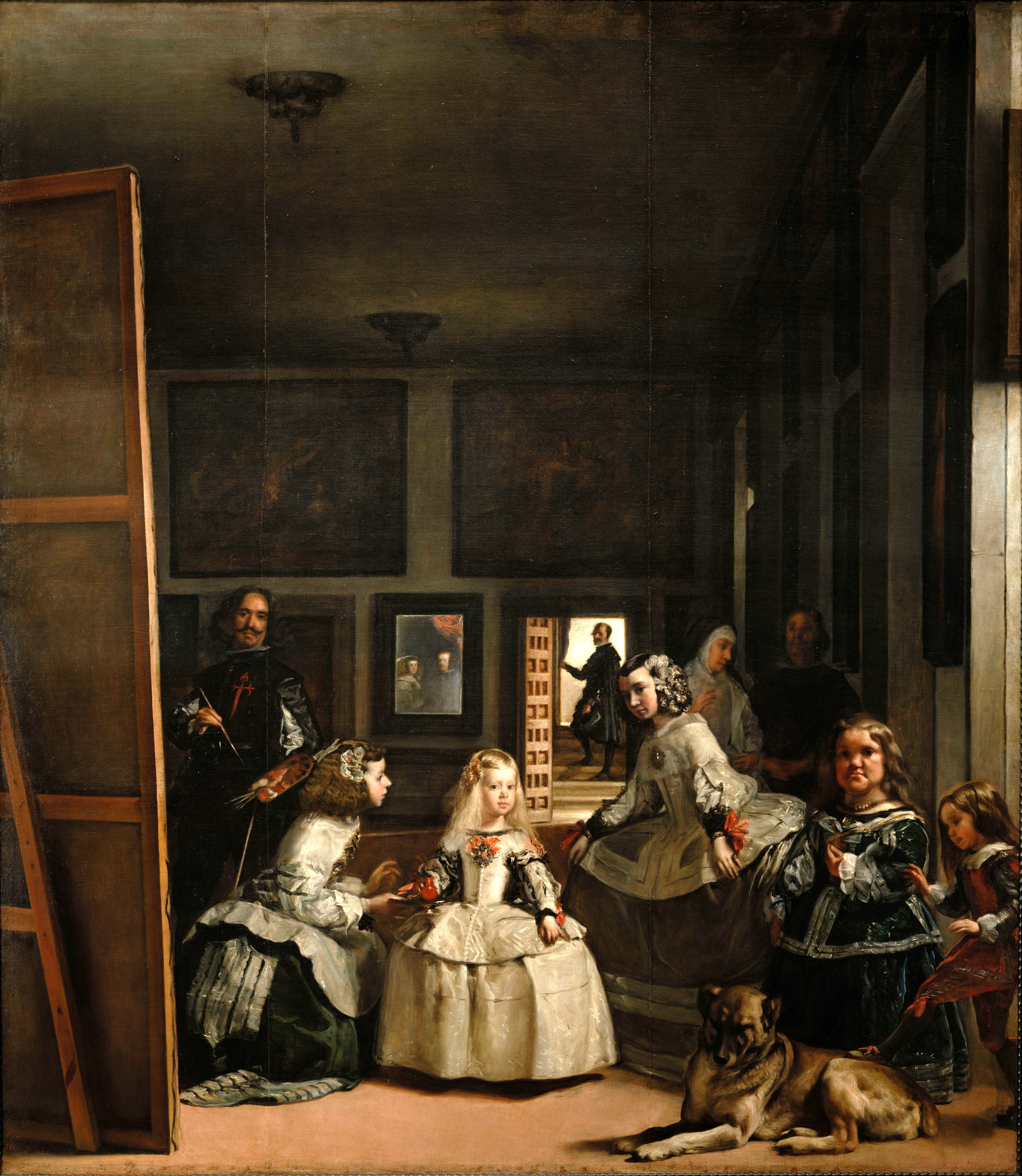
that is Las
Meninas, the great ensemble piece, Los
Borrachos, or even the wonderful portrait of Pope
Innocent X, & choose his portrait of Juan
de Pareja instead (below). It is a painting that, like many of
Rembrandt's, has psychological depth & will never tire the way
perfection can. (Velazquez painted Juan Pareja's portrait to loosen his
hand before beginning Pope Innocent's painting.)
The pose for Juan de Pareja's portrait was
first used by Titian in his Man with Blue Sleeve (below).
Titian died in Venice some 25 years before the others were born
(Rembrandt & Velzquez were close contemporaries). Rembrandt
used the pose after encountering an engraving of Titian's painting for
his Self Portrait at 34 (below), &
Velazquez (who may have seen the original in Italy) for his portrait of
Juan, a mulato painter who worked for Velazquez in his atelier. Of all
Velazquez' work, this portrait comes closest to Rembrandt's technique
& human insight—perfection inspires awe but some
things go deeper than amazement.
(Click images for high resolution in new
window. For a closer look without leaving this page see the detail of
the left eye beneath the portraits. All three painters favoured a
rough-toothed surface—especially as they grew
older—but note, in the detail, how Velazquez' precise hand
(fewer layers to get it right) leaves the Hessian canvas visible.)
--
monday june
3rd, 2013
Of Dogs and Men
(570 words)
When a dog lives in your house its every action is guided by human
rules. Don’t get up on the furniture; wait until your
pack’s leader decides when, & how much, you should
eat;
don’t bark when your instincts tell you danger
threatens—your human will decide that for you.
Don’t jump
up, don’t beg, don’t hunt, don’t forage
in the
kitchen garbage bin; decide for yourself where you want to go, as long
as it isn’t further than leash or fence allows.
But when you take a few dogs for a ten mile walk in the mountains or
countryside, even when they are dogs that don’t belong to a
pack,
who don’t live together, everything changes.
Their purpose is different to mine, they aren’t impressed by
the
beauty of the landscape, they only see the outing as an opportunity to
capture prey. And they know that you, the bipedal creature, is useless
in a hunt; slow, noisy & with no olfactory sense to speak of,
&
so, they take over.
Instead of following you from room to room, lying beside your chair or
bed, they take the lead. I remember observing a martial organisation in
an impromptu pack made up of a Golden retriever, a Dachshund &
a
‘Ratero’, a small & wiry Spanish
‘rat dog’
of the kind commonly used by farmers in Cádiz to keep their
lands free of mice.
Between them it only took a few minutes to voluntarily establish rank,
the smaller dogs recognized not only that the Retriever was stronger
& swifter but also that she had the better sense of smell. They
trotted along in formation twenty paces ahead of me, the Retriever in
the lead—the Ratero sometimes climbed a rock to see further
since
her short legs limited her view. But when the Retriever slowed
&
pointed, both Ratero & Dachshund would stand stock still
waiting
for her decision, she knew there was a rabbit (or something) on the
other side of the cactus copse which they couldn’t intuit.
As soon as the Retriever broke her stance to run around the far side of
the cactus the Ratero would run the short side, while the Dachshund ran
straight through, under the thorny pads rabbits use to hide from
predators.
And yet, though they seemed to ignore me, they would, if I changed
trajectory, & without looking back, turn with
me—still
respecting my rank though snobbish about my limited abilities.
Unlike me also, it is impossible for them to get lost on the way back
since they can smell the traces of our passing hours earlier. I have
found myself relying on their sense of direction many times when my own
weak orienteering skills weren’t up to the task.
Since, at home, my dog depends on me for everything from food to
safety, & must, often, fight its instincts to obey my
decisions, it
is good for her mental health (& my respect for her) to give
her
opportunity to behave in the way she was designed for; to give her the
occasional chance to follow her gene’s dictates &
feel the
sense of dignity & purpose she deserves.
The pride a dog feels when it lays a dead animal it has hunted at your
feet, after being fed dry or cooked food every day by you, is clear; he
is no longer a grateful slave but a partner.
friday october
12th, 2012
A Brief History of Books (2100
words)
Sometime during the 12th century before the Common Era, 3200 years ago,
there really was a war between Greeks & Trojans; aside from
Homer
we have archaeological evidence. At that time, referred to by
historians as Greece’s dark ages—after the fall of
the
Mycenaean civilization—the city-states (& other
political
entities) that made the loose confederation that we call ancient Greece
today, had no alphabet. In the 9th century before Christ
Greece
adopted the Phoenician script & adapted it so well that though
originally intended as no more than a means for record keeping in
trade, the resulting Greek alphabet spread throughout occidental
civilization.
A scant century later, in the 8th century BCE, Homer gave us the Iliad
& the Odyssey which recounted the events of the war,
already four centuries old, its heroes & the gods’
involvement in it.
Homer did not invent a brand new way of using their nascent writing; he
did not invent ‘the hero’ whose description he so
indelibly
coloured our culture’s understanding of. He did not
invent
plots that urge the reader forward, nor did he invent the Dactylic
Hexameter it is written in, he simply took an oral tradition &
committed it to paper for the first time (as far as we know by
reference to older writings by later writers, there are
other, older, texts that were destroyed or are still waiting to be
found).
The poets of those days were not sensitive souls brooding alcoholically
in solitude as today’s stereotype posits. Just the
same as
those of the Indus valley to the east (who wrote sacred texts that
described a war already millennia old as format in which to define
man’s role in society & the cosmos, around the same
century
as Homer), poets of those times, both Greek & Indian (an India,
like Greece, not yet unified), were also bards &
musicians.
The Homeric tales & the Mahabharata are written in metres that
fall
in with a natural breathing rhythm & were sung or chanted
accompanied by music & acted out through emphasis of the
orator’s speech. The formal rhythmic structure kept
those
who memorized the stories fairly true. Each bard might
embellish
or add six lines of his own but he would have to compose them
purposefully unlike the liberty for improvisation allotted to the
story-teller who uses his own words.
In Homer, the poet's, words, Odysseus says:
All men owe honour to the
poets—honour
& awe, for they are the dearest to the Muse
who puts upon their lips the ways of life.
These poet-story-tellers gathered apprentices who, with years of
listening & reciting, each learned in their turn the same
narratives. Although Akhilleus (Achilles) was surely an
outstanding warrior, it is doubtful he was actually son of a
Goddess—the embellishments, the philosophising &
mythologizing, must have come a little at a time between the
soldier’s own stories to Homer’s version four
hundred years
later.
By the fifth century BCE the performance
by the
story-teller had evolved into theatre. It was for ancient Greek theatre
that, finally, punctuation was invented, to help the players in their
inflection & so they would know when to take a deep breath for
a
long soliloquy.
Although we don’t even know if a man called Homer actually
existed it seems to me that he was likely a singing poet, famous to his
generation for the stories he performed who, in old age, turned to
writing them down.
Can you imagine lying back in the hours after supper cradling a cup of
watered & maybe, honeyed, wine if you were in ancient Greece,
or
perhaps a bowl of Ragi (fermented Barley) if you were in India in the
same century, & spending a month or more listening nightly to
the
bard & his musical troupe recite in high poetry the epic deeds,
heroic thought & philosophical doubt of your forebears?
Compared to the snippets of story-telling a two hour feature film is to
us today, it must have been a life enriching experience.
As much as I love movies even including the best of them in what I
agree is the—still disputed—seventh art form, we
talk of
the necessary ‘suspension of disbelief’ as a
requisite,
inspired or not by the quality of the film, to enjoy it. In
other
words, a repression of imagination that allows the movie-goer to
immerse himself in the story the movie tells. If we were
listening to a verbal recounting instead, it is the engagement of
imagination, rather than its suppression, which gives us the greater
pleasure; that involve us in a way that makes it more difficult to
distinguish from actual experience.
In Homer's day each listener had a different interior image of
Achilles, all formed around the stories they heard but individualized
by each listener’s unique imagination; today he looks to most
of
us, in our mind's eye, like Brad Pitt since the film did the job for us
leaving our imaginations obsolete.
Story-tellers were capable of memorizing chunks of history in
beautifully composed poetry 10,000 lines long; an impressive feat
looking at it from a world where poems are kept in books & we
have
trouble remembering our passport & credit card codes, our
passwords
& telephone numbers.
Finally, in the third century before the new calendar, our calendar,
Socrates complains about the spread of books (more on Socrates
&
books in the essay
below—October 31st, 2011) &
their deleterious effect on the intellect. True to his
principles, his opinion about books along with the rest of his words
would have been lost to us if his pupil, Plato, had not written them
down for him—and us.
In the 2nd century BCE, Rome takes Greece by force, muscle over mind,
ant-like efficiency over human spirit, but Greece’s influence
over its victors was as insidious as it was profound. The
Greek
slaves were not treated as the Ethiopian (et al) were in the Roman
Empire. Greek doctors, philosophers, political theorists,
mathematicians & other learned men were used as advisors to
powerful Romans & teachers to their children.
In the first century BCE Horace writes: Graecia
capta ferum victorem cepit, Greece, after it was captured,
captured the ferocious victor.
Rome imitates Greek art, becomes pious to their gods &, above
all,
the Roman loves to write. We know all the details of epic
political movements across centuries of Roman history, the lives
&
thoughts of its leaders as well as the recipes for their meals
&
even the cost of the ingredients because Romans wrote so much.
Among them were great thinkers, inventors, biographers & memoir
writers not to mention historians but none excelled the Greek artists,
philosophers & students of nature. The Greeks had the
advantage, I suppose, of being as influenced by India & Asia as
they were by Europe; the Romans, though multicultural within their
empire, remain essentially Mediterranean.
Aside from books they also kept a sense of the importance influencing
with speech had, face to face with an audience. It was they,
despite the spreading use of the written word, who formalized rhetoric.
With the fall of Rome in the 4th & 5th centuries CE, roads
weren’t maintained or policed, trade dwindled, coin was no
longer
common across borders & societies became more
isolated.
Europe fell into a long period of illiteracy.
Still, the written word was cherished, largely by monks, some with
extraordinary talents, as religious texts were copied, adorned
&
bound for the ages. To the east of Europe & in its
south, the
rising Muslim world wrote tomes of science, wisdom & beauty
whose
calligraphy reached heights otherwise only striven for by the Chinese,
so valuable was the written word to them.
As Europe again organized itself into states that traded with each
other, they recovered their ancient history & looked
forward.
The 12th century brought Gothic Cathedrals & the rise in
production
of cheap linen & cotton paper (because of the introduction of
the
spinning wheel invented a century earlier in China) to replace costly
kid-skin vellum (the best was foetal); the 13th century gave us a
common enemy in the Mongol Empire, the Magna Carta & Cimabue
who
broke with Byzantine tradition to start the Italian Renaissance from a
small studio in Florence.
The 14th century heralds Dante whose Divine Comedy,
written in Italian (a phonetic transcription of spoken language, i.e.
there was no dictionary) instead of Latin, puts books in the hands of
the layman. In the same hundred years Chaucer also publishes
in
dialect & Wycliffe translates the bible to English for the
first
time (after Wycliffe’s death Pope Martin the 5th has his
bones
exhumed, crushed & thrown into the sea).
In Strasbourg at the start of the 15th century, Gutenberg invents
moveable type & suddenly books no longer had to be copied out
or
carved in wood a page at a time on blocks that wore out after a few
hundred printings. Books were no longer precious things read
at
lecterns only by the privileged. The book was abruptly
available
to nearly anyone.
The printing press becomes used mostly for popular literature,
almanacs, erotica, newspapers, but the man with a library still carries
the semblance, the scent, of the kings & popes who were the
only
library owners up until then.
When the Dutch create a lucrative market
for printed maps, the Italians sail to survey coastlines.
A fine turn of phrase circulated quickly, our English of today is still
strewn with Shakespeare’s expressions, metaphors &
descriptions. He seems to be at his best when he composes
phrases
that signify nothing at all but make each reader’s
imagination
reach the same meaning: as merry as the day is long; even at the turn
of the tide; forever & a day; fancy free; green eyed monster;
hot
blooded; primrose path; sorry sight… we remember these
phrases
not because of the efficiency of their descriptive qualities but
because we thrill at the play of imagination necessary to divine their
meaning.
The middle of the 19th century saw the invention of paper made of wood
pulp by the Germans, the cheapest alternative yet which made books even
more attainable & disposable (wood pulp’s acid
content means
it decays in under 50 years). By the end of the same century
literature is divided between escapist silliness read mostly by women
(not serious men unless, of course, they were Russian) in the form of
the novel, &: books of information, the sciences (whose
fundaments
were new to that era), philosophy & the classics.
In the beginnings of the 20th century something happened that had a big
influence on the role of books in people’s lives, film was
invented & spread like wildfire. It wasn’t
until
mid-century though, that moving images were brought indoors.
In a
time so short that some of those who remember a television-less world
still live, every house has an ‘entertainment
centre’ but
very few have libraries.
Of the minority who still make a committed reading public even the most
ardent share reading time with television or videos viewed on digital
screens.
Here in the ‘States television is even more ubiquitous than
most
countries, they are in every room, they are slept with & are
left
on even when no one is watching them, left to feed one’s
subconscious a steady stream of irrelevancies—an ugly
&
cacophonous soundtrack for life. I notice my thoughts crowded
with snippets whose source I sometimes have to locate consciously as
having come not from experience, not from the carefully composed,
edited & published works of some great mind but from Sheldon on
Big Bang Theory (thought fragments that distract without
leading anywhere—they numb the creative numen).
Digital books are hardly worth mentioning in this discussion because
though mass produced paper made a difference to the distribution of
books, digital media is only another means of reading the written word,
it doesn’t, as I see it, change reader’s habits.
I may be a simple Luddite clinging to things past, unable to exchange
the greater efficiency of modern information sources for the written or
spoken word but the fact I can remember multi-evening plays I listened
to on shortwave from parts remote, thanks to the BBC world service; or
Alistair Cooke's wonderful, weekly Letter from America which
I use to tune in for—before
satellite feeds made the world service redundant—better than
I
can remember what I saw on television last night, gives me
pause.
If you don’t need to engage your imagination ‘the
story’ will always be a vicarious experience instead of a
personal one.
friday october 5th,
2012
Fish crossing
(230 words)
Yesterday I saw two fish crossing the
street. I, &
a Crane nearly as tall as me, stopped to watch them. I think the
Crane's interest in the fish was as food, but though he stood so close
that I might have reached out & grabbed him by his impossibly
thin
neck, he resisted, I suspect, because of my presence.
The brown fish, scale-less Catfish about
seven inches
long, wiggled their way forward with great effort stopping from time to
time to catch their breath. Nearby was a turtle so big that when he
slowly ran away for fear of me, his fin-like legs
labouring—his
head looking over its shoulder at me, & tried to hide beneath a
garbage container, he found he didn't fit & so, retreated
inside
his shell to impersonate a moss-covered rock instead. It must have
taken the fish ten minutes to slither across the wet asphalt (it had
been raining) before reaching the storm drain they happily threw
themselves into.
On our way back (I was walking my dog) I
saw thirty or
forty chattering parrots on a high tension cable & a little
further
on, the same electric wire weighed down by a large Falcon undoubtedly
looking at the parrots the way a redneck eyes a Big Whopper.
The best part of Florida is, without
question, its animals, & I am not talking about the human
variety.
monday
september 24th, 2012
How to Slow Global Warmingat Home (790 words)
I had a thought the other day & so
looked up some
data to see if my idea was any good &, sure enough, a study has
been done; figures are available. The idea came
to me when
thinking of the mown-grass lawn, that left-over Victorian symbol of
threatening nature, domesticated.
Unless one needs a surface to play croquet on, I don’t see
clipped grass being more desirable aesthetically than indigenous flora
left to its own devices & natural cycles.
Yes, I am championing the weed & tall grass, not only for their
beauty but because, if we let our lawns grow—all 128,000
square
kilometres of them in the ‘States alone, more irrigated land
than
the U.S. dedicates to corn—they could do their part in
slowing
global warming, at least making up for much of the harm that has
otherwise been done by covering far larger swaths of earth in concrete
& asphalt. The natural cycle would fertilize the earth
naturally.
If wild growth on lawns reached knee length its oxygen production would
increase ten-fold. Insects would proliferate; the common honey-bee
might be brought back from the brink of extinction (in the
wild).
It would be a boon to birds & lizards that eat bugs &
on up the
line to the ultimate natural-resource consumer: man.
REVOLT! REBEL! Just say NO to mowing your
lawn! Put a sign up so that your neighbour knows it is an ethical
decision & not suburban irresponsibility.
No more symbolic nature, green but cowed, no more harvesting grass
clippings in exchange for the efforts of planting grass, no more
pesticides or herbicides or synthetic fertilizers used outdoors by
private households.
Governments talk of the impossible expenditures involved in satisfying
consumer desires when all it really takes is a small change of attitude*,
a grass roots effort, so to speak, to see that it wouldn’t
take
real sacrifice by the individual to stem the runaway effects our
runaway population is having on a planet increasingly choked in
plastics, concrete, asphalt & all the gases & dangerous
chemical compounds manufacturing & using our unnecessary
devices,
including lawn mowers, cause. (How many lawn mowers does it take to
keep 128 thousand square kilometres, 50,000 square miles, of grass
short? How often & how long are they run?)
The scientists wring their hands &
tell us "Come on
you guys, I'm not joking..." the time is nigh but we look at the sky
& can't see any changes. Still, the waters are rising, some of
the
Maldives islands have already sunk; the Artic ice measures half of what
it did in 1979 (first satellite photos); the United States also will
soon be castrated when Florida is overcome (some say that 3 more inches
of rising ocean, like the 3 we've already seen, are all it will take
for the land that is southern Florida to become sea).
Don't you think it odd that the candidates
for
presidency of the world's most powerful nation, the nation responsible
for the majority of greenhouse gases, campaign on debates over gay
marriage, stem cell research (aka Christian morality) & the
right
to abort babies but neither Obama nor Romney has mentioned what he
thinks about the destruction of the world? When we are, in the end,
flooded by the crisis, all seven thousand million of us, one of the
solutions taken seriously by at least some in our scientific community,
is throwing up so much dust into the air that the sun is obscured
enough & for several years, to allow the atmosphere to return
to
its natural balance. Of course this would also result in widespread
famine among other things & may not even work.
Who knows? Maybe it is better not to
worry, maybe there
will still be time after something dramatic that people notice
happens... maybe they'll invent something...
*
Like the one that
occurred suddenly from one day to the next sometime in the eighties;
women in countries with cold winters went from considering fur coats
extremely desirable for their warmth, comfort, beauty &
prestige
(due to their expense), to despising them as symbols of cruel treatment
to animals. Hendrix, Joplin & Morrison all wore fur. Why did
the
change come about? Because, for the first time, we realized the
finiteness of natural habitat & the species of animals that
depend
on them.
The same is true for Chlorofluoro
Hydrocarbons. While
governments, who worried first about economies, made thirty year plans
to incrementally phase out their use, companies that put more expensive
versions of their sprays without CFHCs on shelves, found that consumers
chose to spend more in order to save the Ozone layer. It is us, you
& I, not short lived, self serving governments, who must make
changes.
satuday
september 8th, 2012
New painting, Coyolxauhqui,
the goddess, some say, of the milky way. Oils on canvas 132 x 120 cm
(4'4" x 4') (larger image)
tuesday august
14th, 2012
New painting: Africa. Oil on canvas. See
full size: 2700 x 2600 px (3 MB). (With
artist for scale.)
tuesday
june 19th, 2012
Little more than a week ago it was this
blog's sixth
birthday. I miss making more frequent entries. Up until recently I have
been concentrating on my longer fiction projects (I am working on a
second novel or, perhaps, novella, I'm not sure yet) but have had to
interrupt progress for an interesting offer that has reached me as
painter, not writer.
My team & I have been wrapped up
in the exciting
project all of this last month. It is a big contract with a large
company—that I won’t name here—that
contacted me to
prepare a proposal. Although our focus has so far been mainly
on
legal, contractual & budget concerns, my design partner (Bobby
Porter)
& I have been working on sketches for a plan we think will be
bold
& original as well as being a reasonable approach to covering
10,000 square metres (107,000 square feet) of wall in the time
allotted. The final drawings will be done to scale &
transferred by silk-screen to porcelain enamelled steel panels for
installation. If you would like to see our rapidly increasing number of
sketches & slowly evolving style click here.
friday march
30th, 2012
How to look at paintings
(1350 words)
I once read about a study whose
conclusions stated that
the average time spent by a museum visitor looking at any one painting
was three
seconds. I don’t know how the sum was calculated. If they
simply
divided the number of paintings on a visitor’s route by the
total
amount of time spent in the museum then the figure would be skewed
since we don’t stop and look at every painting. But yet even
if
we multiply the three seconds by a few times the resultant figure still
tells us one thing clearly about the visitor’s experience of
the
paintings: he looks at each only long enough to understand its subject;
it is a man on a horse or a ship landing with some noble personages
being received with pomp. Some mermaids lift themselves from the waters
below to moor the galleon while an angel floats above, that sort of
thing. If one is familiar with the history of the times he might notice
those receiving the guests are French by the golden fleur de lis on
blue ground of the bowing man's cape. Or the ship's coat of arms: the
six pills of the Medici family. A little more time invested shows one
the trumpeters (aboard & in the air above, with brass,
& in the
water with a conch shell), while below, where Neptune directs the
sirens, a canon shoots a celebratory volley, & suddenly the
silent
painting is filled with boisterous sound, breaking waves &
salty
air—in the viewer's imagination. Before the devaluation of
'the
image' I'm sure this kind of synaesthesia was the norm. Behind the
gentleman with the Maltese Cross on his chest, hardly visible amid the
ornate carvings of the stern, a lascivious sailor looks down at the
mermaids. All of this is available even to those who don't understand
the 'art' of it.*
Any other consideration, like understanding the composition or how the
figure’s torsion and placement guide the viewer’s
experience of it—how the light and shade add drama or
tranquillity—how the emotions and character are captured in
those
depicted and their interaction with each other or the colour balance
controlled by the painter’s unique palette. The finish, the
texture, the brushstroke—glaze, bravura,
frottage—the
painter used to express the play of light or the mood of the whole. The
surfaces, shiny, furry, rough; cotton, satin, silk, skin, hessian,
leather, metal, wood, ceramic, each painted in a way the spectator
finds unremarkable unless it is badly done. The dominion also that a
painter has over the viewer’s understanding of these
illusions.
Look at a Rembrandt portrait clothed in wool, lace and fur and it seems
they look like wool, lace and fur because he has copied how they look
in real life; but approach the canvas more closely and marvel at the
few select brushstrokes that were capable of fooling you. These
pleasures that art offers, and many more, all take longer than several
seconds to appreciate. The
Prado in Madrid holds an important collection from Europe’s
long
art history, generous numbers of Riberas, Zurbaráns, Goyas
and
what I personally consider the single painting that comes as close as a
painting can to perfection: Velázquez’ Forge
of Vulcan.
And yet, year after year, the results always show that the
most
popular painting in the Prado's collection is Hieronymus
Bosch’s Garden of Earthly Delights.
I don’t mean to deride poor old Bosch and his production of
painters for his painting factory (four painter sons), but only to
point out that again the painting’s popularity leads us to
the
same conclusion: Bosch offers hundreds of whimsical little figures,
human and animal, to while away a few minutes looking at. He even
offers little rewards to those who look long enough, hidden
figures or interactions between them or humorous details, a man being
eaten by a clam—only his lower legs still visible, or a pair
of
ears carrying a dagger & suchlike. I love Bosch, his
painting
is delightful but if you subject it to a scrutiny like that described
above, going beyond the subject of his painting, you find it has very
little to offer. It is simply a sophisticated game of
‘Where’s Wally?’
As you approach the painting from a distance, before you divine the
hundreds of curious little figures, you see the plodding, unimaginative
composition centred in the middle of the central panel &
reflected
to either side; the perspective is haphazard, the colours workmanlike,
their relationship, unconsidered. The charming figures don’t
share a light source; indeed, they have just enough shadow to define
their shape while disregarding natural light or anatomy. Bosch was
interested in symbolism (much of whose meaning has been lost) and
visual puns, not art—and his triptych is a wonderful,
imaginatively conceived, patiently laboured, giant doodle with a
cryptic message.
Another
painter popular among the art-uneducated is the twentieth
century’s most successful buffoon among the many playing the
role
of artist, if not actually getting at the matter of it: Salvador
Dalí. The average museum goer may not know what all the fuss
is
about when looking at a sombre portrait by Titian, but can wonder at
Dalí’s soft clocks and if he wishes to, he can
attach any
personal meaning that is significant to him, like time’s
inexorability, or relativity, or cruel dominion over man’s
mortality, to feel the painter intended some deep philosophical
message. Dalí’s compositions are desultory, his
colour
theory elementary and his technique is that of a competent but trudging
craftsman—but he provides a subject to look
at—pandering to
those who don’t know what else to look for in a painting.
While
Manet reaches depths of beauty and mastery of atmosphere with nothing
more thought provoking for subject than a bunch of asparagus.
The neglect the twentieth century has introduced in educating a
painting’s spectator with the concepts one must understand in
order to enjoy what the painter has laboured to present to him,
has left the viewer wondering what it is all about. Why do we need art
anymore? He asks himself. Where is the relevance for paintings in a
world saturated with images of all kinds that bombard us from every
side?
One of the various reasons our society lost its interest in paintings
is because the end of the nineteenth century introduced the photograph.
But it wasn’t until the end of the twentieth that nearly
every
person on earth began to carry an image making machine in his hand more
often than Capa or Bressón carried their Leicas. In order to
impress him now we leave him to wander lost among sharks in
formaldehyde and unmade beds wondering what art is for but at least
entertained by its being new and surprising; and, perhaps more
importantly, he is amused by its easy controversiality—it
takes
no more than the opinion “it’s stupid” to
qualify as
valid art criticism.
*The
painting described is one by Rubens about which Delacroix (the leader
of the Romantic, or: 'Colourist' movement of the late nineteenth
century, opposite Ingres' neo-classical of which the elder David
D'Angers was the first proponent) described the water droplets on the
skin of the mermaids in Ruben's painting. I happened to be in the city
where the painting hangs when I was reading Delacroix's journals
&
so I went to see what he was talking about. It is a large canvas like
so many by the master's studio. It is painted to a high finish
& if
one stands at the appropriate viewing distance—rule of thumb:
three times the diagonal—every detail looks like it is
carefully
& exactly described. But if one approaches the canvas as
Delacroix
suggest we do, to see the water drops on the mermaids' skin, he finds
three small brushstrokes that hardly touch much less are they painted
carefully in a teardrop shape as one expects. Red, green &
white.
Rubens knew his craft so well that he could trust these almost
impressionistic daubs to merge in the viewer's eye to form a glistening
water drop. return
friday march
23rd, 2012
Raskolnikov
(2000 words)
Bobby
the painter wrote to me with an interesting point about the essay below.
Why, he asks, would I criticize a wide-spread empathy incited by
television—or perhaps more to the point: an empathy spread
wide
(extending globally, there is no longer a spot on earth where there is
a man but not a moving image camera & a screen to watch them
on),
but not the emotions one feels for Raskolnikov, for instance, a
fictional character born of Dostoyevsky’s imagination.
Before I address Raskolnikov, television & Bobby’s
germane doubt, I will try to clarify a basic notion.
The idea the rest of the aforesaid essay stemmed from is actually one
that occurred to me in an essay from a year or two ago; since then the
hypothesis has grown in interest for me. I don’t think I
explained myself in either case—the recent essay or the
original—well enough to make the point I wanted to.
We humans share, to differing degrees, certain socio-genetic tendencies
& instructions. A man might, for example, be inclined to think
a
woman has a nice personality because, in reality, he likes the shape of
her glutei maximi or the relative dimensions between her chest, waist
& hip. A woman might feel
a man will protect her because he has big muscles. We have all met
someone at some time who behaved in every way normally, was courteous
in every detail & yet we felt we did not trust him, or that
there
was some hidden malignity he had shown no visible manifestation of. A
result of a micro-gesture perceived & judged by our
sub-conscious
unbeknownst to the forebrain? Theory of the Mind in action? Or perhaps
a result of a cultural prejudice from early indoctrination or an
association with a forgotten experience. At least some of these
interactions are controlled not by the mind but by
instinct—by
genetic mandate.
The most basic of these natural urges, like the first two examples
above, are those which serve the purposes of procreation. And since we
procreate so much more successfully when we live in groups, the second,
like the last example (in its genetic version), guide our behaviour
toward tendencies that allow groups to form.
Since not all social give-and-take is direct—in many cases
one
gives today in hopes of receiving tomorrow; parents might hope their
children will care for them in old age, for
example—developing
good judgement in matters of trust is crucial to all of us. And, it
turns out, we are hard-wired by our genes to analyze the mystery that
is other people; which in most of its ramifications can be traced back
to the root: can I trust him?
The advantages of the community over the individual alone include
security, the efficiency of collaboration, the delegation &
specialisation of certain members of the community for the benefit of
the rest. Instead of making one’s own bread every day or
expecting the baker to grow his own wheat, he makes bread, we pay him
with the wheat we grow (or the equivalent in currency).
The glue that binds us together for these purposes & more,
despite
our crotchety, invidious & greedy natures, include the joys of
companionship, the solace in sharing the sometimes bewildering,
sometimes scary, experience life is. There is also the sense there are
others who will stand by us in a fight whether it be your neighbour
against a burglar or your country against another. As well as the
altruism one can rely on receiving in certain circumstances from his
community, which is really reciprocal altruism. I give to you with no
strings attached & you give to me—with no strings
attached.
Despite the lack of strings the system falls apart when one stops
giving back. Even when we give a coin to an unknown mendicant in the
street we give ourselves a little pat on the back for the very
anonymity of the deed, though many of us feel
some good will come back to us because of it. That is our genes talking
to us. Since altruism helps glue the community together it is also good
for the individual.
Our empathic abilities, however, those which incite us to acts or even
just to feel sentiment for another person, fluctuate wildly according
to our community’s circumstance. In a small town there is
room
for the village idiot, for the wife-beater, the drunk who cannot feed
his family & even the enemy—all within the domain
&
responsibility of the group. In a big city where one might be asked for
a handout every couple of hundred paces by people in need (whether of
food, alcohol, discipline or shelter is inconsequential) he gives his
limit & ignores the rest. He ignores not only their requests
but
also their need, the trigger for his empathy. When mother Theresa acted
out of empathy until she had given all she had, all the moments of her
life, did she continue to feel empathy? Continue sharing the suffering
of each of the thousands who passed through her hospitals? Or did she
relax her empathic disbursement? A more extreme example is the capacity
for a gentle & sensitive man to become completely inured to the
mutilated human carcasses that litter the street between the baker
where he buys his bread, & his home, in wartime.
Empathy is a powerful emotion that can move one to act heroically, or
regret he didn’t. It can save lives or make them more
bearable.
It can also be a large expenditure of one’s resources,
emotional,
cognitive, temporal & material.
These genetic triggers formed to assist us in living together, can be
precipitated by many things. Like laughter which the theory has is
nature’s way of saying ‘everything is
okay’. We laugh
when someone slips on a banana peel, but only if he gets back up. The
laughter can be translated to: it looked like there might be a person
in need, but no, everything is okay. Except for empathy we would find
nothing funny about someone falling down unexpectedly.
Since we are rabidly territorial animals I think our shifting sense of
territory—on a New Delhi train one’s rightful
territory is
smaller than one’s own body; in a car it can extend to the
harmless act of someone putting a foot on its bumper; on a ship,
boarding without permission—has a great effect on some of the
triggers that make us act in inappropriate ways. Where in the big city
we learn to shut our empathy off at a personal limit, if the mendicant
were in our home, on our territory, we would be far less likely to be
able to ignore his need. This is where my theory about television
triggering our empathy comes in; because our genes know nothing of
televisions & so only see a person within our territory who
pulls
our empathic strings.
I remember when I was in the ‘States recently, where
television
is made up in good part of morbid voyeurism, an image I caught
accidentally that will stay with me the rest of my life. The large
screen filled with a close up of a face bigger than life size of an
obese man. He weighed as much as some cars & was bedridden. The
tears ran freely over the huge face as he repeated with heart rending
anguish: “what have I done to myself, what have I done to
myself?”
The people around me were not as impressed as I; indeed, they
weren’t affected at all, or even drawn to consider the tragic
image of the suffering man. The difference between them & me is
not
that I have an extraordinary capacity for empathy in comparison to
them, but rather that I was the only person in the room unused to
seeing such things.
If it were correct to empathize with all those people in worse
circumstance than our own just because they are presented to us on
television, why not all the people in the world? It is an obvious
absurdity, caring about everyone in a poor situation would paralyze the
empathizer (i.e. exhaust his emotional resources) & be a matter
of
complete indifference to those empathized with.
An actual example to illustrate comes to
me. I was at
my sister's house in Los angeles, we have a difficult relationship
though we both wish it were easier. She called me into her room as I
passed by her door telling me I 'had' to see what she was watching on
television. It was a show about a young man who had killed a six year
old boy when he himself was eight or nine. He was now twenty-one
&
there were people campaigning for his release. Details of the abuses he
suffered as a child from his parents were delved into & I still
remember his face looking into the camera at his present twenty-one
years & saying: I did it because I wanted to, I felt very good
afterwards. I must have sat there, on the edge of my fifty year old
sister's bed, for half an hour or forty minutes of sheer
suffering—I not only didn't want to spend my time or
emotions—the former limited by mortality the latter by
character—that way but also I didn't want to imprint,
indelibly
as it turns out, the images, thoughts & acts of this rotten
young
man on my mind for the rest of my life. I sat through it because it was
a sharing of sorts with my sister. She, on the other hand, was entirely
committed to the experience & cried with deeply felt sympathy
for
the poor young man. The point is not our differing judgements of the
protagonist of the documentary but that she chose to spend all that
emotional energy in my silent presence instead of say, playing a hand
of Rummy with me as we used to when we were children. Although I
remember the child-murderer, I bet she doesn't. A clear instance of
caring about the wrong person, someone far away that has nothing to do
with you while someone who does sits ignored nearby.
So, either one is expending energy empathizing with those people who
are none of his business or he turns empathy into a cheap thrill, a
sensation he feels while watching other’s misery or stupidity
or
bad luck on television & can conveniently forget afterwards.
Raskolnikov is not a cheap thrill, a momentary emotional buzz, or even
an emotionally vicarious one. Being presented to Raskolnikov by
Dostoyevsky is an honour one doesn’t soon forget. We
don’t
just get to know him as you & I might know one another, we get
to
be Raskolnikov. His thoughts, deep & superficial, his doubt
&
decision, his philosophical delusion & rationalism, his valour,
his
cowardice, his delight & guilt. All within the context of
Fyodor’s world, so artfully described that it turns reality,
that
is, the time not spent reading, into a cheap paper cut-out for as long
as the book lasts & sometime after. Whether he is a fictional
character or a real one is immaterial. It is far more important we live
the emotional range offered by Raskolnikov than devote it to the
emotional shock tactics of a remorseful fat man on a twenty-six minute
show meant as entertainment. Or, for that matter, an entire country of
poor souls suffering from war, disease or catastrophe.
Drawing entertainment, or a tawdry emotional jolt—shallow
&
tolerance building—from the suffering of a morbidly obese man
is,
in itself, a morbid activity.
I don’t mean we should care less for other people but rather
that
we should care the same amount but for fewer people. We should care for
those close enough to be considered our business; those who can be
helped by the acts inspired by our empathy, in other words: those
relevant to our resources—within the jurisdiction of our
concern;
& let the others be cared for by those close to them.
tuesday march
6th, 2012
The Canvas
The reason my entries in this blog have
been so
sporadic these past months is because I've been devoting my time to
writing a novel, my first novel: The Canvas. To
help me
visualize what I'm writing about I sometimes sketch my characters
&
their settings. Below, Damian in profile. He is the old painter, failed
in his career, bitter, isolated from the world in the shambles of his
one room studio. The other character pictured in the second
drawing—listening to Damian under a bare 40 watt bulb in
Damian's
studio—is Rami, a talented young artist with a promising
future.
A series of coincidences overcome the improbability of a friendship
between them...
sunday
february 26th, 2012
Territorialising
territoriality (1440 words)
During my lifetime it has become easier to
imagine the
human race as a single organism spanning the globe. Each individual
human like a cell, contributes, even if unknowingly, to the
organism’s conduct. Just like the cells of a body, each human
is
compelled to do what he does out of personal interest but, unlike cells
of a body, humans are so badly organised in the collaborative sense
that the organism lurches blind in one futile direction &
another.
It seems we humans make up a body without a brain.
If I belabour the allegory further I might ask myself which part of the
body I, as metaphorical cell, might represent. There has never been
perfect leadership or a perfect human society anywhere in the world at
any time. I wish I could think of a big answer the way Marx did, but if
I am a cell I am not only not a brain cell but not even of the
neurological system.
With the economic crisis we have been suffering I find everyone around
me is suddenly an expert economist, political strategist or
sociologist, & they all propose vehement solutions…
in fact
it is difficult to find anyone without a definitive answer. I
don’t know how they do it but I am glad I don’t
have the
power of decision because though I have a few reasoned opinions, I am
smart enough not to recommend my own advice on questions so wide, deep
& impossibly complex.
We can see my metaphor for society more clearly, perhaps, if we apply
it to the pefection of an ant colony. The colony doesn’t care
about the sacrifice of the individual & the individual
doesn’t mind making the sacrifice for the colony. Each
individual
has a clear function in the defence, alimentation, fecundity &
upraising of the organism. The existence of a single ant without its
colony is as meaningless as a single muscle or skin cell.
But if we toy with the ant’s perfect society by say,
increasing
the number of individuals beyond the necessary, the system breaks down.
Similarly if we take the individual ant & blow him up to the
size
of a dog, not only does the system break down but even the individual
ant is crushed under his own weight by the effects gravity has on the
engineering of his anatomy.
Rather than leadership for our global society—the brain for
our
headless organism—I think we need to do the opposite. I'll
explain in a moment but if we begin by asking: Why do we become
societies? Why do humans reach out beyond the family structure to the
alliances of a tribe? And agree the answer lies in making sacrifices
like sharing food in a community instead of eating one’s
fill—in exchange of giving the individual greater strength in
defence; a new ability to hunt prey faster or stronger than he can
alone; the advantages of the division of labour along the lines of
ability instead of necessity; making, for instance, a small or old
woman, incapable of hunting or foraging her own food, valuable to the
tribe for her ability to make earthenware pots or stone weapons,
&
is fed & protected by them in exchange.
To the practical considerations like removing each other’s
fleas
from the spots we can’t reach ourselves, we might add the
pleasures of companionship, obvious even in simpler mammals. We might
also add crazy projects out of reach to smaller societies like,
travelling to the moon or trying to find a cure for cancer. The
advantages of the unlimited growth of this community, those which began
with Alexander of Macedon & have grown into global
communication
& transport, & hence: economic infrastructure, are
breaking
down our proper function as parts of an organism just as it does for
that of the hypothetical ant's.
The other day I found myself in a room with a television broadcasting
the news, a situation I would never allow if I were alone. Since I had
no choice I sat down & listened to it. The leading item of news
was
the third day Barcelona was suffering cooking gas outages because of
the freezing weather. The others in the room with me, accustomed to
this type of thing, saw nothing strange in it. In fact, despite my
refusal to watch news programs or read newspapers, I had already heard
about the gas problems in Barcelona. People here in Cádiz,
where
we sunbathe in February, commented on the cold weather problem in
Barcelona.
I, on the other hand, was both flabbergasted & resentful at
being
exposed not just to such irrelevant triviality, but more to the point:
to something which is simply none of my business.
You might say: “well, the temporary shortage in the supply of
cooking gas in Barcelona, really is a triviality that doesn’t
merit attention, but what about when the news is really bad?”
Well, I think that whether it be five hundred people killed in an
airplane crash or a child kidnapped by a pederast, if it lies outside a
smallish circle that surrounds me, it is none of my business. My circle
should include my family, friends, neighbours & maybe painters
I
admire, little more. And yet, if I see the crying parents pleading for
the return of their child on television, I will automatically devote a
good deal of my emotional resources to thinking about them &
feeling for them, until I forget about them, or until they are replaced
by some other compelling image of people far away from me whom I do not
know.
I think the natural instincts that allow us to form communities of
collaborating individuals such as empathy, reciprocal altruism, a sense
of responsibility, discipline, sacrifice of personal interest, are
excellent traits whose exercise offers great rewards. But these
instincts are too easily fooled into behaving foolishly by the
irrelevant information they are exposed to. We can extend them
successfully to family, friends, tribe, but after that their use is a
questionable drain on a system with very limited resources in questions
of altruism, sacrifice & discipline. One only has so much brain
space & emotional energy to invest in his life, it should be
invested wisely. To use one’s emotional resources to worry
about
a missing child a thousand kilometres from where you live, while you
haven’t time for your neighbour, is the wrong order of
priority.
The instinct to succour a child separated from his parents is a good
one but when it is triggered by an image on a television screen, though
it be on one’s own territory, it is not really people but
only a
two-dimensional image of people, far away and: ...none of one's
business.
A hundred years ago the only far-away news one could get was in fairly
unreliable &, by today’s measure, tardy, newspaper
reports.
But if the events happened so far away that it took a long time for the
news to travel, why would it matter to anyone if they weren't made
aware of it in real time? Now, we are bombarded with far-away news as
it happens even when one tries, as I do, to hide from it. Furthermore,
far away news can have an effect on us, like an earthquake in Japan
that affects American economy. But only because we want reliable cars
& they want muscly ones, or we want computer chips &
they want
cowboy boots, or whatever. There isn't any real reason both sides could
not do without, & far away earthquakes would cease being
personal
problems.
At the risk of sounding like a Luddite, & I fear, not for the
first
time, what I was suggesting earlier when I said: 'the opposite of
building a head for our organism,' I meant we could do with less global
infrastructure, fewer live satellite feeds, fewer television channels,
less tourism which eats, digests & excretes the cultures it
travels
to see. Or perhaps, expand Paul Bowles' personal rule & ban all
travel at speeds too fast to permit one to see the changes gradually.
Roads should end as they leave populated areas.
As our organism reaches for nine billion individuals inside of thirty
years I think back thirty years to when people talked of
overpopulation, quoting two & a half billion in awed tones.
We should, like the ants, know our limits, reduce our numbers; only eat
fruit in season; only eat livestock, no more emptying of rivers,
depleting of oceans or the further reduction of wild animal numbers in
the name of sport. We should have a dozen choices of car models instead
of hundreds. We should live headlessly but relevantly, care less about
those far away & more about those who are close.
What is it people want most from others in their society? The answer
is: they want others to be in agreement with their self-image. A poor
& difficult life can be made bearable by a family who share
good
perceptions of each other; while a rich & easy life can be
soured
by finding others think less of one than one does of himself.
We may enjoy it if other’s opinion of us is better than our
own,
if our boss thinks we are better at our work than we actually are. We
may even make some effort to convince others of an image of us better
than our own, by, for instance, never letting others see us without
make-up, hiding the true ‘us’—the one we
know—from others.
But the attractions of a betterment in our self-images by others is
limited, if it goes too far above our own estimation then it becomes a
challenge we may be called on to prove. A man might like it that his
wife thinks he is stronger than other men but does not want to be put
to the test too often.
Where we allow no leeway is in the other direction, we cannot stand to
find out others think less of us than we do of ourselves.
A self-image is a delicate thing, difficult to judge objectively
&
yet of great importance to our well-being. The distance between our
actual self-image & our ideal one is the measure of our
self-esteem. One might forget the time he ate the last slice of pie but
remember the time he offered it to someone else & therefore
think
of himself as generous. The other person might do the opposite,
remember the selfishness & forget the self-sacrifice.
Anyone exposed to varying situations will run into understandings
&
summations of his character by others which do not agree with his own.
He might, as a consequence, feel misunderstood, unjustly unappreciated
for his true worth. Or, alternatively, he might question his own
self-image based on others’ reading of it. Neither is
comfortable
or pleasant.
We naturally like to think that we are comprehensive in our characters,
that we are always brave, that we are always kind &
trustworthy,
that we are always attractive or charming. In fact we are all cruel
& kind, selfish & giving, attractive &
repellent & all
the other possibilities, but in differing degrees. Character is no more
than a collection of vague tendencies that manifest in different ways
according to circumstance.
We would like to believe that the times we can recall when we behaved
in a self-image-enhancing way, was the true ‘us’.
While
when we did something we regret, we want to categorize it as a mistake,
an aberration that forms an exception which does not define us. This
bending of reality is aided by the ease & pleasure we feel at
remembering the former & the facility with which we can chase
the
latter away when it rears its head to our mind’s eye.
When our self-image distances itself far enough away from the truth we
are labelled ‘mad’ by others & find that
the dissonance
causes us to make poor decisions that repercuss badly for us. Finding
equilibrium between what one wants to believe about himself &
what
he can
believe about himself, is difficult because of a combination of the
opinions of others which disagree with our own & each other,
&
the range of ways we react to differing stimuli. We might play the wise
man to the child & the humble student to the elder without
being
either wise or humble.
When Einstein was thirty & hailed universally as a genius it
might
well accord with his own understanding of himself without any psychical
dissonance but when he reached seventy & his surname was
established as synonymous to genius, though he hadn’t had
another
good idea in the forty year interim, the label must have been a weight
for him to carry.
Often it is enough to share a self-image with only one other. One
sample of all the perceptions of who one is that agrees with
one’s own closely enough to make all the others irrelevant. A
cruel dictator who is hated by all his people may find it enough to be
loved by his wife to feel he is not wrong about himself, she, after
all, understands him while the rest don’t.
Some people, like public figures who have expert image consultants,
professional public relations support & a structured marketing
of
their image, can closely control other’s perception of them.
Actors also develop not only subtle ways of expressing themselves we
mere mortals never learn, but they also cultivate a control over
gesture the rest of us are unaware of. A shy person commonly thinks of
himself as projecting an attitude of modesty while others see him as
simply, & in most cases, justly, insecure—a humble
person is
not shy because he doesn't fear or resent other people's low opinion of
him. Most people’s physical self-image is tied closely to
their
biggest personal experience: what he sees in his bathroom mirror;
precisely the image the rest of the world never sees.
So, what to do about this slippery question? If one can never be sure
his own understanding is correct &, furthermore, his character
is
really made up of tendencies rather than absolutes & is capable
of
acting uncharacteristically, of falling short & disappointing,
how
can we get a healthy grasp, an objective knowledge? Age might provide a
certain bird’s eye view, but it also colours old, repeatedly
reconsolidated, memories. The mythologizing nature of memories turned
over by a mind very different to that which had the experience.
If one is able to ignore all opinion but his own, so sure that
other’s conception of him isn’t as correct as his
own that
they never inspire introspection—so that he can say: "I don't
care what others think of me" he will be considered wrong at least some
of the time. But since he rejects others' opinion of him, they will
reject him in turn. Consequently, unless a man wants to live his life
alone he must admit differing views of his actions. The word
'unsociable' has inherent negative connotation that go beyond wanting
to be alone, & such a man, in the occident at least, will be
thought of as 'not sociable', i.e. unfriendly, which has an aggressive
quality absent in the word 'solitude'. In the Orient, by contrast,
there is a tradition of cutting off earthly chatter to open the path to
enlightenment. In the West he will be considered eccentric at best,
cantankerous & not a little crazy, at worst.
The Indian concept of Dharma removes
conflict, if not
difficulty, by defining correct behaviour not according to the
individual but rather his circumstance. A husband's Dharma will be
different to a son's, a friend's or an enemy's, though one man may fill
all those roles.
If, on the other hand, one considers
other’s
opinion above his own he will never become a holistic personality but
will bend instead according to the direction of opinion.
If one were able to make a comprehensive infrastructure covering all
one’s protocols of behaviour; & he was willing to die
before
deviating from any of them; & also he avoids situations where
his
personal rules conflict with those of others, like a cloistered monk, I
suppose he can
consolidate a character of unquestionable solidity. Anyone who
disagreed about who he is would be wrong. And still, where one might
judge a cloistered monk as a Saint securing God’s eternal
love,
another might think he is simply, pitifully & sinfully wasting
the
only life he has.
As painter I have found that since I am capable of making myself proud
as well as disappointing myself, that since I can be charming or
obtuse, right or wrong, the only thing that keeps me from the form of
madness mentioned earlier is that, regardless of all the conflicting
forms of me, I always have my work; it is the only thread that makes
me, undeniably & irrevocably, me.
tuesday january
31st, 2012
Dylan Thomas
on words
I fell in love [with words]—that
is the only
expression I can think of—at once, and am still at the mercy
of
words, though sometimes now, knowing a little of their behaviour very
well, I think I can influence them slightly and have even learned to
beat them now and then, which they appear to enjoy. I tumbled for words
at once... There they were, seemingly lifeless, made only of black on
white, but out of them, out of their own being, came love and terror
and pity and pain and wonder and all the other vague abstractions that
make our ephemeral lives dangerous, great, and bearable.
Notes on the Art of Poetry
1951
monday january
16th, 2012
Fifty (330
words)
Today I turn fifty; what a surprising turn
of events.
I remember a time when I was still
adolescent
& my father was fifty. We were exercising in a boxing gym when
he
turned to me, arms outstretched, & asked my opinion: "How do I
look? I'm not in bad shape, am I? I am after all, middle aged now." I
didn't begrudge him his curiosity, he was by no means a vain man
&
he had been a professional athlete in his youth. I did not have to
resort to a lie when I told him he looked very good for his age. But
inside I sniggered secretly to myself: "middle aged indeed! Who do you
think you're fooling? You are old." And so, whatever people might say
or however I might feel, I know I too am now old.
I remember also when I turned thirty. I communicated with my mother by
snail-mail, in the days when it was still called: mail. With ten day
delays between missives we corresponded between two continents. We
discussed age, my mother had just turned fifty & I remember her
saying it was an easier milestone than turning thirty had been. Now
that I too have reached the former I understand what she meant.
When young I wanted to be a poet but luckily for me, & the
world, I
discovered without undue delay that I had no predisposition or talent
whatever for it. I left the writing of bad poetry behind, though not
the reading of the good, for other pursuits I found suited my natural
inclinations better, & yet the urge sometimes still surfaces.
And
so, upon presenting my rhyme-less, graceless poem to you, as poor
&
spare as a nineteenth century orphan working a fifteen hour shift, I
can only beg your indulgence, it is, after all, my birthday.
fifty
death looming
knees aching
mind bright
life flavourful
the best moment
still
yet to come
sunday
january 8th, 2012
Ants & People
(540 words)
When we observe ants, they impress us with their sense of purpose. Or,
to express it anthropomorphically, they seem to work convinced that
what they do is of the utmost importance, far greater, for instance,
than the ant’s own life or, for that matter, the
next’s.
From the great heights of our greater neural complexity we can see what
the individual ant cannot: the only purpose for his single-minded
efforts is to produce more ants who will work single-mindedly to
produce more ants who will… etc.
The ant’s mission forms such a prerogative that if its
purpose is
taken away, say, for example, the queen, the only egg producer, is
killed, the colony of individual ants doesn’t, as it might,
go on
to concentrate on feeding itself & lying around on blades of
grass
enjoying the sun’s rays as the grasshopper does. Once its
purpose
is removed it curls up & dies.
We naturally see nobility in the ant’s absurd futility; of
the
millions of beings we might hold up, the ant is one of our favourites
for parable & metaphor alike & never as a symbol of
futility.
"Look to the ant thou sluggard; consider her ways & be wise"
King
Solomon admonishes us in Proverbs. Ants are industrious, foresighted,
responsible.
If I imagine a being that compares to me the way I compare to an ant,
not a God but simply a creature with so much more comprehension than I
that I cannot envisage him—just as the ant, with only a few
neurons to call a brain, is unable to fabricate an interior construct
of me—I can see a creature who sees us like intellectual ants.
The great thinkers in man’s history, the philosophers, though
we
might just as easily talk of scientists or artists, like Plato who
describes us, humankind, as chained to a wall in a cave. Higher up
& behind—out of our line of vision—are the
real people
who live around a fire & are not chained. The real
people’s
shadows mingle with our own & are the only clues we have for
judging the reality we cannot under any circumstance see first-hand
(our chains cannot be broken). Descartes who thought that the thought
‘I am’ was all there was & especially Kant
who summed
it up so convincingly: there is the inner world of our understanding,
reached through a filtering of subjective perceptions by a subjective
brain; & there is the outer world of ‘ding an
sich’ the
thing in itself, unknowable to the inner self. But Schopenhauer might
have put most elegantly what the Indian subcontinent has been trying to
tell us since before Greeks wore clothes: “The world is my
idea”
They recognized that the pursuit of truth was marred by our innate
inability to understand it. If Nietzsche had lived as his beliefs
dictated he wouldn’t have found reason to write so many
books.
They each, these supra-human thinkers, in their way decided that truth
in its ultimate form is unknowable & then decided to dedicate
their
lives to knowing it. Just as the ant is unaware of the ulterior purpose
of his life’s work, we humans, we intellectual ants, scurry
to
purposes of no consequence & therein lies our nobility.
friday
december 16th, 2011
Four ducks
(1060 words)
I have four ducks, two males and two
females. I have
never been so near to the species before. It was curious to find that
despite being of very limited intelligence when compared to say, a dog,
they each have their own character. They sound differently to one
another and they waddle differently, one with rolling gait, shoulders
first; another with its webbed toes foremost as if—if
you’ll pardon the pun: it were goose-stepping like one of the
Fuhrer’s men; although they all laugh like Donald, the duck:
WHA-HA-HA-HA.
When I first got them, recently hatched, they made high-pitched,
small-bird sounds; it wasn’t till they reached maturity that
their laughter turned cynical.
Now that I’ve had an opportunity to understand them better I
realize that Walt Disney must have spent time with ducks, Donald is not
just a frivolous if enduring fictional character but a close
psychological study.
To a human eye they are comical animals, badly designed and clumsy on
land. What acts as prow to a ship on water is, for a duck, all
unbalanced weight when it walks. But where a child will laugh at how
they stumble on small stones or even a single blade of grass and,
lacking hands to stop the fall, will land flat on their faces; an adult
might also notice how they make no sound when they trip up, how they
get up with a sense of dignity, foregoing the look back a person always
follows a stumble with, as if to say to anyone watching: “it
wasn’t my fault: there was something in my path.”
They always stick together though one will sometimes hang back in some
spot where they forage, and the other three will, complaining all the
way, always return in single file to pick the laggard up.
Their patterns are precisely the same, the females are brown though
each of their feathers is rimmed in black so that their bodies are
covered in the converging design of a thousand black triangles each
framing its brown content. And still, each have unique markings, one of
the females is wide-eyed while the other has a black stripe intersected
by its eyes that makes her look disgruntled.
But one of my four ducks distinguishes itself from the rest; he stands
nearly twice as tall and is undisputed king of the farm. Even the dogs
show careful respect after having been nipped a couple of times with
his big beak. When the dogs approach the ducks, jealous of my feeding
them, the big duck puts his beak near the ground and coils his neck
into an S shape while hissing, warning that he will soon strike like a
cobra. The others, his mate and the smaller couple, gather immediately
behind him.
His head and neck are covered in feathers so small that, together, they
give the impression of a single sheet; metally Ultramarine or deep
Viridian depending on how the light catches it. His wing tips are
Cobalt blue and, forming a triangle across the shoulders with its point
between his wings, are small white feathers loose enough to be
transparent. Each of these white feathers has a series of faint black
lines and since they are see-through, wherever the lines intersect
makes a dot of darker black. As the duck moves, the delicate pattern of
black spots on his back shifts constantly as if it were the dots
themselves which were in independent motion.
A peacock would smack of mere and empty ostentation beside him.
Of the range of recognizable sounds my ducks make there is one which,
like that of a human baby, is unmistakable as a cry of emergency. Now
that I am familiar with their ways I can translate for you, it goes
something like this: “something terrible has happened! I
don’t know what to do. Won’t someone come and help?
I’m only a duck for Christ’s sake! HELP. HELP.
HELP.”
The first time I heard it I dropped what I was doing and ran to the
swimming pool where the sound came from. Before I arrived I guessed
what had happened. The female was near the filter inlet and looked back
and forth between me and it as I approached, alarm on her
expressionless face. The big duck must have been following a line of
the small snails that gather on the wall above the surface of the
water, and when he reached the filter, he was sucked in. The flapping
door only opens inward and so he was stuck in the narrow cylinder, half
filled with water, without a cubic centimetre to spare.
His mate was beside herself. I cast about for something to stick in the
hole to pop the top and found a short length of rebar. Before sticking
it in the hole, however, I looked through it and found the
duck’s
eye looking back at me. He had managed to squirm around so that his
cheek was flat against the cover with a view of the world outside for a
single eye. My dog watched, aware I was doing something purposeful but
unable to figure out what it was. When I popped the lid the duck came
out with it as if his head were stuck to it, or, perhaps, a big spring
propelled him from below. He jumped out spreading his wings with a loud
squawk of joy and nearly gave my dog a heart attack from the surprise.
This morning I called the ducks to come and eat, they all came,
waddling with urgency, except for the big one who usually leads the
way. Surprised, I went to look for him and found him floating in the
pool where they usually sleep, head beneath the water on unnaturally
bent neck.
If I found such an excellent specimen of his species at the
butcher’s I would clean it knowing its fatty liver would make
fine foie gras, and I would bake its body with orange stuffing. I
didn’t imagine when I got the duckling I could be so moved by
its
death.
I buried him under a totem of stones, one balanced on the other. They
will topple and fall and the piled earth will settle as will my
feelings for the nameless duck.
monday
november 7th, 2011
A
painter's style (350 words)
Artists do everything on purpose, every
brushstroke,
every colour, tone and hue; composition, lighting, expression; even
just knowing when to stop—to recognize when a painting is
finished—is a complex consideration. Each daub of paint is a
deliberate decision based on infinite combinations of multifarious
variables. Painters know the public is mistaken in its common belief
that a painting can be a ‘natural expression’
instead of
conscious decision. As if painting were a spontaneous manifestation of
para-psychological phenomena like automatic writing or talking in
tongues.
When looking at the whole effect, however,
the big
picture, so to speak, the painter’s style, he not only is not
in
control of it but often, doesn’t himself understand it.
An artist might make exhaustive efforts deciding how to treat his
subject, which composition, which framing, which illumination; but once
chosen, he can only see one way of painting it.
If two artists set their easels side-by-side to paint the same subject,
when they finish and look at each other’s canvas,
they’ll
inevitably find each is very different to the other. Each of the
painters may well look at the other’s work and think
“what
a novel and aesthetically pleasing approach to the subject, it never
would have occurred to me to paint it that way.” Each can
only
paint it in the way he knows how; the way which is obvious to him; the
only way.
That one way is the painter’s style, the part of painting
which
can surprise the painter with every painting though he knows exactly
how to make it so.
When Monet painted the same haystacks twenty-five times or Rouen
Cathedral's façade from the same vantage point more than
thirty,
despite the intense scrutiny and experimentation studying the same
subjects so long allowed, everything in the canvases
changes—except the way he painted them.
In essence, a painter’s style develops from trying with
sincerity
to paint his subject honestly. As the years of making this effort
accumulate, the painter notices a pattern, he always makes the same
mistakes. And that, in a nutshell, is his style.
Life, if you know how to use it, is long
enough.
Séneca
monday
october 31st, 2011
Thinking with Google
(1340 words)
In Phaedrus, Plato has Socrates lamenting the
spread of
writing. He worries about its effect on human intelligence:
when
knowledge can be stored in, and retrieved from books, people will
become lazy about using their brains, which will become forgetful and
weak through lack of exercise.
From the distance of time we shake our heads with a chuckle at his
luddism. We agree that the knowledge we can appropriate from
the
vast pool of written words is more valuable than any disadvantage its
not being memorized can point to.
Rather
than seeing books as an alternative repository for knowledge, we see
them as a source of new thought. In some cases a book might be a
summary of the thought dedicated over a life-time by an extraordinary
mind, to questions of importance to all mankind, as is the case with
Socrates whose ponderings would likely be lost to us if Plato
hadn’t done us the favour of writing them down.
Although we assimilated mobile telephones with great ease, without fuss
and hardly noticing the huge difference they have made to our lives, I
remember a world lost not so very far in the past where Dick Tracy was
the only one with a mobile ‘phone. In that dark
yesteryear,
where one became unreachable and un-locatable as soon as he distanced
himself from a land-line, I knew the telephone numbers of everyone I
knew, as well as any pizzeria or mechanic I had ever called more than
once. I have no idea how many combinations of numbers, with
their
associated names, I stored in my brain, but there was never any worry
about running out of space for more. All it took was
repeating
the series of numbers a couple of times while paying attention, like
folding and laying it in a drawer, for it to be there when I got back.
Now, I who move around a lot and therefore change ‘phone
numbers
often, don’t even bother learning my own; I know I can hit a
couple of buttons on the machine in my pocket for a number to appear
which I can pass from eyes to mouth without engaging my
brain. Is
this an example of the loss of the very cognitive exercise Socrates
referred to? Does the relegation of my friends’ telephone
numbers
to an outside device make my mind weaker? It is true that if someone
wants to tell me a telephone number today I reach immediately for paper
and pen or mobile 'phone, having lost my confidence, along with the
practice, of being able to memorize it.
I remember the exciting sense of mixed greed and despair as a child at
the public library; so much attractive knowledge and beauty and so
little time to get it into my head. Now we have Google, and
not
only in its capacity to resume knowledge, but also as warehouse that
offers full texts of nearly any book you can think of as long as it is
out of copyright (that is, almost all the important ones)—not
to
mention an image of nearly every painting painted by any famous artist;
it wasn't long ago that Saint Petersburg's entire Hermitage collection
was an impenetrable mystery in the occident. Google's credo, to collect
and organize all of man’s knowledge, has been an incredible
boon
as interface for accessing information. I use it constantly
for
learning either deep or superficial. I can use it, for
instance,
to pull up everything ever written by a philosopher as well as all the
critical studies and, in many cases, even live discussion of the
subject by interesting minds. Far more depth than that
provided
by the book-and-microfiche libraries of my youth and all from the
comfort of my comfortable chair.
But I can also use it as an appendage to my own brain in real
time. As I discuss something with a friend I can casually
look up
tidbits of information that aid my argument as I speak—on the
laptop that beckons from the coffee table. Tidbits I can use
in
the same way I would those stored in my mind. I don't even need to
remember them, they will be there to look up next time I want to know,
just as they were this time.
In a not inconceivable sci-fi future it is possible that we do away not
only with keyboards and bi-dimensionality but that we invent an actual,
biological and cybernetic interface with the machine. The
recent
leaping advances in neuroscience might make it possible, for example,
to insert a tiny chip with a syringe into an appropriate part of the
brain which would communicate directly with an exterior data-base and
translate that data into electrical impulses the brain would understand
as thought.
Whether or not the hypothesis is farfetched is irrelevant to the
interesting consideration of how this would affect how we
think.
And, by extension, how the information age affects how we think.
On the one hand it would be no more than taking what
Google—the
Internet—gives us today, to an extreme. We would
have
access to what amounts practically to the sum total of human knowledge
as if it were stored in our own individual minds. The
information
would be there in the form of a memory in the sense that it would be
retrieved in the same way as our own memory, but with the difference
that it wouldn’t actually become a memory until it were
accessed
for the first time.
Imagine what one could do! The raw power of knowing everything there is
to know about any subject one cared to delve into.
On the other hand, the question remains, would we begin to treat
knowledge as I have learned to treat telephone numbers? Would we find
any purpose in transferring knowledge from the exterior data-base
except for those moments of direct relevance to external stimuli? Would
we become indiscriminating and indiscriminate piles of erudition,
without the spark of contemplation that draws wisdom from knowledge?
Our own measly store of knowledge, that which resides in our heads
alone, is haphazardly collected. Apart from the formal
efforts we
may make to learn something in particular, the way we handle our
understanding is influenced by aleatory experience.
Would the advantages of possessing all knowledge be outweighed by our
loss of associative thought? The best in the history of thought has
always been, after all, the intuitive, the creative, the inspired, the
thought which results of the magical association of incongruent and
often disparate information. If I had all of
Plato’s
writings in a surrogate mind, would I have bothered to read them in
order to come up with the thoughts I now write? Or would
I—knowing Plato’s every thought could be called to
mind by
simply wishing it—wait to use them until I needed a pithy
quote
in conversation?
What of the great literary characters that live within us? Although
Heathcliff, Raskolnikov or Siddhartha each have a different face for
each of us, we each lived with those characters because the authors
brought them to life with words. If we have their memory
without
having lived through the words, who would give them life?
Even the pilgrimage or the hunt, itself adds to the
experience—to
the value ascribed to the experience. I can remember bundling
up
against the snow to walk to the library; entering its hushed order like
a temple; deciphering the mysterious Dewey Decimal code to find a book
on a lost shelf—on which its many lovers over time had left
their
marks. The great books ate my reality, turning the day into
something extraneous which I had to do before returning to the real
world between the covers of my book. Can the easy retrieval
of
superbly cross-referenced intelligence on our screens ever match that?
Am I as much a reactionary as Socrates was when I question the use of
vast knowledge in comparison to the romance of the hunt and
collection—and consequent possession—of scant
knowledge? Or
are we both right? He, at least, usually was.
(If you arrived here from the link in A
Brief History of Books, click here
to go back to where you left off)
wednesday
October 12th, 2011
The Vulture's Throat (400 words)
It
started with a light-hearted invitation to join some friends in a visit
to the 'Garganta del Buitre', The Vulture’s Throat,
a gorgeous national park here in Cádiz.
The ‘throat’ in the name refers to the narrow
ravine cut
through the sandstone to a kilometre’s depth by the river;
and
‘vulture’s’ to the fact that the gully
and its
precipitous cliffs are home to the world’s largest population
of
Tawny Vultures. As it happens we found one dead on the route and so had
a chance to study it up close. An amazing bird with a wingspan that
reaches nearly 3 metres, 9 feet, the feathers at its wing's tips are
around 60 centimetres, 2 feet, long.
I began to sense I hadn’t been
fully informed
when I reached the meeting point to find my friends pulling helmets,
ropes and harnesses from a van. My suspicions grew when I saw how
seriously the park ranger and police who guard the entrance studied our
permissions, warned us there was no way out once we entered but the
long way to the exit at the other side, and explained the importance of
knowing exactly who was in the Vulture’s Throat at any time
in
case of the necessity of a helicopter rescue. And yet, my friends
wouldn't let me back out when I tried.
You can see in the photo how
inappropriately dressed I
arrived, with leather boating shoes, now ruined, and jeans, but what
you can’t see is the chest-high and gelid river, so deep in
the
cleft of the stone gorge that it is never touched by sunlight, which we
had to cross several times, or my dog who accompanied
us—wrapped
in our shirts and lowered with ropes when necessary—surely
the
first of its species to complete the route.
Despite my unpreparedness I had a great
time and just
as it was typical of the Andaluz Spaniard to approach danger casually,
during the 10 hour trek, 5 kilometres of which were climbing,
rappelling and wading through the boulder-strewn crevasse (which
narrowed to as little as a metre in places) we stopped three times for
lavish banquets. Sandwiches of excellent dry-cured ham and olive oil,
potato omelette, choice cuts of grilled pork, olives marinated with
garlic, fruits and a selection of beverages. What we lacked in
equipment we made up for in luxuries. A fine day I am be sure to
remember.
wednesday june 10th, 2011 today marks the
fifth anniversary of this blog!
Tortures of the
Damned (2000 words)
My
curiosity was piqued when I found an old copy of Dante’s Inferno (from the Latin infernus which
means 'being underneath' usually interpreted as
‘Hell’ in modern
English) translated by Harvard’s
Ichabod
Charles Wright and published in 1833. More
elaborately elizabethan
than the colloquial of the original, its long introduction
shows the attitude of academic endeavour of its time: sentimental,
melodramatic,
hyperbolic and always with a tip of the hat for the truth of the
Christian
creed, it begins:
Here
are three examples
I chose to illustrate how different translators deal with Dante's
unflinching frankness of speech. The difficult word here
being
'cul[o]', which in modern usage, both Italian and Spanish, might be
'ass', although its use in front of children or on daytime television
points more to 'bum, bottom, or buttoks'. Wright prudishly
translates Dante's:
Ma prima avea ciascun la
lingua stretta coi denti, verso lor duca, per cenno;
ed elli avea del cul fatto trombetta.
To:
But
to their leader every demon first
Put forth his tongue, as looking for a sign-
When from behind, the sound of trumpet burst.
Compared
to the Princeton Dante Project's (1997-98) more coarse than colloquial:
but
first each pressed his tongue between his teeth
to blow a signal to their leader,
and he made a trumpet of his asshole.
Longfellow
achieves a largely unaffected English (1865) which flows in easy poetic
metre despite the loss of rhyme:
But
first had each one thrust his tongue between
His teeth toward their leader for signal;
And he made a trumpet of his rump.
The
first line: "Ma prima avea
ciascun la lingua stretta/coi
denti" translates literally to: 'But first each one had his tongue
tight against his teeth'. Wright chooses "put forth his
tongue",
Princeton: "pressed his tongue between his teeth" and Longfellow:
"thrust his tongue between his teeth" each decides to anglicize the
mediterranean
gesture. Princeton's version tries to straddle both meanings
with
its physically impossible 'pressing' between teeth. Wright
makes
the tongue
gesture an expectancy, Princeton: a prelude to sound and Longfellow,
a request. With Wright it is unclear who makes the sound or
from
whence it issues. Princeton's lack of lyricism is often made
up
for in
clarity but, like Longfellow's version, I would like to see the 'he'
capitalized so that it is clear it is not each of the tongue-thrusters
who make
the trumpet-sound, but rather their boss, the devil. When I
think
of all the literature I have come
to love but whose original language I cannot read I can only imagine
how great is the loss to translation.
Since
Dante wrote in colloquial Italian, instead of the
Latin of serious work that was the custom at the time, it is still
intelligible (although, personally, I need the English translation as
reference)
because Italian, like Spanish, has not changed so much
as to become archaic like the
English language has over the same seven centuries.
I
thrilled again at the apparent spontaneity and ease
resultant of the heavy labour Dante applied to his rhyme and also
the clear
imagery of his cleverly metaphoric Hell.But despite the ingenuity of Dante’s description
of his progress through
the nine circles—an ingenuity that goes beyond the vulgar
Hell of the bible—a doubt
began to form in my mind. I
wondered
about other descriptions of Hell including that of the New Testament
which I
wasn’t sure I was entirely familiar with. I
must have read a million words in my
search, from sacred texts to Cicero and Averroes’.
I
looked into Hells from Zoroastrianism to Jainism; from
Judaism to the Aztec—to Sartre's “other
people”.The
reasons for being banished to Hell in the
afterlife, or, according to Taoism: this life, vary from denying a true
God to passion
in any form.The
grounds for punishment
are usually tied to moral behaviour defined in a surprising range of
transgressions according to culture and circumstance. Although
many coincide in
the basics of social
collaboration, even the most fundamental: do not kill other humans or
they may
kill you, has exceptions like the cannibals of the south Pacific who
only avoid a hellish
hereafter
by either killing an enemy (normally a member of the neighbouring
tribe)
and
imbibing his soul, or dying in the intent.
Despite
the dizzying array of differing cultures, from militant—Norse
or Islamic—to pacific—Buddhist and Taoist;
and their wildly divergent
circumstance: Ancient Egypt, grown in the soils of an oasis in the
desert
recreated each year by the Nile’s delta flooding its banks
(where, until the end of the Old Kingdom (2010 BC), only the ruling
nobility were allowed any afterlife at all),
or, the gentle Jain
religion in the south of India which arose during the same millennium,
to those
living in
jungles so
dense that their inhabitants never see more than ten metres distance in
their
whole lives and can know nothing of seasons.I found the promised punishments for lives unrighteous by
whatever definition,
were just as surprisingly and disingenuously common, even
standardized, across
all the different theologies.
In
concept, all divine penalization is a threat made by
a mortal to an eternal soul (or eternally living body, depending) and
hence, I believe, limited in its menace.Not all are forever of
course, some offer a
cyclic and never-ending succession of chances as through
reincarnation (Diyu, the Chinese Hell of atonement which occurs between
transmigrations),
though if one is Hindu and rejects his dharma he increases the distance
from his
goal
through diminishing forms. Not
as punishment, as it is understood by many in the west & east
alike, but, having failed at the complexities required to dispatch his
dharma correctly in one form, he is given a simpler existence, an
easier challenge, to try again with. Indeed, the whole concept of
punishment is replaced by Hinduism with that of Karma. Others
offer another
judgement at the end of the game, the ‘second
chance’ to escape the tortures of
the damned at the apocalypse as of certain branches of Christianity.The
ancient Greeks offered annihilation of soul and body as ultimate
penance,
while others, like Hindu and Buddhists, offer the same as
ultimate prize—an
equivalent to the concept of heavenly reward—another way to
return to the bosom
of the creator, only the properties of the creator change.
Some
offer conceptual pain difficult for a mortal to grasp,
alienation from God’s love, for instance, but with certain
rare exceptions that
vary little in their crude conception, almost all describe physical
pain even
when it is the incorporeal soul that suffers it.
In
a Thai temple I once
saw a scene of Hell painted on carved bas relief, figures whose faces
were chiselled
in permanent gestures of extreme dismay, climbing the trunks of thorny
trees
(Guad tree, right),
with demons, grinning sardonically from below, forcing them up with
pointed
lances.Christianity
is more
imaginative: Lakes of fire in atmospheres of brimstone, the old name
for
sulphur, flesh-eating worms, eating a flesh which, presumably,
regenerates
forever and ever. Others threaten
immersion
in human excrement or terrible
and
unrelenting cold to which the Aztecs add skin-flaying winds.The Parsi have baths of
molten metals while
the Jain are trampled by domestic animals if they were cruel to them
during their
lifetimes. All things which scare or repulse mortals
but wouldn't impress an immortal eternally.
Dante
adds some moral inventiveness and macabre twists to
the torments. His
seers and
fortune-tellers, in punishment for sinfully trying to see
God’s future, walk
the eighth circle with their heads turned backwards so, now, they can
only see
what has been (in Wright's translation):
ché da le reni
era tornato 'l volto,
e in dietro venir
li convenia,
perché 'l veder
dinanzi era lor tolto.
Of each, in manner wonderful reversed.
So that the face was twisted back;
And want of faculty to see before
Compell'd them blindly to pursue their track.
and Princenton's version:
Their faces were reversed upon their shoulders
so that they came on walking backward,
since seeing forward was denied them.
Among
the other exquisite tortures Dante concocts, political traitors (whose
sin is the greater for being wholesale since they betray all those they
represent) twisted into
awful
shapes:
one foot brought up to the face the other to the back of the head for
example, are
buried
in solid ice. Sometimes
only the head
protrudes, in others: only a foot sticks out above the ice while the
rest of the
punished body, fully conscious, lies encased head-down, below: Now—and I shudder as I
write it out in verse—/I was where the shades
were wholly covered,/showing through like bits of straw in glass./Some
are lying down, still others stand erect:/some with their heads, and
some their footsoles, up,/some bent like bows, their faces to their
toes. (Già era, e con paura il metto in
metro,/là dove l'ombre tutte eran coperte,/e trasparien come
festuca in vetro./Altre sono a giacere; altre stanno erte,/quella col
capo e quella con le piante;/altra, com' arco, il volto a'
piè rinverte.)
Milton also paints a compelling picture: "...and to the
mouth of
the internal pit, which seemed like unto a well; regions full of horrid
darkness, of foetid exhalations, of shrieks and loud howlings.
Near this Hell there was a worm of immeasurable
size, bound with a huge chain, one end of which seemed to
be fastened
in Hell. Before the mouth of this Hell stood a great
multitude of
souls, which he absorbed at once, as if they were flies; so that,
drawing in his breath, he swallowed them all together; then, breathing,
exhaled them all on fire like sparks."
However
terrible these imaginative punishments may be or as
bad as each person’s personal fears might invent, whether it
be having a nail
perpetually hammered into one’s eye, his fingernails removed
with pliers or having his intestines
pulled out to be
eaten by wolves as he watches, even the most perverse mind’s
most repellent
resourcefulness, is, in the end, merely physical pain.As dreadful, fearsome or horrific as the
thought of suffering physical pain might be, it is only a true threat
to a
mortal because as awful as burning, being eaten alive or breathing
sulphur
might be at first, the first day, week, year or even century,
after a
thousand years, or a million—eternity is a very, very long
time—one’s mind is
sure to wander, sure to get used to the worst physical pain imaginable.
I am
surprised none of the religions I looked at thought of
the torture which must by definition be far worse: emotional pain.If theologians
threatened the immortal soul with
eternal regret, shame
or guilt—not the emotional distress that results from
physical
torture, but rather: pure in its essence and detached from
circumstance—the
suffering would indeed be everlasting and far more efficient at
putting the
'fear of God' into a mortal. Even during our short stay alive
on
earth human psychology will get used to most anything. If one
has
committed a terrible act, say, he has killed someone as Dostoyevski's
Raskolnikov did,
he will, if he does not succumb to madness (disasociation, for
instance) or suicide, find a way of
integrating his behaviour by either managing to
categorize it as an abberation which doesn't define him, or by
eventually accepting the diminished sense of self. But the
threat
of divine punishment in the form of agonizing emotion not tied to an
individual's own estimation of a particular and personal conduct, but
rather as imposed castigation, must needs become
inescapable
however long one feels it.
In
other words, to
resume the concept in its simplest iteration, instead of: "if you are
good you will be happy in the afterlife but if you are bad you will be
tortured with unspeakable cruelty"—which
psychology doesn't work for raising children nor even training a dog—theologians
threatened with: "if you are good you will be uninterruptedly happy for
an eternity after you die, but if you are bad you will be unhappy
forever" —wouldn't
it be more effective motivation?
monday april 18th, 2011
Memory and self (2400 words)
An old memory and I ran into each other
today. I rummaged in an
old box inside of which, among other things, I found a smaller one.
When
I opened it I discovered an artefact from my past, a silver and
Carnelian broach nested in
cotton. And in that same moment I saw in my mind's eye a
young woman wearing it on a
strangely unattractive Tweed jacket she, my first great love, used to
wear a
quarter century ago.
It caught me in a moment that wanted to linger
and I recalled her
toothy smile, her wit, her reluctant attraction to me and her
perfect, dark
breasts, in a flood of feelings that connected the then to the
now. I
remembered our first date, one she wouldn’t have agreed to if
we had given it
that name. She was born into the privileges of Bombay's Parsi
aristocracy
and had a solid education behind her. She took me for a
brash, ignorant
and vain young American, which was hardly strange as it was
likely precisely
what I was at that age, more boy than man.
I had overheard her asking for a recommendation for
a gym, I broke in and
suggested mine, a sweaty men’s gym above the Covent Garden
market back when
Covent Garden still belonged to Dickens. Before its transformation into
the fun
tourist trap it is today. But when she asked for directions I
insisted on
taking her.
She had said she wanted to try the gym out but
tried her first escape
instead. Instead of changing into gym gear herself she waited
politely while I changed, she wished me a good
work-out when I came out and turned to leave. But I,
convinced I would
never have another chance, told her I wouldn’t be five
minutes and turned
without giving her possibility to point out there was no reason for her
to
wait. I changed back into my street clothes as fast as
Superman in a
‘phone booth, full of trepidation she mightn’t
be there when I emerged
again from the locker room.
I wheedled and charmed, I made her laugh
and worried a little at how
easy it was; worried she might think me wittier than I am and be
disappointed when she discovered my limitations. I pushed her
through a
walk in the park, food, and after dark, drinks at a club, I knew
London better
than she did, back then. We spent three days and two chaste
nights
together. I remember music from an open window as we walked
along a dark
street and how she hopped up onto the low wall of
someone’s front garden and
improvised a humorous dance that never-the-less, showed her training;
and how
my heart throbbed at the private performance.
Three days
of resisting and succumbing, three days of attraction and repulsion,
three days without future or, for that matter: past, ended with her
getting into bed with me on the third night on the assurance I would
not try to make love to her. A promise I might have kept had
it been possible, if we hadn’t both wanted to so very
much. I can still see her long legs for the first time as she
climbed into bed in panties and undershirt. I can still feel
how the union of our bodies was a birth, a resuscitation.
And yet I had no way of knowing that of the many
women who had driven me
to single-minded, adolescent desire, who had filled me with passion
and
inspired ardour, she would be the one I remembered decades later as my
first
great love in a lifetime that has only offered two—so
far. I can recall
with pleasure many worthy women, indeed, worthier than I merited, many
delightful infatuations. But in the
case of my Indian love I can still feel, smell, see, the moment that
belongs to
an ancient, personal past.
It is even possible that except for her and
the experience she gave
me, I might never have learned there was such a thing as love that gave
greater
pleasures in the contemplation of another’s pleasure than
one’s own.
Typical of the paradox inherent in all definitive truths.
Such memories, those able still to move one a
lifetime later, made me
think of all that is lost to the past, unrepeatable firsts and
depths of
emotion untethered as yet by longer experience. Memories not
only of
youth but by youth. Feelings I can live
only by recalling them since
I can no longer be inspired by the present to feel them.
Feelings I can
only share with a Paul expired and disappeared.
Although I am fundamentally the same person who
fell in love twenty-five
years ago, I am also essentially different and so even though the
pleasure at
the memory might seem a personal one, it is actually more like a
vicarious
one. A pleasure I share with a badly remembered, perhaps
even, a mythologised
self who no longer exists. Since that time I have changed
every atom
and almost every cell that makes me
(I am told our corneal cells live as long
as we do).
In fact, if I look at the big picture, the universe
of which I am a part,
I see space which compared to me, the observer, is so vast as to seem
infinite,
filled with varying quantities of matter. Today’s
science tells us its
densest concentrations of matter exists in black holes while its
weakest
density can be found in open space though Heisenberg showed us we can
never be
sure a vacuum actually contains no matter at all.
If I choose to look at a small portion of the
universe, namely: me, in
this context, I see that compared to the air in which I walk I make a
huge
massing of matter, a whirling vortices of innumerable atoms attracting,
repulsing, joining and abandoning a point in space which is I.I
remember a
ninth grade chemistry teacher putting it in perspective when he told
me: ¨If
the nucleus of a Hydrogen atom were the size of a baseball, its
electron would
be at the same approximate distance as the earth from the sun,
and still, the
electron would be so small as to be invisible to the naked eye¨
So, if I look
at the same me on a subatomic level there is so much more space than
matter I can
no longer distinguish myself as a discrete entity surrounded by air.
One
day, whatever it is that made the loose confederation of elemental
matter
coalesce, will stop exerting its influence and all the
indivisible components
will spin back out into the universal space. In other words:
seen from a
grand scale I am insignificantly small while on a small scale I am an
object so
diffuse as to hardly merit being considered a thing
at all.
Who is this ‘I’ who not only
thinks about its ‘I’-ness but remembers
and even feels what an I who ‘existed’ in the
past thought and felt? What
is it that makes me, I? And what is the sense of continuity that ties
it to
another, indefinable, ‘I’ who only exists as a
chaotic, subjective and often
mistaken pile of memories that was Paul in his youth?
We are all aware of neuroscience’s
definition of thoughts as
electro-chemical paths that run along select neurons of the brain. As fascinating as that
information is, it
explains but little the sense of place, its smells, sounds, tact
and taste I
can bring back by simply willing it. If the argument for the
existence of
me as corporeal form is weak, then the only definition of self
left is as
perceiver. I am a loose incorporation of universal matter
and space
which, because of its particular construction, perceives its
surroundings and
thereby infers its own existence. In essence I am no more
than my ability
to perceive.
But if what makes each of us
‘I’s’ is not physical presence but rather
its consequence: perception, then we must consider what exactly this
ability to
perceive is. One might argue that all living things perceive
but a
cellular biologist could object claiming, for instance, that bacteria
are alive
but instead of perceiving, they limit themselves to chemical reaction
since they
have no sense organs or neurons with which to analyse or store their
perceptions. But if we look at ourselves on a cellular level,
we do no
more than bacteria though we do a lot more of it. And so the
distinction in the definition
of ‘I’ becomes dependant on quantity instead of
type.
Moreover, if the definition of
‘I’ is ‘that which perceives’,
then the
next step would have to be an examination of the senses
responsible for
perception—the chemical reactions whose cumulative effect is
awareness.
Worms have neural networks and some even have eyes and
might be said to
have the senses of taste and smell since they recognize food by
chemical
interactions with their environment. But their simple eyes do
not ‘see’
in our sense of the word but rather distinguish simply the contrast
between
dark and light, night from day or the sudden shadow thrown by a
bird about to
eat it. We can look at the worm from the great height of our
advanced
evolution, our sophisticated sensual perceptions, and laugh at
its
ignorance. With our ability for theoretical speculation we
might even
imagine how, given the means to express itself, the worm might describe
the
universe it lives in. With its limited sensory perception it
would
understand the world as a place with food, mates, night, day and
large but
formless predators who offer quick and unexpected
annihilation. It
could know nothing of animals and plants, of its home, the planet
that whirls
on its axis as it spins around the sun as part of a planetary system
that
speeds through the universe at dizzying velocities.
As perceiving beings we are so far ahead of the
worm as to make his
conception of reality and of himself, so primitive that even if
it had the
ability to express itself we could not communicate with it for lack of
basic
understanding that coincided well enough to form mental images on each
other’s sense of reality.
But
what of our own abilities? We know enough to have discovered (only
recently in our history) that the spectrum of light we perceive is only
a
narrow range of existing light. A man who is colour blind can
die
of old
age without means of suspecting the colour of grass is indeed
distinguishable
from that of a sunset. We needn’t even speak
conceptually
when we speak
of sensory sensibility, we need go no further than certain birds to see
examples of sight far more sensitive than our own (or frogs who are
capable of
recognizing a single photon in the darkness), owls who can see their
prey as
points of brilliance in the night since they have the ability to
discern light into the infrared range (body heat as
light)—entirely invisible to us. Or
eagles who can spot a mouse in high grass
from half a kilometre above. For the olfactory sense we need
only look to
our dogs who give constant evidence of great sophistication when
compared to
the paucity of our sense of smell. We cannot even smell
water, a
basic tool in the survival kit of many mammals (not to mention the
other taxonomic
branches). Our auditory sense is a joke compared to a
cat’s. Where
we can pinpoint the direction of a sound in six locations, above, below
and
in the four cardinal directions a cat can locate the source of a sound
with
precision at sixteen points of the sphere that surrounds
it. And so it is with
all of our senses, even a cockroach serves as example of heightened
awareness
since its tactile sense is so sensitive it can tell by the movement of
air,
before its sight alerts it, that you are trying to crush it beneath
your
shoe. Without going so far as the world we cannot perceive we
can even
imagine the fundamental difference to our general understanding if we,
for
example, had eyes placed on the sides of our heads like a
hare’s, giving us a
near 360 degree vision of our surroundings. How poor a cinema
screen’s
frontal view of reality would seem in comparison!
If
we are naught but perception and perception is no more than
deception, then if one person says to another: ¨every man is an
island. Although we take as a given that you and I share the
universe
we both live in, in fact my universe is very different to
yours.¨ and the other disagrees:
¨actually, I think no
man is an island, we are all connected as 'mankind' by our common
experience¨ the very difference of opinion smacks of
such a fundamentally conflictive understanding of reality as to prove
the former right.
Despite the sounds we make to describe our sense of
reality to each
other we can only use words the person we speak to already has a
definition for
and these definitions, though, all considered, are wondrous in
their efficacy, vary
inevitably between listeners. If
I tell
a group of ten people that I saw a green field topped by a blue sky,
the image
in each mind will vary invariably in tone hue and even colour
like Homer’s ¨wine-red
sea¨.Not
only is man’s perception/conception
subjective but each man’s is incalculably different to every
other’s.One
need only consider the different
universes a painter, musician or sommelier live in, due solely to the
degree of reliance
each puts on different sense organs.
If we go beyond comparisons to other animals we can
not only imagine
what a world seen with heightened sensory perception might be like but
can also
imagine that there might be phenomena we could perceive, given the
sensory
organs to do so, which we cannot imagine for lack of them.
Might it be that if we had perfect sensorial
abilities we would
understand everything? That we
could
even understand the I, the perceiver, like the gods we imagine? Or
could it be
that perceiving everything accurately would make the perceiver
irrelevant to
his own musings? And, more importantly, would the conspiratorial intimacy of love be possible
if we weren’t so misled by our perceptions, so mistaken?
monday
february 14th, 2011
Democracy is a circus where a bedazzled
audience votes for clowns.
wednesday february
9th, 2011
Hinduism and me (1480
words)
Anyone who has read these pages of my blog
to any length will have noticed my interest in theology and my
special affection for Hinduism. It wasn’t until my
most recent trip to India, however, that I delved deeper in my attempts
to get a better grasp of it. I bought a few books, critical
summaries and translations of the ancient Vedas and
Mahabharata (the last includes the Baghavad Gita, made famous in the
west by Jung, Hesse and Huxley, among others; together they make
up the largest body of sacred texts of any religion) which I am still
re-reading and using as reference for further research.
Aside from beginning to scratch at the
surface of Hinduism’s subtleties, and enjoying the
literary pleasures of its great romantic poetry, I am starting to feel
another influence. If Lancelot Andrewes’ bible for
King James is a peak of English literature it differs in that despite
its evocative imagery it is, compared to the Hindu texts, a screenplay
made up of dry events and ‘he saids’, waiting
to be brought to life on the stage, while the Mahabharata is colouring
my universe with vivid scenes of real people and marvellous
events. I begin to get an inkling of the vast differences
growing up with Hinduism must make to one's understanding of
reality.
The gods have a sense of humour, they are
even able to laugh at themselves, something entirely missing in the Iliad
& the Odyssey
or the bibles. It is odd to think of all the images we have of Jesus'
life embedded in our minds without one occasion for laughter. The
Mahabharata's heroes don't fight like Spartan automatons convinced of
the glory of war & their doubts & regrets make the
killings
affairs of greater gravity, & heroes more difficult to
distinguish.
It seems to me, from the point of view of the one who must honour a
God, an ability to laugh at oneself—more than diminishing a
God's
dignity, makes him easier to adore.
I can imagine the scene of
Pilate’s ecce homo transcribed by Hindus instead of
Christians. Gods on either side of the issue debating
philosophically, the lives of individuals in the crowd described along
with their reactions; the smell, the heat, Jesus’ thoughts,
his mother’s and all his family’s.
More like Rembrandt’s 'human' depiction of the scene than the
bible’s:
If I compare it to the religion of my
father, the Jewish tradition, or my mother’s Christian one,
either is all black and white morality, cultural cynicism
and angry gods presiding over dire events and frightened
congregations. The Vedas and Mahabharata are instead,
poetry in a metre meant to be sung or chanted. They describe
images, smells and feelings in people and gods
alike. The dealings, decisions and doubts each might
have about his dharma, his duty in the various roles he plays in life,
make for inner conflict and constant introspection about what is
good or bad.
On the eve of the great battle that
culminates Vyasa’s tale—the
Mahabharata—with the death of nearly everyone and only
remorse for the winners, Krishna, God incarnate and charioteer to
his friend the great warrior Arjuna, discuss the right and wrong
of it. Arjuna, pondering the great suffering and loss
of life the war is sure to produce, asks: “is one’s
duty to what is right, or what is good?” Through a long
discourse of 700 verses that makes up the Baghavhad Gita, Krishna
defines ‘dharma’ for all humanity as he convinces
Arjuna that ‘right’ must needs be
‘good’. Duty is righteousness.
Still, in a moment that might have turned
the battle to victory, Krishna jumps from the chariot he steers to
attack Bhishma, whose own dharma is flawless, with his chakra* but
is tackled by Arjuna who
pleads for the enemy general’s life remembering how he sat on
his lap as a child. But in the end, it is Arjuna who
tearfully fulfils his duty and kills Bhishma who lays down his
shield and arms to allow it.
Amartya Sen recounts a talk he had with
his grandfather, also a celebrated man of letters in Bangladesh, while
he was still a young man. He confesses to him his doubts
about Hinduism and his fears that he may not be able to
believe because his growing understanding of the universe didn't seem
to allow it. His grandfather reassured him that his path was
noble; he should continue to discover and to learn, so that he
might eventually form a mature opinion. But he also
added that he was sure that, given time, the young Amartya couldn't
fail but find the truth and value of his religion.
Many years later the older Amartya is back
in Bangladesh (from Harvard where he holds a chair in economics)
helping his grandfather translate a book he wrote into English, when
the
subject comes up. Amartya tells his grandfather that he now
considers his opinion mature and is sorry to say that he, his
grandfather, turned out to be wrong. Amartya's search had
only increased his scepticism and ultimately brought him to
atheism. But his grandfather imperturbably explains: "ah,
then you belong to the Lokayata end of the Hindu spectrum: those who
don't believe."
And so Hinduism embraces all reality
instead of picking and denying. It has no creation
myth, no genesis, because it denies creation i.e. a definitive
reality. It admits only
the self’s experience of self as manifestation of the
universal principle, Brahman: the universal soul or being to which
individual souls will be reunited after the illusion of time and
space has been conquered.
Now the wonderful world is born,
In an instant it dies,
In a breath it is renewed.
From the slowness of our eye
and the quickness of God’s hand
we believe in the world.
It is God’s sleight of hand that
makes us believe in the illusion there is a God or even in the
existence of a self that might judge whether or not there is.
Hindu gods are not capricious like Greek
gods, though they may be impulsive, they are instead, conflicted
and unsure though wise. They are moved to admiration,
sadness and joy by man’s affairs. But also
show man's ultimate insignificance in the grand scheme of things, in
'the width of
space and vastness of time'. Where the Judeo-Christian
ethic does the opposite, aggrandizing man’s role.
Though puny when faced with God’s wrath God’s
pleasure relies also on man’s behaviour. Where
Christianity and Judaism list bulleted rules and Islam
spells out correct behaviour, Hinduism understands that the
universe’s fundamental law is actually paradox.
They somehow conciliate deep religiosity and
existentialism, a religion an atheist might embrace.
Kausika, the Brahman, who is now roasting
in Hell,
set his heart on Virtue
and in all his life never told a lie even in jest.
Once, having seen their helpless victim
run past him and hide,
Kausika, sitting where the rivers meet,
answered the thieves: “That way”
It is easy for Europeans to think of
themselves as descendants of Romans with a little influence from the
Arab world but in fact our culture and even our language is
Indo-European and much of what we consider Arabic is actually
Hindu. Even what we call ‘Arabic
numerals’ are referred to in Arabic as Hindu numerals since
they come directly from the Sanskrit.
While Europe wallowed in the fall of Rome,
Christianity finally put down roots
after many centuries of struggle and Islam spread like wildfire;
eight centuries before
Copernicus,
in India it was common knowledge the world was a sphere and
travelled around the sun. A theory only put to the test by Europe in
the 15th century in a bid to reach India more easily. I think
there is also convincing argument that the Buddha’s teachings
influenced Christ’s. And just as Christ died a Jew,
not a Christian, I believe Gautama Buddha died a Hindu.
Indeed, I
imagine he himself would not have claimed more than a new
interpretation of dharma within a Hindu context.
And so, it seems that just as our genomes
lead us back to sub-Saharan Africa, our history of thought takes us
back to the old wisdoms of India.
When I decided to familiarize myself
better with the Indian writings I expected literary, aesthetic
and conceptual pleasures but more than anything I have been
enjoying the beautiful backdrop it is painting in my mind of scenes
and charismatic characters driven by a noble love of truth to
ignominious folly. It seems to me a wondrously romantic soil
in which to plant the seeds of a culture.
*
Krishna's chakra: a weapon impossible to defend against. One
of three objects made of the sun’s energy by Vishvakarma
and given to Krishna—incarnation of Vishnu—by
Agni the fire God, after holding on to it for him since the beginning
of the world. -return
sunday february
6th, 2011
The Barber
(1300 words)
There was a time I lived in Buffalo, New
York, the mere mention of whose name will bring a derisive smirk to any
North American’s face. A drear city of under three
hundred thousand, down from the half a million of my childhood since
the steel mills closed.
It has a poor and dangerous East side, a
poor working-class south side and a sad little downtown whose death
rattle chokes in the silly, short subway line, put in at great expense
in an unsuccessful attempt to try to save its image as a real downtown.
Its winters are long and their snows
heavy. Fresh falls seem to wash the city clean but its dirt
seeps through soon enough so that most of the year is just black salted
slush, leafless trees and featureless white skies. The long grey
winters coloured everything; we played ice hockey all winter like our
Canadian neighbours and street hockey, with a tennis ball instead of a
puck, all summer.
I can remember times my sister and I
walked to school covered like astronauts, peering out at the world
through the small window of our laced parka hoods, like Kenny on South
Park, with the snows swirling so thickly we reached with our
hands to feel for the next tree to guide us, and I remember accepting
it as perfectly normal.
And yet, to be fair, it is also a town
filled with faded glories, world-class architecture and cemeteries, old
tree-lined avenues whose canopies mingle. Joyous, if short, summers.
Grand old mansions built of noble woods and old traditions like its
chicken wings, on menus now anywhere from Spain to Thailand but
invented in the Anchor bar still open for business at the rough end of
Main street. And of course its night-life: more bars and good live
music than any city its size.
It is known also as the city of good
neighbours. Despite its high crime rate and its segregation along
racial, economic and nationalistic lines—Poles, Italians and
Blacks all have their own sections of town though few of them have seen
their ancestral countries of origin in at least three generations. And
yet, while sliding around on the slush with our cars, it was not rare
to take a long time when we met at a stop sign while each driver
politely insisted, with gestures through iced windshields, that the
other go first.
There was a small barbershop on Allen
street when I was a kid, a tiny remnant from the straight-razor days
surrounded by a world of salons, hairdressers and stylists. It was just
large enough for one old, heavy, cast-iron, barber’s chair, a
small bench sometimes occupied by a few old men like birds on a wire,
and the barber himself.
For most of my youth I wore my hair long
but during the period I knew the barber I was crazy for cycling and my
whole look had taken on an aerodynamic feel. Down to my minimum weight,
with muscles thin and strong as steel cables, tight lycra clothes and
hair close to the scalp. I’d drop in every couple or three
weeks for a quick, cheap and standard 1940s haircut.
I don’t remember the
barber’s name though I can picture him clearly in my
mind’s eye. He was short and plump and hairy except on the
top of his head where he was bald.
When I sat on the bench with the old men
waiting my turn I found their chatter dull, how cold the weather was,
whether or not they had put chains on their car’s tires yet,
how one of them had been caught out by a dead battery—killed
by the lethal cold—and how a friendly stranger had stopped
with cables to get him going again with his own battery, that sort of
thing.
The barber was practiced but his
participation in these conversations was desultory, except for one
subject that made his eyes light up, his country, his home: Romania.
He had lived in Buffalo for nearly fifty
years and had forgotten much of his own language but had not become
fluent in English either. I found myself wondering if he
didn’t sometimes get stuck in his thoughts for lack of words
in either language, to describe them to himself.
But on this one subject he was loquacious,
marking rhythm for his speech with the clickety-clack of shearing
scissors deftly clipping hairs. His sentiment made up for his poor
vocabulary. He remembered childhood in an idyllic
‘România Mare’, ‘Great
Romania’, between the wars, before communism and having its
natural resources stripped by the Soviet Union; and with ancestral
memories of Transylvanian glory.
If one encouraged him, as I did, he would
wax volubly on the proud skies, forever blue, of his memories, his
noble traditions and warlike history, the monumental cities, the
charming old towns of his countryside and their rich folklore, not to
mention the food. His mother’s tripe and sour calf-foot soup
was… but the qualities of his mother’s cooking
were beyond the range and scope of his small vocabulary. His gesture
and blissful expression, head back eyes closed, thumb and forefinger
together, however, left no room to doubt that his mother’s
soup was joy made corporeal.
The barber, in his characteristically
expressive way, teared up when he told me of his brother whom he
hadn’t seen since escaping Romania as a young man.
“My brother will be old like me” he said with a
shake of his head. It was more difficult for him to change his image of
his brother into an old man than it was for himself.
I asked why he didn’t go back
for a visit and he assured me he would. The political situation was
delicate under Ceauşescu’s tyranny and besides, he was
saving up, he wanted to return with money in his pocket but
he’d been planning on it a long time, it would be soon.
Although I wondered if he meant it or
would have the courage when it came to it, he finally, one day, did go.
His shop was closed but there was a notice on the door about when
he’d return. I was curious and I went in for a haircut. What
I found was heart-rending, the barber was a broken man. The dream of
ten thousand haircuts was dead. He didn’t grace me with his
usual friendly smile nor was he talkative in his usual friendly way,
but prompted by my questions he told the story of his trip, his reunion
with his world. He arrived to find family and friends passed or gone
and the distant relatives he looked up saw him as a foreigner and were
only interested in the dollars he brought.
The country was poor, worse: it was raped.
Romania’s proud culture had been squashed like a cockroach by
a single megalomaniac and in less time than it takes to grow a child to
adulthood. The people had suffered for lack of bread for a full
generation
while their autocrat deified his own image, commissioned golden statues
of himself and killed, oppressed or imprisoned at a whim. The barber
found not only that the country of his hand-coloured fantasies was
actually grey, cold, uncomfortable and inhospitable but its people were
scared and shorn of hope. Their poverty such that there was no room for
the proud culture he remembered.
The barber’s dreams of home had
kept him happy his whole life and now that they were poisoned by
reality there was nowhere for him to turn. He was alone in the town he
lived, and a stranger in the home of his imagination. I never saw him
again but noticed, not long after my last haircut in his chair, that
the barber shop had closed and the bar next door had taken over the
small space to store its beer in.
thursday
january 27th, 2011
Glasgow
Smile (1270 words)
Although my Dad was a kilt-wearing,
bagpipe-playing Glaswegian, and though I have visited Scotland a
few times, this is my first time in Glasgow and the first time I
live in the country.
Right:
My father, Victor Herman, or 'Vic Herman'
as he was known when he was British flyweight champion boxer in the
early 1950's. A Scottish Jew, as you can see from the Star of David on
his tartan robe.
The day I landed in Glasgow, just before
Christmas, I found everyone in town wearing kilts, bagpipers played on
every street-corner and a weather phenomenon that I have only
ever seen before in Niagara Falls. Every wire, branch on the trees,
indeed: everything inanimate there is, was covered in micro-crystals of
ice that branched into tiny icicle earrings, turning the whole city
into a white-glass fantasy. For a moment, I thought I'd stumbled upon
Brigadoon, but the icy decorations soon turned to slush and, it
turned out, the kilts and pipes were in support of the football
team.
It is a city of just over half a million but at the turn of the
twentieth century it had expanded to its largest population before or
after: a million. All of its grand buildings were built
during the Victorian era and tend to a stolid gravity with few
frills though they may include such things as oversized, muscular
caryatids, carved in the local red sandstone, flanking a portico.
Its nineteenth century riches were earned
with its world-famous shipyards—building and
engineering.
For its size (population: 5 million),
Scotland has also produced a large number of important thinkers;
philosophers, scientists and writers. Combining
Glasgow’s pragmatic, industrial and engineering
history, and Edinburgh’s academicism, they produce a
rich history with strong tendency to rational thought.
And like anywhere where violence is a
ready option, the Scots are great lovers and writers of poetry.
And yet I find that, like Andalucia in
Spain, popular culture focuses on Glasgow’s most vulgar
aspects. The NED (Non Educated Delinquent) phenomenon has
somehow grown to have a certain popular appeal, a kind of home-grown
charm, a sort of tribal validity.
The disproportionate number of young men
with knife scars on their faces use them as a kind of Masonic
handshake, to signal strangers that they belong to the same
club. Questions about the scar’s history make
conversation openers: “So where’d you get your
Glasgow smile mate?” (The Glasgow smile is the knife-cut from
the edge of the mouth up a cheek and is usually earned with a
short blade after losing a fight).
The NED is a social type. He is
born to the poor working class and inadequately educated to rise
above a hopeless future. In the ‘States, by
comparison, the equivalent class made up of poor black, and badly
educated people, are responsible for a huge creative productivity with
a popular impact far beyond their own culture.
Where the NED may be involved in criminal
activity like theft or drug-dealing, criminality is for him more of a
personal expression, an assertion he exists in a world which has no
room for him. His criminality will manifest as vandalism or
random violence more easily than something he benefits by
materially. His benefit is instead the simple and
unadulterated sense of raw power most easily expressed in a destructive
form.
The Scots’ identity is
influenced by a historical warring spirit, where, in the wilds of the
highlands a man protected his own family and the far-flung clan
protected every man. I remember a time in my youth when I
lived in London when the Scots played the English in an
important football match there, half the city closed down, main routes
were gauntleted by police in riot gear and people stayed at home
till the three day invasion of Scottish football supporters ebbed back
across its borders.
The NED phenomenon is taken seriously by
general society but it is also winked at as a kind of indigenous emblem
worthy of cultural pride. Heavy penalties and enforcement against
carrying knives has only resulted in the NEDs carrying glass bottles of
health drinks instead, turning them into weapons when needed.
I was visiting a Scottish friend who
mentioned a performer, a comic of sorts, I hadn’t heard of
before. He found a recording on the Web of the fellow
recounting a five or six minute anecdote for me to hear. He
is enjoying a certain success here in Scotland though I couldn't find
anything funny or entertaining about his tale. I did,
however, find an undeniable kind of disturbing fascination for the
insight it provided into the workings of this kind of mind.
Its most interesting aspect was its clear zoological
symbolism. I imagine its author doesn’t realize how
clearly he is describing basic mammalian instincts.
I will write a synopsis below from memory
but without the thick Scotch brogue or quite as many
swear-words. It began something like: “So, this
bloke walks into me local”
…and asks the barman if
he can use the men’s room. The barman tells him the
restrooms are only for clients. The story-teller decides to
follow him out to the next spot he goes into, asks the same question
and is directed to the toilet. The story-teller joins
him at the urinals. The fellow is about to urinate when the
story-teller, urinating himself, addresses him: “oy, remember
me?” The man, in fear, now has trouble urinating.
The story-teller taunts him: “didn’t ya
wanna piss?” His taunts turn aggressive: “Piss, ya
cunt!” The man, torn between the vaso-constriction of fear
and a wish to do as he’s told, farts. At
which the story-teller, justified by the offence, grabs the man by the
back of the head and slams his face into the tiles above the
urinal. He goes on with a grizzly and graphic
description of kidney punches, blood, and blows inflicted as
permanent damage after the man is unconscious (kicks to eyes, teeth or
groin). End of anecdote. No punch line, no irony,
no biting observation.
In other words: a mammal tries to piss on
another’s territory. He is scared off by the leader
of the pack. One of the pack follow him to a nearby spot
where he also tries to urinate. Although off his own
territory he intimidates the other male into not urinating there either
while doing so himself. And finally he wounds the other male
to insure he will not be coming back trying to claim territory that
belongs to the story-teller’s pack and perhaps,
encouraged by lack of male enforcement, compete for females.
Otherwise Glasgow is great, I am meeting
interesting people and finding strangers remarkably pleasant
and polite. But what I like best might be characterized by a
difference I observed in attitude toward the weather. Where the
Londoner is
famous for carrying his umbrella in climate fair or foul, here in
Glasgow, where the weather is always foul, one can look up and
down the street in cold rain, sleet or snow without seeing a single
one. Even the old women advance under lashing climes unsheltered, red
cheeked and with
unhurried step. It seems that where the Londoner is proud in the
self-sufficiency of preparedeness, the Glaswegian is proud in his
simple self-sufficiency. By the same token, comments about the weather
are always met with polite feedback in England, even if the interaction
is made up of no more than the reiterated description of the weather
each are experiencing as they speak, here in Scotland a complaint about
inclement
weather is more likely to be answered with ¨well, it's better
than none¨
friday december
26th, 2010
Airports (1300
words)
I like airports because though the people
who gather in them are harried and unwashed, tired and
dishevelled, struggling to communicate or get informed in the wrong
language; they share a sense of collective inconvenience that makes for
ready smiles and unaccustomed tolerance within a temporary club
whose members are in constant flux and are tied by the common
tedium of human transport.
But what speaks most of the
traveller’s camaraderie is the dingy little airport smoking
room. In otherwise scrupulously clean, indeed, spotless
airports like Dubai’s, it is the only few square meters (or
cubic meters, if you want to count the air it holds) which is not only
not clean but is genuinely disgusting.
Like all airport smoking rooms its walls
are a dark cancer yellow, its bin ashtrays overflow and often,
smoulder perpetually under a lazy column of acrid smoke. The
floor is covered in butts and the extractor fan wheezes
ineffectually—it is one of the universe's inexplicable
mysteries how a billion dollar hub like Dubai’s
can’t organize an extractor fan as good as any commonly found
in a McDonald’s restroom.
The sense of group is strong despite its
inevitable diversity, each is drawn to the others as indiscriminately
as family by having the brainlessness of still
smoking thoroughly brought home by the fact this horrid little room is
the culmination of a personal odyssey for each of us.
Each person there has been frustrated for
several hours of nothing better to do than think of his desire for a
cigarette. Finally off the airplane, with rising hopes, he
rushes from its confines after the interminably slow taxi to the gate,
pushes past other passengers in the long corridors, runs up stationary
stairs while the rest stand on escalators… only to be
thwarted by the wait for immigration and security: shoes through
a scanner again? What could I possibly have hidden in them since the
last scan just before boarding? Then the long walk to the
airport’s furthest reach, taunted by innumerable signs egging
him on, the anticipation so high its achievement can only
disappoint. And finally, the anti-climactic moment of finding
the sad room filled to brimming with smoke and people, each
grimly sucking on his cigarette determinedly for the seven minutes it
takes to get the tobacco’s essence into his bloodstream.
In a vain attempt to ‘stock
up’ for the long flight ahead, many will uncharacteristically
light a second from the butt of the first.
Through the glass walls of our shabby
asylum, barely visible through the dense atmosphere, the smoke-free
look upon us as at a pen of pigs eating their own excrement.
Each person that approaches the dim
room’s door, young or old, male or female, and from
wherever they come in the world, first make a face of wrinkled nose
and down-turned lip sometimes followed by an expletive:
“Fakin’ ‘ell” and
then… he smiles… and the rest of us smile,
knowingly, back.
It is a pleasure to see someone arrive
from a 12 hour flight after an infinite 3 kilometre walk through the
airport to the small refuge in a smokeless world and see his
engrossing, urgent, sometimes desperate desire,
satisfied.
It was in that very room, the one in
Dubai’s busy and remarkably efficient airport, the
smoking room filled to capacity and billowing smoke out a door
illegally propped open with a standing ashtray, that I joined the group
congregated outside the entrance. We were presently harassed
by unsympathetic airport staff to enter and close the door,
and some began to protest.
A fierce and elderly Turk said:
“I respect non-smokers’ right to a smoke-free
environment, the problem is that they don’t respect
us!” This was received with general approval and a
German added an anecdote about a flight so long that when he reached
Singapore he found himself reduced to the choice of catching his
connection to Bali or having a cigarette. None of us addicts
expressed dismay at his decision to miss his flight, stay the night in
Singapore and buy a new ticket for the morning.
When an old man of undisclosed origin but
a thick accent and bona-fide smoker’s rage said:
“I cannot go 8 hours without a
cigarette” i.e. the airport’s disregard for a
circumstance beyond a man’s control was fundamentally
unjust. But when I piped up among the murmurs of sympathy
with: “Well, you do sleep 8 hours
without smoking” everyone looked away ignoring my remark as
they pulled a breath through their cigarettes thoughtfully.
The group, with nothing in common but the
sense of being shipped rather than transported—due to the
shared bad
habit—was heating up at the feeling of unfairness and
humiliation
they fanned in each other. A beautiful young Swede whose
youth pointed to an acquaintance with Raleigh’s leaf too
short to have yet marred her skin tone or ruined her lung functions,
broke the awkward silence with: “It is not illegal to smoke,
we paid for our tickets the same as everyone else, we should be shown
better regard by airlines and airport” A tall Dutchman
agreed: “Heroin junkies are shown more respect in my country
than smokers are by the rest of the world”
I, wondering how far I could rile the
impromptu legion, said: “Yeah, we are an oppressed
minority!” although everything I said was meant
tongue-in-cheek I kept getting serious and increasingly emotional
reactions: “We really should do something about it”
“Like what?" Asked a middle-aged Australian woman who really
did look ready for anything, “well,” I improvised,
“what if we refuse their laws? We could all of us march back
the three clicks to the centre of the busy duty-free area, stand in a
circle, light up and refuse to put them out when the security
guards come, what could they do to us?” “We are
in the Middle East” someone cautioned, but the German quickly
squashed the dissenter: “Yeah but what are they going to do?
Stone a whole group of foreign nationals to death for smoking? They
have a billion dollar business in this airport; they don’t
want to turn it into an international incident”
“Yeah! What could they do?” Chimed in a hitherto
stereotypically silent Korean girl “maybe when the security
guards come we should all run in different directions”
“We could wear roller skates” added the big Turk
and we all paused a moment in our shared fantasy to imagine the
pot-bellied, elderly man skating gracefully away from the bumbling
coppers like one of Disney’s hippopotami, cigarette burning
gloriously in his right fist. “I’m sure
they couldn’t even make us miss our flights, the airport gets
millions of transients, but I bet our protest would make a mention in
the International Herald Tribune” I teased.
The tension rose, the possibilities
excited and with abandon, we all lit new cigarettes from the
butts of the old since most of us had had our lighters confiscated at
security; the few who got through with theirs proudly lit all
comers.
And in the momentary silence coloured by
the vision of our communal strength and buoyed by the sudden
shared empathy among travellers who, more than feeling transported, are
already irritated at being treated like
so much freight by airlines, we pondered the fantasy of revolt; the
seizing of
our dignity; the righteous reversal of our humiliation; we the few, the
downtrodden, the unjustly incarcerated in small, drab and distant
rooms, exhaled with a satisfied air.
Then, looking at our watches, we all
wished each other good journeys with sincerity and disbanded. But
I, at least, was left looking forward to the next meeting of the ad hoc
club that gather at whichever airport I find myself in to again
celebrate our affection for each other’s bone-headedness.
wednesday
december 8th, 2010
False advertising
These signs are not offering sexually
transmitted diseases but rather the services of the State Telephone
Department.
Pushkar is one of India's most sacred
places because it is the site of Brahma, The Creator's, death. No
animal is killed here and no meat, fish or egg is offered as
food, much less, as this menu advertises, are aborigines roasted
(although aubergines are).
wednesday
december 1st, 2010
Buttons (920
words)
It took me awhile to find Praveen, the
tailor who did such good work for me last time I was here, due to my
complete lack of orienteering skills. Here one cannot just ask
directions like most places because of the twisted sense of agency the
Indian tourist-belt has developed. Anyone who takes anyone else to
spend money earns a ‘commission’ on the sale, as
they call it, though it is not really a commission but a kickback.
If you tell a rickshaw driver to take you
somewhere, even if he has never been before, or you ask directions as I
needed today, or you tip any one off in any way to a purchase you make
before you make it, or even before you have decided to make it, it is
enough for the rickshaw driver, helpful stranger or anyone at all, to
walk past the shop in question and nod at the owner for the
shop-owner to recognize he owes him a kickback for bringing you to your
purchase and will then automatically tack it onto your purchase
price. The kickback system can, when feeling un-ambitious, cost as
little as 10% of your expenditure and when it’s not: as
much as 50%. Some shops even offer a standard fee to anyone brought to
their door regardless of whether they end up buying or not.
In the end I developed a little story I
told as if by-the-way, a head-scratching ‘shucks, silly
me’ kind of story they are quite willing to believe since to
most Indian merchants anyone who doesn’t know about Indian
stuff, knows nothing at all. In other words: they are ready to believe
foreigners do things dumber than any dumb Indian. I told the people I
asked that I had already ordered clothes from Praveen and now
could not find him to pick them up.
It was not however, enough that I
remembered his name or his appearance or indeed, everything I had
learned about him except his location in the space-time
continuum—yes, aside from orienteering problems I am also
chronologically challenged—but when I mentioned his small
hands (when we shake, his fingers barely extend past my palm) everybody
knew.
We were each pleased to see the other when
I finally arrived at his place of business, a small space where bolts
of cloths are neatly stacked but that extends to twice its size with
large, colourful textiles strung up beyond the entrance into the
thoroughfare.
As we drank spicy Masala tea we quickly
agreed on everything from the colour and size of the Jodhpurs I
was having made for a horse-riding friend to the prices on everything;
except the buttons of my shirts since he could only provide plastic.
I said I would see what I could find
and get back to him. In a pleasant chase that led me through
various establishments filled with tempting goods I finally found the
button maker. She was a small woman who might have weighed 35 kilos
and was probably in her fifties though she looked older. Her
unusually unattractive, but clearly open-hearted husband bustled with
the clientele while she sat on the small space on the floor surrounded
by her tools and materials.
As she made the buttons of the size
and colour I asked for, I sat beside her and communicated
in extremely broken English. I asked how long they had been married
and both laughed though neither could remember. They explained
that she had been about nine and he around twelve when they
united their lives. To even the most callous observer it would have to
be inescapably obvious that their marriage was as solid as their
parents’ good decision had turned out to be. And I reflected
how everyone in my family, all with free choice, range of options
and a judgement developed into adulthood, are all divorced at
least once, all, that is, except for me, but then I never married.
We sat together some forty minutes as she
made the fifteen buttons (plus one she added “just in
case”) that I paid 3 rupees each for (2.1 British pence-2.4
U.S.). Eventually she asked where I was from. But it turned out she did
not ask for the usual reasons I am asked the same question every day:
to predict how much I might spend, to decide which language to speak to
me in, to lead from apparent personal interest to a suggestion to buy
proffered goods, etc but rather as a lead-in for something she wanted
to talk about.
With some trouble she went on to make me
understand that her son was director of research (head engineer, I
think) for a Nokia facility in Florida. She repeated the word
‘chips’ though I got the distinct impression it was
she who didn’t know what it meant.
I asked if she ever visited him there but,
of course, she had never left India and had probably never
ventured as far as Delhi or even to see the sea. I asked why and
she answered that she didn’t like the cold (no, I didn't
mention that Florida is in fact warm) but, she added delightedly, her
boy was coming to visit on his Christmas holidays this year.
During the time I shared their happy union
in their tiny hovel with his unrelenting, gap-toothed, crooked smile
and fierce brow; the almost enlightened quietude in her slow,
sure and steady movements, I marvelled at how many penny buttons
it must have taken to get her son through university and from a
desert backwater to the forefront of global technology.
saturday november
27th, 2010
Govandhan pooja
(200 words)
On a certain day of Diwali (actually
'Deepawali' or: 'row of deepak' which are votive oil lamps, i.e. small
sun-fired clay bowls into which ghee—clarified
butter—is poured and a cotton wick inserted, as can be
seen centre-bottom in the image) people paint their door-stoops
decoratively with iron oxide and gypsum paints and also
make figures for what is known as Govandhan Pooja (pooja means holy
offering) shaped out of cow paddies:
The pooja commemorates Shiva's victory
over Indra, whose titles include God of rain. When Shiva told the
people they needn't worship Indra, Indra became angry and sparked
a tempest that deluged the land. In only a few days the people feared
the worst but Shiva lifted Govandhan mountain with his little finger
and holding it aloft, sheltered the people from Indra's downpour,
thus proving who was the mightier.
Since cows are sacred so are their
products like the milk the Jain wash their stone idols with in the
temple every morning (along with honey, sugar, cow urine and
butter) or the ghee used in the aforementioned deepak. Cow paddies are
used for everything from cooking fires to house-building and, it
seems to me, these good-luck effigies made of the sacred substance give
a new and literal meaning to the exclamation "Holy shit!"
friday november 26th,
2010
Mean streets
(400 words)
Men and women have theorized about
the differences between them since the beginnings of the
species—without making much headway—but there is a
lesson I
learned about
those differences comparing places like Delhi, where I am now, to
living in northern Thailand, whose conclusions are inescapable.
India, Bangladesh and
even Pakistan all treat women as second rate citizens and, in
some cases, as the chattel of men, and yet they have all three
had women prime ministers. But though these countries will accept
female leadership, on the ground level everything is decided and
run by men. All three of these countries eschew cooperative
organisation in favour of ruthless competition and as a result
are filthy (the attitude seems to be: don’t clean until
necessary), rude, corrupt and depressed in spirit.
In the image at left, the capital of
India’s waste disposal management in action: men with two
small boards to gather and scoop, and a wheel-barrow.
When I compare them to northern Thailand
where, on the ground level everything is run by women, it is clean,
polite, considerate and organized.
It seems whatever other
differences there may be between men and women it is the women
who have better talents for structuring communities.
I spent the day in one of
Delhi’s forlorn neighbourhoods where tourists
don’t, apparently, wander; communicating—if not
actually talking—looking, photographing, eating, in this
sub-world hidden from the world.
Once again I find that where
Bombay’s poverty smacks of hope, Delhi’s is
thoroughly disconsolate.
I am not a man prone to sentimentalism
but, or perhaps: therefore, I feel to my core the pathos of the human
condition so evident here in the raw but in essence no different to
when it is dressed by Gucci and sprayed with Chanel.
Considering how Delhi has always made me
feel, spending the day in its underbelly makes me wonder whether it
would be burden or boom if Babur were here today to burn it to the
ground as he did in the fifteenth century (hence:
‘new’ Delhi, since it was rebuilt during the
following century). If hope cannot be rekindled in fire than this is
Becker’s metaphorical man on all fours, up to his breathing
apparatus in his own excrement, raising his maw to the heavens
and declaring life good; but for the difference that here, there
seems to be little raising of maws.
Right: brown sugar addict chasing dragons
on Delhi’s mean streets.
wednesday
november 24th, 2010
Udaipur
market. Oils on wood board 12 x 12 inches (30 x 30 cm)
wednesday
november 24th, 2010
Population (1850 words)
Today, in New Delhi, while working my way
like a cork on ocean waves through a vast throng of pulsing, pushing,
perspiring people, beasts of burden and vehicles—mechanized
and otherwise—of such density it made New York at its worst
seem a haven of kynespheric surplus; it unsurprisingly, made me think
of the world’s burgeoning population.
The crowds, with nary a space between
individuals, included cars and other vehicles sometimes forcing
their way through in the direction opposite the halting flow. We
pedestrians walked among them for lack of sidewalks or because of the
cars parked in the thoroughfare or on pavements; everybody
beeping constantly, not in protest or warning but merely as a matter of
form. Through these same lanes, congested by a mixture of rickshaws,
lathered and labouring cows or men pulling wagons;
undernourished, often lactating dogs, automobiles and motorbikes,
were people sleeping in the skinny median between opposing lanes.
Buying a token for the subway can mean an
hour of hard jostling by crowds that refuse to queue.*
The trains separate
men
and women in gender-exclusive cars; not for religious reasons
like some countries, but because in such close quarters, Indian men
cannot be trusted to treat their women like ladies.
I have noticed that in this competition
for personal space even small, often sub-conscious forms of cooperative
communication break down. The Indian forgoes the tenth of a second
glance shared between strangers walking in opposite directions to
decide who will take which side of a walkway. Even the motorcycle
that cuts off the walker so closely that he must stop and wait,
will not look at him but will make the turn that barely misses running
over his toes, as if he hadn't seen the pedestrian at all. Cars will
pull to the curb inches in front of someone walking and think
nothing of the detour he forces the walker into making: turning back to
walk the length of the car before rounding its back, other side,
and front, in order to rejoin the path he followed. Once, on a
narrow street where a car driver had simply stopped his vehicle in the
middle of the road in order to run an errand in one of the shops, I was
forced with my back against the wall, to wait while a few motorbikes
squeezed between the parked vehicle and me. Eventually, when
given a tiny space between bikes, I stepped the two strides necessary
to cross behind the parked car and continue on my way. But as I
did the rider paused a moment, irritated, and said "Only short
wait" meaning: since motorized vehicles move faster than pedestrians,
it was I who should have waited. The fact the madding stream of bikes
would stop the unassertive pedestrian forever didn't seem to occur to
the biker. And If the path narrows to one, person or car, two will
enter and face each other, without looking at each other, until
the obstacle passes, instead of taking turns that allow each to pass.
But it was a happy young mother holding a
recently born child that took me back to a memory of a dinner I
attended long ago in honour of a friend’s third
child. He, the father, was a chef and he threw us
thirty or so guests a beautiful meal on long tables on the grounds of
his country house. But I was disconcerted by the toast he
offered because it sounded self-consciously heroic and more brave
than genuinely celebratory. I turned to my old friend Bobby,
wiser in many ways for having lived nearly twice as long as I,
and asked him why the reservation in our host’s voice,
why didn’t it sound like the undiluted joy typical of a new
father? It turned out I was the only one confused. Bobby
pointed out that a child born with Down’s syndrome as this
one was, was a great deal more trouble for a good many more years with
no hopes of independence or brilliant futures a parent can be proud of.
It occurred to me then, as it did today,
which the purported reason for having children; is it in hopes he will
be beautiful, smart, strong, disease resistant and survive to
great longevity? Are points taken off the satisfaction for the degree
to which he fails to achieve those hopes?
The young Indian mother repositioning her
baby onto her other shoulder with a loving look prompted me to revisit
my thoughts from that earlier time about the purpose of having
children. Aren’t we taught from the earliest of
ages that despite the experience being self-fulfilling in the happiness
it provides: a purpose in life unimaginable to the childless; in fact
we do it for the altruistic purpose of giving life? Like
belief in a God, the will to have children begins as a given rather
than a decision or a consequence of reason; procreation is, after all,
the raison d’etre of all life on the planet. It is
this biological imperative that has shaped all the societies of earth
to encourage the dreams of starting families in children, and to
celebrate them in adulthood.
Dan Gilbert, the psychologist, describes
answers given by parents on a questionnaire designed to discover the
truth of the matter. They showed that when tricked into
honest answers, parents unwittingly show distress, anxiety and
resentment toward their children that they themselves are unaware of,
instead of the standard pleasures of parenthood they claim if asked
directly whether they are pleased to be parents.
Up until recently, however, there were
other reasons for having children and the younger one started,
the better. In an agrarian society bigger families mean more
land sowed and more crops reaped. In a tribe, more sons
mean greater strength to defend or attack, more daughters mean a better
choice of alliances with other strong families.
There is also the decision to breed
children as investment for one’s own future. As one
grows older and weaker his offspring are the most likely to step
up and return the care lavished on them as children.
In today’s world, however,
societies developed to greater complexity than the agrarian are weaker,
not stronger, for their large families. Children become a
financial burden; they do not help their mothers with housework or
younger siblings as they still do here in India. They do not
bolster a father’s efforts to provide before they are six
years old but instead, require expensive gadgets and cost money
to educate. And without an education that takes them well
into adulthood, they can barely compete to care for
themselves.
Even India is now relinquishing its
tradition of the extended family as educated children move
away. They are still far behind the trend led by the United
States in near abandonment of family once independent, but they are
moving in that direction.
With the world-wide loss of reasons for
respecting one’s elders, because it is, after all, the young,
nowadays, not the old, who understand how the world works, family
suffers another blow as the aged become encumbrances (and keep on
aging so much longer than they used to) however well loved they may
be. Like the mythical tradition among the Inuit of launching
their aged on ice floes, in the Occident many are sent off to live
among their like which reduces the onus on their progeny to grudging
weekly visits, each chipping away at the genuine intimacy once shared.
When Indira Gandhi tried to stem the
population growth here in India by offering incentives for vasectomies,
she barely escaped lynching by her voter base. In China with
its traditional philosophy of sacrificing the individual for the
greater good, the one child per family rule was followed only out of
fear of draconian enforcement (while their Soviet neighbours, with
their expansionist ideology, were still rewarding mothers of more than
7 children with official public approbation even in the
union’s last years).
Some experts warn we will breach 9 billion
by 2050, a year I may still be alive. I remember when there
were just 2.5 billion and overpopulation was already a salient
theme. I also remember when bottled water first hit the
supermarkets and though I was just a child I remember laughter
among people and jokes on television; who in their right mind
would buy drinking water, as plentiful as was its free
supply.
Now, or soon, we of the human epidemic
will be buying air. Although the Israelis have, with huge
investment and many years effort, turned small bits of desert
into arable land, land also is clearly a diminishing resource like all
the others we are accustomed to. And yet, if we could just
get back to the 2.5 billion of a mere 38 years ago, all the
world’s ills, the pollution of our waters and
atmosphere, global warming, wars over resources and even just
those caused by the heat of friction between bodies too close to one
another, would end.
What can be done with our present near 7
billion, swarming, greedy, selfish individuals (yes: me included) to
come to our senses and stop reproducing mindlessly? The
alternative, as science fiction has long warned, is clearly the
extinction
of our species and possibly even of our planet. The
‘our’ unthinkingly used to describe the earth at
the end of the last sentence is telling, it has so long been our custom
to consider us, one of tens of millions living things, its de facto
owners.
Despite most religions offering us divine
permission for such narcissism it is evident that, as E.O. Wilson says,
“All entities and processes in life come to life
through natural selection” and so even if we succeed in
controlling our baser instincts our run as a species will never rival
that of cockroaches even in the most hopeful circumstance.
What should we do to stem the tide? To
save ourselves? The rest of nature as we know it will never again be a
threatening force, a force which limits our pandemic spread, though an
unsuspected asteroid, volcano, bacteria or virus, could well change
everything overnight, leaving nought but bones for future
palaeontologists to study just as we study the
dinosaur’s.
But if we cannot stop using petroleum or
depleting the ocean of its life despite the clear danger, nor either
can we halt the march of medicine that allows us to outlive our
procreative cycle to such ludicrous extent, what are the chances we can
get people to stop having children for the greater good? If we
can’t change the behaviour of people capable of reproducing,
i.e. adults, we must start the indoctrination at an ironically younger
age, that is: teach our children that having children is not really the
dream of fulfillment parents thought it was when they bore the children
they teach. In other words: at home and in schools,
replace the sentimentality attached to the unthinking biological urge
with cynicism and dire warning.
* As I discussed in my last blog
entry about India, almost a year ago, unlike the
Confucian Orient, Indians choose tolerance over consideration for one
another. Return
tuesday
november 9th, 2010
Radshe Shyam- Brahma cows, Udaipur. Oils on wood panel 12 x 12 inches
(30 x 30 cm)
sunday november
7th, 2010
Back in New Delhi
(1090 words)
As always when I find myself in New Delhi,
I think again how well it and not Bombay, deserves its reputation
for the five ‘di’s: discourteous, dishevelled,
disorganised, disconsolate and dirty.
Of course it is also a grand old city with
opulent architectural marvels dating back as far as 1500 BC all the way
to those built by the English when they ruled here (Edwin Lutyens
figures large in the British reform of the city after they lay it to
waste in the mid-nineteenth century bid for power over the last Mughal
emperor) as well as marvellous gardens and even bits of protected
forest right in the centre of the city.
The old town reminds me of the souks of
Marrakech, dizzying rabbit warrens of slim alleys alive with commerce
of all sorts. But all the rich history and aesthetic
aspects of the city are veritably smothered in shoddy concrete
structures and the seething masses who live where they can.
For a country whose police until recently
carried no arms but a truncheon—& could frequently be
seen
walking down the street in chappals, holding hands while
patrolling—the sand bunkers manned by serious men in
bullet-proof
vests with old
Russian Kalashnikovs, often worn or with jerry-rigged, duct-taped
butts, on streets, in public buildings and subways, is
shocking.
When I was last here just under a year ago
I also felt what I am feeling this time, India’s exposure to
the world through the windows of Internet and television, the 7%
annual growth of its economy over the last decade, as well as the
changes in its type of tourism from the serious minded traveller often
drawn by India’s ancient spiritual wisdom to the clueless
tourist come to enjoy the oxymoron of a safe adventure, has hurt its
culture in more ways than one. Where before the
Indian was as fascinated by us as we were by him, now we are merely a
bother mitigated only by a spending power they both resent and
covet. And he, from untouchable to Brahmin, is no longer
fascinating for the very same reason.
In the old days of my first aquaintance
this was a country with a
worrying percentage of people relegated out of necessity to begging for
their bread while the rest shared just enough to keep them from the
worst, now it seems the true beggars, the clinging, tireless and
relentless hordes of humans with outstretched hands, are fewer but
‘the rest’, the working class and even the
emerging middle class, have joined in the begging mentality without,
apparently, any sense of loss of dignity. The same Indian
who, because of his caste or his wealth, because he is a diner talking
to a waiter, a motor vehicle operator negotiating road use with a
pedestrian or anything else that gives him power over others, treat
other Indians with a complete lack of respect, consideration or even
courtesy. They have lost their pride and think it a game to beg
or cheat the visitor. Compared to some countries I suppose, a
saving grace is that if they cannot fool you or beg from you, at least
they seldom resort to violence or robbery. Their hospitality
or even the lingering sense of respect for the foreigner taught by the
English Raj, are substituted by a shameless pride in getting something
for nothing. In my early visits to India more than a quarter
of century ago, the foreigner was treated as an equivalent of a high
caste Indian though he didn’t always deserve it, whereas he
is now, at least in Delhi, treated as casteless; that is: not even
deserving of a place in the system.
I try to put myself in their shoes, I scan
my memories for some time I was on the other side of the equation.
And I remember when I was sixteen and making a living
doing portraits of tourists on the streets of the West End [of
London]. It was during the years the newly, fabulously
wealthy Middle Easterner, arrived for the first time in
Europe. They walked the streets in silken robes, leading
entourages and carrying bottomless bags overflowing with
money. They entertained themselves in ways that made us, poor
in comparison, wonder and marvel. They stole trinkets
from Harrods, a thrill because in some of the countries they came from,
stealing was punishable by the lopping off of a hand. When
caught, the judges would fine them heavily knowing the quarter of a
million pound penalty was a laughable amount to people who dropped a
million per spin on the roulette wheels of London’s old
casinos.
One time I was trying to cajole one of
these hugely rich Arabs into sitting for a portrait as we did with
everybody in the crowds that watched us work. He, possibly a
prince or at least the son of an obscenely wealthy oil man, possibly
miscalculating the exchange rate or maybe just my level of need, he
held up a five pound note in front of me and laughing, ripped it
in half. I moved in to punch him for the insult—we
fought a lot in those days of working on the street—but his
two very large and doubtlessly capable bodyguards immediately
closed in between us. And off they went leaving me feeling
ill-treated enough to remember it still after all these years.
Recalling this time in my life I must
admit that I, like the others, might indeed ask for seven pounds or
even ten for a five pound portrait from the rich Arabs. The
only reason for doing so was because we counted the money in their
wallets instead of offering the fair price we were satisfied to earn
from any other sitter.
At sixteen it didn’t occur to me
to think how the Arab might feel about me, his portrait, or even all of
London, not because of the five pound difference on the cost of a
likeness drawn in twenty minutes on the street, but for being treated
badly when a guest in my country.
It may not compare to the thoroughness
with which the foreigner is mishandled here in India, nor either to the
scale or pervasiveness of it. But I am ashamed to have to
admit it was none-the-less, fundamentally the same thing. By
the same token I am pleased to say that I learned somewhere since being
sixteen that it is a harmful psychology for both parties. I
do hope the Indian, who is going through his global adolescence now as
I was going through my chronological one then, does also, because it is
difficult to see his undeniable charm through the steam on the glass
his greed blows, and it is heartbreaking to watch him give away
his deep culture in exchange of mere money.
saturday
october 9th, 2010
And if we must carry further the offence
of being born,
let us find, through the crowd, an opening toward the port
and the paths of unruled sea
ST-JOHN PERSE
monday july 26th, 2010
Science and Philosophy
(1120 words)
I have always liked the concept, true
until the end of the 19th century, that the sciences existed to support
philosophy. In the 18th century, Newton's time, the sciences were
referred to as 'natural philosophy'. In the 19th, even some
extraordinary minds like Tolstoy’s could afford to disdain
the sciences as a kind of trivial pursuit to explain details that
couldn’t possibly help fathom the big picture as philosophy
could.
In the 20th century, often as per
Tolstoy’s criticism, branches of science did explain highly
specialized details which, though fascinating, didn’t in
themselves affect (or effect for that matter)
understanding of the big questions. At other times science really did
tackle a big one as the General Theory of Relativity did for our
fundamental understanding of the universe.
But scientists continued to doggedly
dedicate entire careers to understanding the first third of a second
after the Big Bang, the make-up of mitochondrial DNA or the purpose of
a single Drosophila gene. Over the duration of the century though, the
details added up and became big and surprising bodies of
knowledge. Today, after such a short time relative to man’s
history, anyone can get a map of his own genetic code for a fee, an
image of the instructions responsible for his appearance and,
largely, his behaviour, and possibly, even his expiration date.
Philosophy, like history, became a
pedant’s game, a bookish interest for old men lost in the
inconsequential past. It shed light on none of the important truths as
science now did. I have even heard 20th century philosophers say that
there are only semantic questions still open to their field, all the
big questions having been thoroughly treated by four thousand years of
pondering; just as the late 19th century scientists—decades
before
Einstein and Bohr—expressed sorrow for future generations of
scientists since the 19th century's scientific community had already
discovered and figured out all the big , important stuff.
The old philosophers sometimes inform
man’s cultures so inherently that we think of them as
discovered
truths rather than invented doctrine. Confucius in the East, the
Bhagavad Gita on the Indian sub-continent, the ancient Greeks in the
occident, all imbue culture with such basic tenets that we never
question them.
Pinker, the cognitive neuroscientist,
explains that it wasn’t
until artificial intelligence engineers began trying to program robots
with the most basic common sense (like the bomb-fighting robot
programmed to remove or deactivate an explosive in a building and
decides to do so
by throwing it out a window thereby killing the multitudes below) that
scientists realized just how mysterious the concept of common sense is
though the great philosophers took it so for granted they never thought
it worthy of consideration.
When the bomb-fighting robot is programmed
to consider the consequences of different courses of action it becomes
paralysed by the study of literally infinite possibilities. A human
knows ‘automatically’ that he needn’t
consider the importance of the death of a bird flying by the window
when the bomb goes off but a robot cannot know until it
‘thinks about it’. How does common sense work? How
can a man divide relevant and irrelevant categories without
considering their content piecemeal?
When Aristotle said: all men are mortal;
Aristotle is a man and therefore: Aristotle is mortal; his system
of logic was not an organization of the natural structure of thought
but rather the imposing of an artificial structure on instinct
(and logic is indubitably the most reliable way to extract cogent
inference devised so far). Some people think that having a brain means
they have an involuntary ability to think, when in fact thinking is
something which is learned, or not.
And now, it seems to me, it has come full
circle: science begins not only to take an interest in philosophy but
also to contribute philosophical speculation based on physical research.
Physicists don’t have to try
very hard as theories of matter made of energy, multiverses or quantum
mechanical processes naturally brush questions of philosophy and
even metaphysics. Now that neuroscience is explaining so many of the
workings of the brain, science is realizing that certain thoughts or
understandings, self evident in themselves, appear physically
inexplicable. Concepts like the meaning we extrapolate from knowledge,
free will, or the most fundamental and defining facet of humanity:
sentience; our sense of self.
What is ‘self’ after
all? A combination of experience and knowledge? The behaviour of
the individual? The experiential sense of one’s own
existence? The agglomeration of its beliefs? Of its neural patterns?
But all of these things are in constant flux and the self has
different reactions to the same circumstances at different times. The
same thing that might make the self happy one day can make it angry or
sad the next, like the company of a friend who betrays. The self cannot
even find evidence of its own existence, if it wishes to it can decide
to believe it is a hallucination or part of another’s dream.
Among his examples, the contemporary
philosopher Colin McGinn points out that we can understand numerals
insofar as, if you add the quantity: 1, to any number, it will become
larger by 1. And so we can conceive and understand any sum but
are nonetheless still incapable of understanding
infinity—except in
theory—because our brains, like our other organs and parts,
came to their evolutive design as tools for successful survival
and procreation, which do not require it to deal with great or
tiny distances or innumerable quantities.
Abstract thought is to the mind what
painting is to the hands, an application as by-product of tools meant
for other, more urgent, necessities.
Since the invention of agriculture, which
ended a long nomadic history and increased the size of
communities to such an extent and complexity that we now need a
minimum of eighteen years, a full quarter of a natural lifetime, to
learn enough about the world, forms of communication and
protocols, to successfully collaborate
and compete within the extended clan, tribe, state... global
community.
Pinker
reminds us that the brain is an organ like any other and just as
we do not wallow in dejection because our eyes cannot see
x-rays (a proven part of reality), the brain also has its
specific duties which do not include seeking or understanding
definitive truths but rather surviving as hunter-gatherers which is how
we have managed during most of our 15 million year hominid history.
And so, while science removes the reasons for theology and
metaphysics, it may turn out that philosophy’s only answers
to the eschatological questions that have haunted man’s
understanding of his own existence throughout his history, are not
something either science or philosophy can provide but are simply
answers we are not physically equipped to understand.
wednesday july 7th, 2010
Happiness and Theory
of the Mind (1030 words)
Among the theoreticians of happiness I
discuss below, there is one consideration I have heard little mention
of: companionship. I don’t mean that of a mate or the
loyalties that belong to friendships, which they do
talk about, but the social circle as well as the daily casual
interractions with strangers, that informs our
conversation, our inner musings and often, to a surprising extent, our
mood.
If you are surrounded by people who think
like you, who appreciate, express and reason in similar fashion,
regardless of whether their conclusions or opinions are different to
yours, certain consequences for the self manifest.
A conversation can inspire, bore,
enlighten, beguile or frustrate. One of the things we can devote a
great deal of our cognitive resources to as a consequence of
conversation is theory of the mind, born of the basic need to judge
whether or not we are being deceived.
In this, its simplest iteration, it can be
important to a bird to be able to reliably determine that if it
responds to an appeal by a neighbouring bird to remove the parasites on
its head, those it cannot reach itself, that his neighbour will in turn
do the same for him after he is parasite-free.
We humans rely far more heavily on
judgements far more complex than: will he return the favour? Aside from
predicting other’s behaviour, an important function of theory
of the mind, we, being sentient: self-aware, also use it to try to
construct an interior representation of ourselves inside the
representation we have cobbled together of the interior of the person
being considered. To think as
others think about how we think about them or vice versa, in other
words: we try to
imagine how we appear to another person from his point of view, how
they might predict our behaviour (e.g. do I appear trustworthy to him?)
or how well he appreciates our ‘self’. Just to give
an example of the myriad uses we put the mental energy to, sometimes
with good reason and at others as disastrous waste of cognitive
resources.
All of this might seem plain and
self-evident to someone who hasn't stopped to consider it, and
why would one? Thinking about each other's thoughts is not the type of
thinking one must learn to do, it is one of the cognitive tools
hard-wired by our genes, just as reciprocal altruism is, in order that
we may collaborate as a species. Indeed, it is difficult to fathom life
without this ability and curiosity about each other's thoughts;
and the consequent inner picture we construct of each other's
inner world. Pinker points out that in fact people suffering certain
degrees of autism may well be examples of that inability. With their
self-awareness trapped in a mind unable to recognize other's
self-awareness, incapable of imagining the thoughts of others, they
would see people simply as scary, lurching, unpredictable, inexplicable
and noisy entities.
I have talked of the theory of the mind before
and I don’t want to go over it again here, but to
consider it instead in light of all this theorizing about happiness. It
seems to me that to be in a social circle which does not think like
you, not only wastes experiential time but also colours the consequent
experience wrought of thoughts about the
experience.
I think being in a society that reflects
your interior world is of great importance among the factors considered
capable of making one’s existence happier, more satisfying
and
inspiring. Funnily enough I
had these thoughts not while listening to Gilbert expound his theories
but while observing his evident satisfaction with his life and
himself. I even found an old photo of him looking geekish and with a
body language that showed defensiveness and insecurity which contrasts
sharply to his contemporary image and extreme confidence of posture. I
found myself thinking: I bet when he was a young, unknown
psychology graduate, though equally brilliant, he couldn’t
expect Dawkins, or Dennet or Pinker, to answer an email discussing some
question of mutual interest, as he can now.
By being successful in his vocation he has
entered a society with whom the conversation is always interesting
because it is always the conversation he wants to have. The importance
he feels about his own thoughts is shared by others. This must
influence his level of happiness a lot.
Considering the essay about happiness below,
if it is the
remembering self
instead of the experiencing one that accounts for our decision-making
as well as our general state of satisfaction, and memories are
inevitably confused in their substance, subjective in their form
and biased in their arrangement, wouldn’t an ability to
twist our memories even to the point of delusion be attractive since
their enjoyment when recalled would only be greater?
There are plenty of people willing to
misrepresent their pasts, to deceive others and perhaps
themselves, about who they are. We have all met people willing to
misconstrue their experiences in the telling of them to us, people
willing to exaggerate their role in a good experience or minimize it in
a bad, or even lie altogether about experiences they’ve never
had. In general we all have well-trained deception meters and a
liar or exaggerator is usually sniffed out soon enough by his society,
but usually he is not challenged though his lack of honesty or
sincerity is commented about by his circle when he isn’t
within earshot.
Often people who lie or exaggerate their
roles in life to those around them, seem to become immune to the signs
that should tell them they are not convincing. For instance, when the
people around them don’t ask questions about something
extraordinary they have recounted. A lack of challenge to his lies is
probably enough to help enable his ability to begin remembering things
as he describes them instead of as they actually were because of the
feedback loop he creates.
Even if objective memory is an
impossibility, the attempt to keep it as close to objective truth as
one is able, is important. Not only is it important to remember things
as truthfully as we may, but also not to cover our mind's ears when
memories
which cause regret, remorse, shame or embarrassment come to us, since
they are
a legitimate part of who we are now.
I think the reason the people who invent
their own experiences never seem happy to us is because inside they
know that their invented self—who lives in the
past—never concords
with the present self. Although the remembered self might be improved
through self-deceit, his bravery, or smarts, or suavity, can never be
counted on in the present moment and it is this conflict of
personal reality that is difficult to live with.
tuesday july 6th, 2010
Boat races in Sarasota(570 words)
The boat races in Sarasota on July fourth,
the anniversary of American independence from the British empire in the
18th century. Crowds, food smells, beer beginning before noon
on a very hot day. Blaring bands playing old rock and
roll on the streets, lots of American flags everywhere from decorating
drink stirrers to bandannas around the necks of dogs and, of
course, the roaring boats.
The men were all dressed almost
exclusively in combinations of only four clothing items: short-sleeved
buttonless shirts often with words written on them that in some small
or large way, describes something intimate about the person wearing it,
which kind of motorcycle he likes, the music he listens to or which bar
he drinks at; short trousers or jeans and baseball
caps.
The women tended more to tight and
scant attire revealing more of their suspiciously large breasts than is
normally considered civil. Extremely fat people queuing for
extremely fattening foods, including, endearingly, alligator sandwiches
alongside the Italian sausages.
The racing boats are
60 and 70
foot long, that’s more than 20 meters, with covered cockpits
that seat two
pilots. They cost several hundreds of thousands of dollars
and are
carted from race to race on trucks that cost nearly as much.
Now, I am
not saying I have anything against the boats themselves really, we have
cigarette boats in Spain too but we don’t use them for racing
there. We
put them to practical use instead transporting contraband, namely:
cigarettes
[from Gibraltar] or to dash back and forth to shore from ships
carrying hash
from Morocco.
The
boats and
the races are
flashy affairs, with plenty of noise, colour, speed and above
all,
power. Not only the power of 2000 horses of engine but the
power to
pursue interest in such ludicrously expensive and extravagantly
useless
machines.
All I see when I
look at the
excited crowds, the festivities, the races, is gross
consumption. A sense
of Roman gluttony and excess. Unlike sailing regattas,
here the demand
is top-down, people come to see these boats race because these boats
race,
where sailing, for example, whether as sport, hobby or even lifestyle,
is
undertaken for its own pleasures and subsequently organized into
races.
A sailboat’s speed is entirely dependant on human astuteness
and physical
effort rather than the largest sum paid for the most powerful
engines.
Money creating money with multitudes ready to spend it. Large
amounts of
fuel for racing and transportation, plus the chemical and
sound pollution,
the latter, a large part of the draw.
It is true I am indifferent to sports in
general but, is this a sport? It must take some
skills I am ignorant of to pilot such boats but they do, after all,
just race in a straight line on a clear day as fast as they can trying
to beat a clock (unlike the cigarette boats in Spain whose more
challenging skills are honed by evading coast guards at night and
as often as not, in bad weather.)
I think that though the audience may not
be consciously wishing for a dramatic accident: boat upturned by
excessive wind resistance due to its speed, ripped to shreds in the
air, explosions, flames, death; it is the images of such crashes in the
minds of those who watch, that attract them to watching. If
it isn’t that I just can’t think what it might be.
monday july 5th, 2010
Would you kill yourself to
go on living? (360 words)
Suppose it were possible to make another
you. Exactly like you in every way but stronger,
disease-resistant, more symmetrical, in other words a you that was
exactly like you in every way but: optimized. This new you would also
hold precisely the same memories and neurological patterns you do.
After the new you is made you become sick
and are facing a long, painful and inevitable death. In
order to go on living as you did before the illness, all you would have
to do is kill yourself since you would already be alive and in
good shape in the new you.
It is an interesting conundrum which had
an impact on me when I read a narrative version of the dilemma by one
of the more philosophical science fiction writers I used to read when I
was a young adolescent. A Polish author whose name I don’t
remember.
The sense of ego and individuality
would make it difficult for most of us to plunge the knife into our
respective chests. A religious man might make the argument that all
souls are unique and since he is sure his own resides in him, the
other him, though indistinguishable in every way, can only be a cheap,
soulless facsimile and not really him.
Of course, if the two
‘you-s’ are given enough time for separate
and different experience, they gradually become less strictly
interchangeable. If it were possible to make sure all sensorial input
were exactly the same for each of a pair of monozygotic twins, would
they not be exactly the same as one another not only in body but in
every memory and thought?
To someone like me who believes the mind
is a consequence of the brain and the body is no more than its
precise and unique agglomeration of atoms, the two
‘me-s’ are in every way me, with only the odd
circumstance that I now occupy two places in space at the same time
[made of two sets of atoms each undifferentiated individually or
collectively from the other]. But it would still be difficult for me to
plunge the knife.
wednesday june 30th, 2010
More Happiness (2960
words)
Memory is a crazy woman who hoards colored
rags and throws away food. Austin O'Malley
I learned something today that made me
think about its implications: in psychology three seconds is used as a
practical measure of a person’s experience of his own
present.
I only recently discovered Steven Pinker,
the cognitive neuroscientist and Darwinian psychologist. I knew
nothing about Dennet’s computational model of the brain or
the polemics between it and the behavioural model. I
bought Pinker’s How the Mind Works and
it has led me through the discovery of various scientists, professors,
linguists, philosophers, neuroscientists and the like, each
referenced by the others and consequently searched out by
me.
All the new information about studies
and experiments and the subsequent thought which is novel
to me, has brought me back to the philosophical questions habitually
interesting to me to see how they look in the light of this new
knowledge.
And so, I find myself again examining
ideas about happiness and man’s subjective experience
of it, but illumined now by Gilbert, Kahneman and others working
in this branch of psychology and neuroscience.
When I am learning something new I have
become aware that paying attention to a lucid explanation, spoken or
written, is enough to understand it, but it is not enough to be able to
rely on the information still being there when trying to recall it
later. And so, I have learned to do this exercise: by
composing in written words a recapitulation of my new knowledge I can
commit it to memory even if I never again go back to read what I
wrote. In this manner I consolidate a memory so as to be able
to reliably reconsolidate it in the future for the purposes of say,
referencing it in light of some new understanding not yet attained, or
to be able to explain it to a friend as part of a conversation on the
subject.
The reason I am telling you this is
because that is what this essay actually is though I decided it was
interesting enough to publish for the pleasure of sharing its thought
provoking qualities with you. Who knows? They might be memes
gathered by me which, given your shared interest and previous
ignorance, be passed to you and be capable of soldiering on in
both spatial and temporal dimensions, with even a chance, however
remote, of leaving the earth aboard a ship, in the form of radio waves
or a Trekkie tachyon beam, to settle on worlds far from our own (!)
I calculated how many of these three
second present moments make up an average lifetime and it worked
out to approximately 735 million units of perceived
‘presents’ for the experiencing self. The
remembering self, on the other hand, might, in a lifetime, only spend
time remembering some thousands of them. No one, however much
they dwell in the past, will spend anywhere near two weeks remembering
a two week holiday even if it comprised the best two weeks of their
entire lives. Most three second present units make no
memories at all.
Although we may think the present moment
is the most important since it is the one we are perpetually living; as
much as we may enjoy our memories, we can no longer taste the ice cream
that has been swallowed but only remember that it was good.
In fact it is not the experiencing self who makes the decisions, it is
instead the remembering self. I thought Kahneman’s
definition of thoughts of the future as ‘anticipatory
memories’, very telling indeed.
In a simple thought experiment he suggests
imagining a luxury holiday in Hawaii (as an example of something
generally considered desirable), do you go for the experience, or the
memory of the experience? There is a simple way to decide: what if you
are offered the holiday on the condition you take an amnesia-inducing
pill afterwards? There you have the experience without the memory
and clearly its attractiveness pales.
Personally, I decided while still young
that the best purpose life can be put to is collecting
memories. It is not only all we have, i.e. the memories of
our lives, but also who we are. Anyone experiencing a moment
of regret or remorse feels this keenly, the past mistake diminishes his
life and his sense of self. But can it really be
reasonable to sacrifice the life of the experiencing self who lives
every moment of your life to that of the remembering self who only
recalls occasional moments, often badly and out of context?
I suppose the question would have to come
to rest on a choice between satisfaction and happiness.
The experiencing self is the one who feels happy, or not, while the
remembering self draws the conclusions about whether or not the
experiences satisfy him as a whole. If the effects of doing
something directed by the remembering self in spite of the experiencing
self were cumulative over a lifetime; in other words: if doing that
thing makes you increasingly satisfied with your life despite the
experiencing self, then I suppose it is worthwhile.
I have also talked in earlier essays of
meditation as representative of living in the moment compared to the
normal rat-race existence where pleasures are often assigned an
imagined future while sacrificing the present to them. Time
seems to slow for the person meditating, the one living his present,
while the rush of the competitor in the rat race compresses time so it
seems to pass all too quickly. But when considering the
memories each have of his life, the one who meditates finds he has only
made one memory while the rat has a rich tapestry to choose from. Time
as inversely relative.
When I think of the approximately 30,000
meals I have eaten in my life I can recall very few indeed.
Maybe a few dozen where the food, the company, the event, the place or
something else, made it extraordinary enough to remember. I
seem to have learned a tendency to choose the thousand dollar night
out, the one that makes the memory, over the thousand dollar vacuum
cleaner I might need more, will serve me longer, will do me more good,
but is so banal as to enrich my memories not at all.
It is the remembering self that makes me
realize also that though my experiencing self might be improvident
enough to casually throw 4000 units of present moments at watching
random television, my remembering self reminds me that it is more
unlikely to make memories, create greater satisfaction, than doing
something else instead.
So which is more important to happiness?
Experience or the memory of experience? In another example Kahneman
uses a study done with colonoscopies, something which can generally be
counted on to make a bad memory but, how bad? People undergoing the
procedure were tested for pain levels throughout. I imagine
them turning a dial or pushing a lever back and forth to match
the level of pain in real time thus creating a graph that describes, in
a sense, the experience’s actual
‘badness’.
Some time afterwards the same patients
were asked about the experience. Surprisingly some of those
for whom the procedure took twice as long described it as less bad than
the others. It turned out that the deciding factor was how
the procedure ended, if it ended at a high level of pain it was
remembered more badly.
If the people who suffered the procedure
for half the time had a second colonoscopy where after the procedure
ended painfully, the doctor left the apparatus inside but
didn’t move it around for a couple of minutes; meaning that
despite the discomfort, the pain level was low, then, if the patient
had to choose between doctors for a third colonoscopy he would choose
the one that ended the procedure with less pain regardless of the
amount of time it took or level of pain while it lasted.
Plato said that what distance is to scale time is to value.
In other words: the further something is from us in space the smaller
it looks, just as the further something is from us in time the lower is
its value. This is the fundamental problem we have in judging
the things and events that will make us happy when compared with
those which actually do. The 70 year old man might erase his
first, youthful, sexual encounter in exchange of ten more years of life
while the 17 year old boy would give ten years of his life for his
first sexual encounter. The value of everything is relative to its
context. We wouldn’t dream of paying $25 for a Big
Mac in a McDonald’s but would consider it a tantalising offer
if we were lost on a desert isle and dying of hunger with $25 in
our pockets.
The same is true in the devaluing sense
for someone who smokes cigarettes, he can ignore the statistics that
tell him that the 365,000 cigarettes he smokes over a lifetime will
give him a long, painful and premature death, and
concentrate instead on the improbability the cigarette he lights in this
moment will be the one that causes the cancer to start.
Gilbert offers a neat thought
experiment. He used a twenty dollar bill in his example but
when I tried it myself with a few people around me, their answers went
against Gilbert’s results until I raised the stake to $100.
This showed me that when considering it conceptually they
were not answering the question according to its stated criteria but
rather in function of how little they cared about a twenty dollar
bill. It goes like this: say you go to the theatre with a
ticket that cost you $100 as well as a $100 bill in your
pocket. When you arrive you reach in your pocket and
find you have lost your admission but not the $100 bill. Do
you spend the hundred dollars replacing the ticket you lost? Or do you
change your mind about going to the theatre because you have lost your
ticket?
The majority answer: no, they would not
replace the lost ticket. Their reasoning is a value judgement
based on comparison: “the ticket is worth one hundred
dollars, I will not pay two hundred for it.” Or “If
it had cost $200 originally instead of 100, I would not have bought
it.”
Gilbert then goes on to ask:
“What if you reach the theatre and find that instead of
losing the ticket you have lost the hundred dollar bill, do you still
go to see the show? Here everybody answers: yes. What does
losing the money have to do with the question of going or not to the
show? But as you can see, the results of replacing the lost ticket or
going to the show despite having lost the currency, are exactly the
same, you enter the theatre with nothing in your pockets either way.
Why are we so bad at judging value? We are
ill-equipped because we are genetically constructed for a world where
choices are few, life is short, there is little we control and
our only desires are for food and copulation. But we live in a
world where all of nature is under our control, we are frequently
called on to make a decision from among infinite choices, we have food
aplenty, options more attractive than sex and we live much longer
than our biological purpose: the sexual cycle, requires.
One more: when people were offered 50
dollars now, or 60 in thirty days, the majority chose the 50 in the
moment. When people were offered 50 dollars in 12 months or
60 in 13, the majority chose to wait the full 13 months.
However, as the twelfth month approached they regretted their decision
and wanted the 50 instead.
Interestingly
Gilbert illustrates
Plato’s comparison of scale and time in a literal way,
he shows us two figures on a screen one of whom is much taller than the
other. He then makes them recede into the distance and
we see how, though their relative heights never change, as they become
smaller (in visual terms: more distant) the difference in their height
appears to diminish. In his work with blind people given sight later in
life, Sinha shows us that the image of the world reflected on our
retinas is a two-dimensional patchwork of tone and colour, it is
the brain that extrapolates and organizes a three-dimensional
representation from the raw data. This is our brain summarizing images,
deciding that at that distance the relative difference no longer
matters.
We can see by this that what we've always
been told about
our sight is untrue; it is not that my eye, like a camera, sees every
detail
within my visual range but cannot recall it later because the brain has
'dumped' information irrelevant to my interests. It is rather (or, in
addition
to) that between lens and cognition—not
after—the brain
is already censuring data
before presenting the inner eye with a representation of the reality
before it.
The inability to value things or events at
a distance makes us mistake which are the objectives worth pursuing.
I once calculated the chances of winning a
lottery with a friend who mentioned wanting to buy one, by calling each
ticket sold a second. Multiplied by the chances, it turned
out to be a question of having to choose the single second of a
specific hour and day, out of 36 days plus some hours and
minutes. The big lotteries which offer 100 million+ can have
odds
rounding 150 million to one or the equivalent of choosing the specific
second inside of 4 years and ten months, i.e. your chances of
winning are more or less the same whether you buy a ticket or not.
(Knowing the odds, the only times I have ever been tempted to buy a
lottery ticket was when I couldn't actually afford one, in other words:
out of desperation rather than hope.)
When Gilbert made the same point with a
different analogy (also involving time), someone stood up in the
audience and said: “I have interviewed more than a
thousand lottery buyers in a psychological study I conducted which
showed us that in fact people do not buy lottery tickets for the remote
chance of winning the prize but rather for the anticipatory illusion
inherent in the purchase. Although that may be true, or, as
Gilbert pointed out: despite the odds, they do
believe there is a chance of winning, “someone,
after all, has to.” It seems to me, however, that
in order to maintain the illusion he is actually paying for, one must
believe he might win the prize, which means he must make the
miscalculation of risk Gilbert refers to in the first instance.
Another example was of a lottery made up
of 10 tickets at 2 dollars each with a prize of 10 dollars.
The cost of the ticket is one fifth the value of the prize and
one tenth the cost of all the tickets; a fair lottery: ten people each
with a one in ten chance of winning, which it turns out, most people will
play. But if you are offered one of the ten tickets at two
dollars and know that I own all of the other nine, you become
more reluctant because though the odds have not changed, it becomes
clearer how much likelier it is that one of my tickets will win.
When people spout the cliché:
“money doesn’t buy happiness” I usually
retort: “the question of whether or not money buys happiness
is debatable but there can be no doubt whatever that poverty buys only
misery.” It is normally good for a chuckle, but I
felt vindicated when Kahneman backed me up with science.
Apparently here in the United States, people with incomes below $60,000
a year are less happy than those who earn more, but the surprising
thing is that of those above the 60,000 dollar line, it
didn’t matter how much they earned, whether it were 60,000 or
600,000, they showed a perfectly flat graph line of
happiness. In other words, riches of all levels brought
similar grades of happiness but the impecunious, who have difficulty
paying for the essentials, are all miserable according to just how poor
they are.
We are all familiar with the studies that
have shown that the rare lottery winners, skyrocketed from ordinary
circumstance to fabulous wealth, find that within a year they have
settled back into their customary ratio of happiness and sadness
despite the circumstantial changes. The same is true for
tragic change, a car crash victim who is turned paraplegic also shows
the same levels of happiness a year after the accident.
Despite the obvious advantages of winning
a multi-million dollar lottery over living the rest of your life in a
wheelchair, it seems that we pursue happiness pointlessly since, in the
end, we are neither capable of choosing which things or events are
worth striving for, nor do we experience more happiness than our
natures allow regardless of whether we achieve what we pursue or, its
opposite.
Since I am interested in happiness the
same way I am interested in religions, for philosophic reasons rather
than wanting to learn how to get more; I think it is quite right we
dedicate our experiencing selves to our remembering ones if for no
other reason than that the experiencing self only feels happiness in
lieu of unhappiness, whereas the remembering self can make happy
memories of both. Just as a self-made man cherishes memories of his
wretched origins, life is not made successful by a successful pursuit
of happiness, by a filling of its time with happy experiential moments,
but by structuring a satisfying whole informed by much besides
happiness.
friday june 25th, 2010
Theo Jansen talks about his kinetic
sculpture. In the second half of the video he explains some of the
fascinating (and surprisingly simple) mechanisms that account for
his sculptures' extraordinary behaviour.
thursday june 24th, 2010
e-books and writers (1240
words)
Kindle has been on the market for two
years now. Amazon’s CEO Jeff Bezos, measures sales of the
ebook reader in “the millions” and claims
that for every 5 sales of a particular title on paper, 3 people will
download the same book to their Kindle. Its appearance on the market is
largely credited for Amazon’s 32% increase in profits since
its launch.
Although the iPad has only been out three
months it has sold 3 million units already and will undoubtedly
open a new market segment to people willing to read books on the iPad
but not the Kindle or, lagging way behind: the Sony reader. Although
the iPad costs nearly double, beginning at $500 compared to
Kindle’s $259 (recently marked down to $189), the fact most
people buy the iPad for its functions other than the book application
means that many people who have been unwilling to try the switch from
paper to screen will be converted by-the-way.
It is still early days, only 3-5% of book
sales are accounted for by their digital versions. As the percentages
rise I will be among the people who will miss the book as friend, as
beautiful object or decorative one; what, after all, can make a room
more appealing than book-lined shelves?
But, in the end, the excuse we once used,
that we weren’t comfortable reading at our computer screens,
is now moot. We have no choice but to get used to the greater
convenience. I, for one, will not miss the weight of paper books when
travelling, for instance.
Here is a rough breakdown of comparative
costs to publishers for traditional printing and digital
publishing (source: New
York Times, Feb 28, 2010):
There are some expenses reflected in this
chart that seem suspect to me, for instance, instead of counting the
ebook as essentially storage-free, publishers include in the expenses
of selling ebooks the storage of all the paper books they distribute
divided by the digital books that need no warehouses. Also, 50 cents
per book is counted for the digitalizing of printed books though any
book produced in the last twenty years began its life in digital form.
Besides, Google is set to get into the market selling cheap digitalized
versions of older books to publishers. Regardless of these caveats it
is not bad that publishers are willing to admit a price slash of fifty
percent from the get-go.
We can see what the digital book
revolution means to publishers, scared early on by Kindle’s
$9.99 ebooks, when they calculate their own costs at $12.99. But though
their own margins might shrink in a future price war, the growing
strength of the market will make it more interesting nonetheless. The
infrastructure for publishing will be reduced from printing,
warehousing, distribution and promotion costs (and the
administrative teams necessary for the logistics) to an office large
enough to fit a few editors and a computer.
Just as we see with self-published books
for sale now on Amazon, when digital sales begin to account for greater
percentages of the whole, the negligible cost of publishing will mean
even more books by people who mistakenly think they are good writers.
Which is why, in time, we will come to rely on publishers just as we do
now as filters who can be relied on for professional proofreading,
editing and taste.
Among the sea of words will rise the
talented on whom paper-print publishers would not risk the large
investment. And instead of counting on New York Times book reviews or
expensive New Yorker advertisements to help us in our choices, the Web
will offer us genuine feedback from other readers like ourselves.
Furthermore, the ease and low comparative cost of purchasing
books will make us more willing to try new writers who turn out
disappointing.
If you go to the iPad applications store
you will find user comments, honestly pro or con, directly below the
item for sale. We have gotten used to this interactivity among
consumers but it wasn't long ago that outside a ring of acquaintances
such feedback was unthinkable.
Ebooks already offer automatic
book-marking, note-taking and search functions. Integrated
dictionaries, text to voice option, zoom and background music
while you read, as well as many pre 1923 [uncopyrighted] titles for
free. Other options like direct to-and-from footnote travel,
highlighting or annotation, will surely appear soon.
I think there can be no doubt that though
the big publishers are doing everything they can to slow the
conversion, it will only take a market share still in the
minority—of
people accustomed to reading the new way—to make publishers
see the
light, and the profits within a new infrastructure. It
isn’t as if the old structure weren’t corrupt,
writers can no longer even speak to publishers of books without the
intermediary independent agent and most books spell a financial
loss for their publishers.
So we get to the most important
consideration: how will it affect writers, without whom the whole
question becomes irrelevant. I think there can be no incertitude: it
will be a boon, right? We have already seen how the Internet has made
user opinion and word-of-mouth recommendation more powerful than
conventional advertising or movie trailers that are better than the
films they advertise. Publishers will be more accessible to writers
and writers to readers.
Although we may miss concrete libraries
and physical bookstores or books we can hold in our hands, the
old industries will close and a new, better way to read will
revitalize a market waning in the face of digital competition i.e.
people do their reading on the Internet instead of turning paper leaves.
The writer, as the only person in the
chain of earnings between the $3.90 paid to him in royalties and
the $26 charged to the reader for the book (half of which goes to the
retail bookseller), for whom the costs are the same regardless of the
form his product takes on the market, he could continue to earn the
same royalties per book and rightfully become the biggest earner
in the chain even if readers are paying a quarter of what they are used
to for printed books.
When you can look at a half dozen reviews
in half a dozen newspapers in a few minutes, or simply take a
recommendation from a Facebook news feed, click to go to a virtual
store, purchase for a few bucks and be reading your new book
shortly after; all while riding in the back-seat of a car or on an
airplane, there is simply no reason why not. This is
the future of books. All we have to do is get used to the idea. I think
the iPad is going to take us a step closer to that inevitability. It
will not be the end of the physical book but their buyers will become
collectors instead of simple readers.
The author Anne Rice said. “The
only thing I think is a mistake is people trying to hold back e-books
or Kindle and trying to head off this revolution by building a dam.
It’s not going to work.”
I think books on screen might develop in
the same direction people of my generation have seen music develop: to
include moving images. With these images will come a whole new reading
public, those who were brought up on the internet instead of reading
books.
wednesday june 16th, 2010
Engineer and artist Arthur Ganson
introduces his beautiful moving sculptures on TEDtalks:
wednesday june 2nd, 2010
My expat friends and long residents
of Thailand write or call with long, outraged and detailed
accounts and analyses of the regrettable political upheavals in
that country. Today I received a summing up in broken English from a
Thai friend who cuts to the chase dumping all the superfluous detail
for a crystalline clear concision: "About problem in Thailand, now is
finished, with ecomomic go down, country broke and city burn, so stupid
people!"
monday
may 31st, 2010
I visited the Ringling museum of art
today and on its grounds
noticed this stone putto being consumed by a Banyan tree:
tuesday may 18th, 2010
Misanthropy
(1230 words)
I see I am still mulling recently touched
themes:
We human mammals, to give an example, have
retinas made up of three types of photoreceptive cells. On its upper
layers, about 20 times the number of rods as cones, which gives us a
certain ability to see tone and colour, or: an ability to see
certain tones and colours.
Some other mammals have only rods
and no photosensitive ganglion so though they see shades of light
and dark they don’t know that colour exists. Some
complex eyes that belong to mammals give their owners a conception of a
visual context for their existence, even less sophisticated than the
simple eyes that belong to bees.
While others, like owls, have a hundred
times the photoreceptors of humans; imagine how different their visual
abstract of the world is to ours. I suppose that a human born sightless
must still see something. His visual cortex is
still intact though the synaptic intelligence cannot be fed by outside
stimuli, just as we see images in our dreams while our eyes are closed
by sleep. In other words without the tools for phototransduction, the
translation of the stimulus of photons on retinal cells into the
mind’s visualisation of them; or one might say: the
conversion of light into electrical signal, he cannot base his
‘sights’ on the confirmation offered by direct
incitation of reflected photons. It would be as impossible to describe
a cloud in visual terms to a blind man as it would be to describe
colour to a mammal only equipped to see tone: the quantities of light
instead of its quality.
We might look at a dog and think of
all it misses in its colourless world but our own ability to perceive
light ends within a narrow range and saturation, missing the wide
extremes at either side of red and violet. And, of course, if we
spoke of the olfactory sense instead, a dog would look at me with his
150 cubic centimetres of sinus chamber and pity me for my
measly 5 cubic centimetres. A dog might think of my discapacity as akin
to
blindness. If there were a creature able to see all
light, his conception of the same world he and I share, would be
far more different to each other’s than mine is to the
dog’s. And this is without mentioning the wide range of
sensitivity to light and colour between fully sighted humans.
In fact there are an estimated eighty
types of eyes in the world, each describing to their owners a very
different world.
If we draw back from the chemical
reactions between molecules of the photoreceptor cells; the eye as
mechanism that houses them or the brain that perceives them, to the
mind that collates the two, the person; the ‘I’. We
can clearly see that that person, that unique character, is a
manifestation of the unimaginable number (at least to the
‘I’) of the precise combination and
organization of the atoms that comprise his unique form.
And yet not one of the atoms that make up
‘you’ right now is the same as the ones that made
up you sometime in the past. What seems, to someone of our scale, a
solid and discrete body when looking at each other, is in fact no
more than a moving cloud of loosely and magnetically joined parts
which are constantly secreted, excreted, expired, pulled away or
repulsed or even just fall off the edges to float among the gases that
surround and form a part of each of us. As you read this you may
well have breathed through your mouth, your trachea, your bronchioles
and alveoli, to be carried in turn through the oxidation of
haemoglobin to form a part of your Pancreas, an atom that once belonged
to Chaucer’s nose.
And if we consider that atoms are made
predominantly of empty space with only a tiny amount of whizzing
matter-energy to define that space as an atom, the 'I' clearly becomes
a vague and theoretical entity.
Without going so far as the literally,
inconceivably miniscule scale of atoms, let’s just consider
that of a typical human cell. Its outer wall might be an impenetrable
barrier in its own world while in ours it is a mere liquid with the
viscosity of light oil. Within its walls the space is too small to be
reached by the gravity of our planet while the massing of huge piles of
them that are us, are very subject to its pull. We must admit that our
conception of ourselves is strictly subjective, prejudiced and
meaninglessly distant to any definitive reality.
If we add the equally approximate ideas of
reality the rest of our sensory perceptions allow us, we can see how
widely diverging our experience and consequent understanding of
life and its surroundings must be. Yet each of us, each
individual cloud of maniacally vibrating and spinning atoms with
their temperamental electrons flying in all directions, garners an
inner construct of its outer world it, we, feel quite confident is
definite because of its long predictability, rocks are always hard
and water is always wet.
A good example is that you understand that
when I refer to our shared perception of water being wet, or rocks
being hard, it is simple hyperbole understood to mean the common
experience of the material world. Why is it a good example? Because,
how is it that we confirm our shared experience with other humans?
Aside from observation such as learning that fire is hot by watching
someone else burn himself with it, we have language.
A series of sounds within our
narrow range of hearing made with our
vibrating vocal chords which issue from the acoustic chambers of our
mouths
and are carried by the air between us to cause the tympanum
and small bones
to resonate in our listener ’s ear in sympathy. These sounds
are, by tacit
agreement, translated by our minds from symbols of abstract concepts
like:
“careful! The fire is hot” to understanding. Or we
can go further just as I am
doing now and write squiggly little marks translated by a binary
code from
pressure on keys to digital shape on my, or your, screen. These
squiggles are
further removed by being symbols of the symbolic sounds which we
translate into
meaning.
So though someone may make
the noises: "I am sad" "I feel
love" "I feel pain" his empathic listener has no way of knowing
if his definition and
experience of sadness, love or pain, is similar to the
listener's own or not.
Still, we humans, we of the
human community, do feel we share our
experiences of life in
this way, and
indeed, there is no denying that we do. It is only that the extent to
which
this crude and clumsy system is capable is actually very far from
an
individual concept-transfer from one vaguely understood
‘I’ to the other, since
it must be translated into the language of shared experience to be
intelligible
at all.
If we could understand each
other in a real way we might all be misanthropes
and not just because of the unimagined secrets that await us in
each other’s
minds but simply because of the reflection of our own dark and
unexamined
machinations. Could our inability to understand each other be an
evolutive
grace that keeps us in an ignorance just deep enough to let us love one
another?
saturday may 15th, 2010
Dying
Someone close to me is dying. Once again I
find myself wondering at how a lifetime of loving life and
fearing death can turn out in the end,—whether the end be the
interminable seconds that linger outside of time during a car crash, or
a dimming illness—life often fades into death without the
question of
fear or love ever coming up.
But I'll tell you one thing, as realistic
as television or film might seem, they are so far from real life as to
be completely wrong. No matter how good the actors or how much they
pile on the make-up, when death is really in the room his presence is
conspicuous and unmistakable.
saturday may 8th, 2010
Googling our minds
(830 words)
I read the American
Scholar article and also the one in the Atlantic
that he refers to in the first, about how Google is changing the way we
think. I am interested in the concepts they delve into, I read with
attention and with hopes they would give me
some new ideas to contemplate, but, in the end, I feel they are
alarmist and a little hysterical.
Many years ago I used to join a small
and informal club gathering of intellectuals in an all-night
diner in New York city. On a Wednesday night we would sit in a naugahyde
booth overdosing on coffee and pieces of bad chocolate cake as we
talked excitedly about anything under the sun until the early hours of
the morning. We gathered for no other reason than the thrill of
exchange between interesting brains, there was no agenda, no objective
other than the pleasures in joining our minds through words for the
mutual stimulation of networking our thoughts. Like Paris’
Café Philosophique but without the focus, commonality or
rigor.
There was one man there who became my
standard reference when considering ideas like those discussed in the
articles, contemplation, analysis, knowledge warehousing, mind/brain
dichotomy, relevance of reference... it was rumoured he had an
immeasurable IQ and certainly his store of hard-won data was
inhuman. These were the days before Internet and he, on
government disability, dedicated his life to gathering data which,
because of his powerful brain, meant that what he studied was
automatically, largely, stored in the library of his mind
thereafter. It seemed no information was bad information to him since
his knowledge base scanned with certain depth an apparently infinite
range of topics.
I never visited him at home but was told
his apartment was barely navigable through narrow aisles between piles
of books and sheaves of paper. He was also, by the way,
fat, of an unhealthy, sallow pallor, dressed poorly and missed a number of
teeth.
He was not only a repository of knowledge
but was also able to draw on his varied information base with novel
association. What I found however, was that he never
concluded; he had problems giving succinct answers to concise
questions, or formulating personal opinion. There was simply
too much criteria for him to sift through to put it to any
consequential use.
The experience of meeting him reinforced
an opinion, an observation, I had come to while still a kid:
all of history's great men in any field had just one thing in common,
they dedicated themselves to just one thing.
I think Google's mission to systemize
and store all of the world's knowledge is a noble one; isn't that
precisely how we think romantically of the library at Alexandria? If we
think of Google, or the Internet in general, as something biological,
say: a new lobe that grows on our prefrontal cortex in which all of
man's knowledge is stored. Any part of that knowledge can
be consolidated but unlike memory it cannot be recalled until
it is first accessed.
Then, instead of being a scary external
force that threatens to change the way we think for the worse, it
becomes something we would all like to have. The inarguable fact that
the Internet’s format scatters attention, requires
encapsulation, brevity and summation; which in turn harms
contemplation and depth of consideration, is really no different
to the information storage in its varying forms that we have always
had. Those who write these fearful and foreboding articles are as
good examples of those unharmed by the new availability of information
as we who read their lengths, cross-reference and ponder their
content.
The author of the first article bemoans
those ruined by the Net for such cognitive pleasures as reading War
and Peace, but the truth is that when books were our
best repositories of knowledge the majority of people who could read
preferred the topical news and shallow content of newspapers to
Tolstoy.
The analysis of all those terabytes of
user behaviour data can only tell Google one thing: what the average
user wants. And since the average user represents the
majority—the
same majority who never read War and Peace—what
he wants will propel the general development
of the Web.
My point being: there is nothing wrong
with this new technology’s [evolving] format or its new
ability to make accessible hitherto undreamed quantities of
information, just as there wasn’t in removing the
responsibility to remember things in one’s own mind or
disseminate them through the telling, was harmed by the invention of
the book.
History’s better minds, as I
mentioned earlier, will know how to filter out the information which is
none of their business. They are not the information-byte addicts who
surf links to interesting, superficial and irrelevant knowledge.
It has always been in the filtering of the unwanted, the unnecessary,
that deeper minds find the discretion, the space and time, to
fill themselves with the germane.
wednesday may 5th, 2010
Knowledge transfer
(840 words)
An old friend of mine and his
assistants have been working hard for several months on a scientific paper recently
published in the prestigious Implementation Science journal.
As I read it, or more accurately: studied it, it was precisely because
of the concentration it took to understand it that my thoughts began a
parallel course not on the content of the study but its structure,
and I began comparing it in my mind to literature.
What made this paper stand out to me among
others of its class were two aspects: first, though it refer to a
concrete application, it was purely conceptual, with nothing even as
real to grab onto as the surreal energy flow between theoretical,
elemental particles or other unimaginable phenomena studied by science,
but only pure, stark, abstract idea. There are no unexplained esoteric
terms or any words in it not familiar to us laymen; it is strictly the
concepts that are difficult to grapple with.
The second aspect is my friend,
Joe’s, supra-human mastery of concise language: accurately
and exactly defined words in precisely chosen combinations. And
yet, though Joe’s rare ability to explain himself lucidly at
all times, informs the paper, it took months of refining, with outside
help and revision, to make sure it was as perfectly explained as
possible before submitting it for publication. The result is some 9,000
words of which if any were removed, changed or another added, the
paper’s clarity would be less good.
He does allow an analogy between the
states of matter and the three basic stages of development he
describes, to run through the paper but it is not a literary
pretension, just something that helps us gel his ideas in our minds.
My more metaphorical mind thought of
Hesse’s Glass Bead Game but if the game
represents abstract thought; where the magister ludi in the book played
with game-pieces which, though evocative, were mysterious and
undefined; here, Joe, played the same thought-experiment with very real
game-pieces: words.
If Hesse’s immense literary
talents, as opposed to his explicative powers, are able to draw us in
to our own thoughts while still guiding us to his abstract point, then
Joe, as player of the game Hesse describes, must—by the
rules—use
only his explicative instead of invocative powers.
Since both are basically information
transfer I think the main differences between literature and
precise scientific jargon of conceptual purity, lie in only a few
distinctions of formatting. Aside from any lyrical-literary devices,
the stylistic difference is essentially that the scientist talking to
his peers must not recur to example, emphasis or generalization.
Joe’s purpose is an
unmistakeably clean and unchanged transfer of knowledge from his
mind to the reader’s and any deviation from pure,
succinct and concise exposition, risks this objective. He cannot
inspire his readers with enthusiasm or personality but only ideas.
I also thought of something Feynman said
about language as communication, where most people think of it as
information transfer it was in fact, in his opinion, more a question of
translation from one personal framework to another.
The literary author, the story-teller, the
poet, provoke the reader’s mind with artistic license,
subjective focus, words chosen for their inherent beauty and
lyrical combinations, while the scientist’s challenge is to
avoid provoking the reader’s mind to, instead, place within
it an idea like a brittle crystal sphere, made of words so pristine,
the reader cannot help but translate its concepts into his own
framework as the writer intended.
If you read the paper by clicking on the
link above you’ll see the study's content also deals with
knowledge transfer in a specific context.
It is interesting, I think, that though it
seems we all share a universe, the belief relies only on language
and observation of each other's actions. We might all be moved to
similar degree emotionally by Romeo and Juliet's tragic plight,
while each of us has a widely varying experience or understanding of
love*.
Shakespeare can poke and prod us with his emotive words to more
than empathic response, reaching even experiential ones, since the
feelings his words invoke are our own. But if it weren't for all the
uncertain and approximate knowledge we share, Shakespeare's
poignant tale of dashed love would hold no meaning whatever.
If we had to explain the play to someone
without similar experience, say an asexual creature, alien to our
planet and with whom we only share definitions of words, we would
be forced to use Joe's language to attempt the impossible task of
explaining, among other things, the depth and fire of adolescent
ardor and why it is tragic Romeo and Juliet should die for
it.
In fact when we say to the human standing
next to us: "look at that green tree." We don't really have any idea,
nor either does he, whether he sees a pink tree instead, though in his
personal universe pink is green. John Donne was
wrong: language is a crude, slovenly means of communication at best,
and every man is an island.
footnote:
* In the
Confucian orient, for instance, the play runs into all kinds of
problems with its audience, not least of which is the shocking
and intolerable disobedience Romeo and Juliet show their
parents. Return
Sunday May 2nd, 2010
Stephen Wolfram's presentation of Mathematica
was irresistible and once there, as usual, I couldn't tear myself
away from the fantastic TEDTalks
Site for several hours. I spent a couple of them charmed by Richard
Feynman's simple passion for understanding how and why things
are, his metaphors always precise and evocative. When asked about
his famous intelligence he answered: Why not ask a centipede which foot
comes next?
But it was a bon mot by Richard Dawkins
that led me to write this short entry; talking of how atheists are
generally perceived by society: We are all of us atheists in the eyes
of most religions, it is just that some of us go that one God more
(paraphrased)
Saturday April 24th, 2010
Viggo Mortensen
(420 words)
Viggo
Mortensen is an interesting man.
Everyone knows he is a an able actor (even if it took the badly written
role in those god-awful Lord of the Ring films to
make him popular—in the scene where he rallies his troops I
couldn't
help thinking he kept turning his horse's ass to the camera out of
embarrassment at the thought of Olivier or Branagh at the gates of
Harfleur) and we all know how photogenically handsome he is. The
results of a combination of genetic good luck plus talent and
hard work. What is less known about him however, is how atypical he is
in Hollywood: he considers his acting career a means to the end of his
more serious work: artistic photography, poetry, short story writing
and painting.
In fact if it weren't for his
extraordinary good looks and consummate success I'd say we have a
lot in common: our multi-cultural backgrounds, our attitudes and
our interests.
One of the things he has done with his
Hollywood money was found, and now run, Perceval Press,
a publishing house that specializes in books of art, critical writing,
and poetry for those who might otherwise go unnoticed.
One of his languages is a faultless
and fine Argentinean Spanish whose charming formality is largely
archaic in the rest of the Spanish-speaking world. Today I stopped at a
book store for a foamless latte and pastry. I picked up a Spanish
magazine from the shelf because it had Viggo's photo on the cover. I
flipped to the interview precisely because I had been so happily
surprised by others with him before. Instead of Hollywood-speak about
what a pleasure it was to work with the latest co-star or plugging his
most recent film, he roamed his interests from the subject of life,
where he quotes Robert Louis Stevenson's ''To travel hopefully" to
express his attitude toward death, when he reminds the interviewer that
the suit he wears to his grave will need no pockets.
Of his death-fear he says life will teach
him how to deal with it when it is time and with dry Scandinavian
irony adds: "surely in fifty years I will have gotten over it"
With the press quoting any unintelligent
nonsense the likes of J Lo or Tom Cruise care to utter, it is
refreshing to hear a Hollywood actor close an interview with: "You
could ask me a thousand questions and never learn who I am, but
then, you don't need to know... and neither do I"
Saturday April 24th, 2010
From Sir Kenneth Clark's treatise: The
Nude: A Study in Ideal Form
The English language, with its elaborate
generosity, distinguishes between the naked and the nude. To be naked
is to be deprived of our clothes, and the word implies some of the
embarrassment most of us feel in that condition. The word "nude," on
the other hand, carries, in educated usage, no uncomfortable overtone.
The vague image it projects into the mind is not of a huddled and
defenseless body, but of a balanced, prosperous, and confident body:
the body re-formed. In fact, the word was forced into our vocabulary by
critics of the early eighteenth century to persuade the artless
islanders [of the UK] that, in countries where painting and sculpture
were practiced and valued as they should be, the naked human body was
the central subject of art. ...in the greatest age of painting, the
nude inspired the greatest works; and even when it ceased to be a
compulsive subject it held its position as an academic exercise and a
demonstration of mastery.
Monday April 19th, 2010
Fables (340
words)
Before [re] writing the story of the Ant
and the Grasshopper, below,
I did some research to be sure my idea was indeed original.
I read many versions old and new,
including La Fontaine who made Aesop popular again in the 17th century
and whose packaging of the fable has come down to us. When I
discovered Disney's 1934 version I was momentarily stymied until I
realised that though Disney's genius recognised the moral ambiguity
that needed addressing (two and a half millennia later), his
solution was still a condescending charity offered by the correct to
the incorrect; the smart to the stupid; the righteous to the degraded,
i.e. in the end the grasshopper's attitude is brought into line with
that of the ant's.
The most brutal versions belong, of
course, to the
religious. Like the unforgiving children's tales of the Germans, the
Catholics use Aesop as Aquinas used Aristotle: to impose their
doctrine, to instil a fear of God. The Spanish version has the
Grasshopper offering the ant his immortal soul as collateral to the
loan of food he promises to repay with usurious interest. But the ant,
who has plenty, rejoinders flippantly: "You sang all summer now you can
dance for your food all winter." And, instead of using the fable to
teach children about Christian charity, the ant closes the door
&
leaves the grasshopper to die.
Aesop, like Epictectus, was a slave. In
the end I think all fables, all folk wisdom, is tedious with
fears. The same fears brutish peasant farmers, subject to the
weather’s whim and their own lack of education, survive
season to season with; just like the ant.
I can think of three morals that are
different in my version to that about sloth that belongs to the
original: a philosophical one, a sociological one and a cultural
one. The first is the most obvious: pride, which both the ant and
the grasshopper regret before the end of the story. The second:
prejudice against those who are different; the inability to put
ourselves in each other's shoes. And finally: the need industry or
science has of art, just as art must rely on those who haven't the time
for such abstract pursuit.
Monday April 13th, 2010
The Ant and the Grasshopper, a storywith
a moral by Paul and Aesop,
illustrations by Steve
Morrison(1300 words)
6 Go to the ant, thou sluggard; consider
her ways, and be wise:
7 Which having no guide, overseer, or
ruler,
8 Provideth her meat in the summer, and
gathereth her food in the harvest.
9 How long wilt thou sleep, O sluggard?
when wilt thou arise out of thy sleep?
11 So shall thy poverty come like a
robber, and want, as an armed warrior.
(proverbs 6.6-9)
Once upon a time there lived an ant and a grasshopper in a verdant
meadow.
All day long the ant would work hard collecting
seeds and grains of wheat from the farmer's field far away.
Every morning as soon as it was light enough to see, she would hurry to
the field and toil back with a heavy grain of wheat balanced on her
head. She would put the grain carefully away in her larder and rush
back to the field for another one.
All day long she laboured without stop or rest,
running to the field and returning more slowly under her burden. She
never wasted a moment but was always industrious and responsible. She
collected the grains of wheat and stacked them carefully in her
storeroom every day until dark night fell and she slept.
The grasshopper would instead spend his nights looking at the stars and
wake long after the ant's working day had started.
The grasshopper would look at her and laugh.
"Why do you work so hard, dear ant?" he would say. "Come, rest awhile,
listen to my song. Summer is here, the days are long and luscious; why
not enjoy the sunshine a little instead of sacrificing it all to labour
and drudgery?"
The ant would look up at him and tsk tsk:
“don’t you know worse days are coming? You must
prepare, prepare, or you will be sorry on the morrow.”
“But” answered the grasshopper a little
disheartened: “if I wait for tomorrow to become today I may
never have time to learn to make my music sublime” but the
ant didn’t seem to hear the grasshopper’s last
words as she had already taken up her long walk again. Head bent and
hurrying to the field a little faster to make up for the time lost in
idle chatter with her neighbour.
The grasshopper played a tune so sad in homage
to the hard working little ant that a tear came to his eye.
Spring turned to summer and it got hotter and
hotter until one day it rained and it started getting colder and
colder. Summer faded into autumn, and autumn folded into winter. The
sun was hardly seen now; the days were short and grey; the nights long
and black. And finally it became freezing cold and snow began to fall.
The grasshopper was gelid and famished and
could no longer sing, his belly hurt and his hand trembled on
his violin. He had nowhere to shelter from the snow, and nothing to
eat. The meadow and the farmer's field were covered in ice and there
was no food to be had anywhere.
"Oh what shall I do? Where shall I go?" wailed the grasshopper. Then he
remembered the hard-working ant. "Ah - I shall go to the ant and ask
her for food and shelter!" thought the grasshopper, but as he did he
recalled the ant’s admonishment: “prepare,
prepare…” and he resolved with an iron will that
whatever were to happen to him he would not impose on the farsighted
ant. She had been right, if the grasshopper had cared less about the
beauty of his music and simply worked a little, accepting
life’s demands and ignoring art’s, he might also
have prepared cover and pantry. What right had he, after all, to beg
the ant to share what she had worked so hard for? “I will die
caressing my instrument, my friend, my only lover… and never ask her
for charity.”
After a time the grasshopper barely had energy enough to shiver under
his slight shelter of a rock covered by a dried leaf of the tree,
fallen from high above onto its roots below.
He no longer played his violin, he was too
tired and hungry for the effort it took; it lay carefully on a small
ledge above the wet ground safely dry. Little by little his
determination wavered and again he thought desperately and despairingly
of the worker ant’s food.
When he had so little strength left that he
didn’t know if he could make it all the way to the
ant’s hill, he found himself walking toward it, his violin
carried close to his chest for fear it might get wet by the snows his
feet fell through with every step. And with each weary footfall he
could hear her voice again: “prepare,
prepare…”
Finally he dragged himself to the door of the
ant’s home and shamefaced, knocked. He could hear noises from
within but it felt like an eternity before the ant pushed her heavy
door open against the snows that had gathered across it, and put her
head around its corner. The grasshopper felt a wave of warm air
emanating from within and noticed how plump and healthy the ant looked.
He opened his mouth to speak but his jaw shivered with the cold and
though he moved his lips the words were frozen on his tongue.
The ant saw who was at her door and without
even a salutation she began: “I’ve been thinking a
lot about you grasshopper” and she continued: "I imagined you
frozen or dead of hunger by now. I ran through my mind a hundred times
how I warned you against your ways, your living in the moment instead
of preparing for the future. I also remembered your parting words:
'beauty must have its day' you said, and then from a distance I heard
your bitter-sweet song but I was too busy with important things, with
life’s necessities, to feel it."
Now here I am, fat on my patiently gathered
stores of grain and prepared to sit out the long winter, while here you
are, frozen, hungry and near your last before winter has even begun to
blast in earnest. But still, though you can hardly stand, you clutch
the instrument that unmade you.
I took pleasure in the proof I had been right,
but do you know what happened to my gloating, my pleasure, grasshopper?
Well, as I sat in my warm, dark hole, surrounded by my food and my
pride I had time to reflect: 'I will do nothing but sleep and wake in
order to eat, before I return to sleep again, and so on until
the end of winter. I asked myself: and for what? And the answer came to
me:
to wait for next summer’s long labour to repeat and so on
till I die.'
You, at least, were brave enough to have lived one summer
though it be your last. I have yet to do so much though I have survived
many winters. Are my mind and heart worth nought, that I dedicate their
desires and curiosities to nothing more than the survival and comfort
of my body?
And I heard again in my inner ear the sad
melody you played that summer's day, but this time it accompanied tears
of remorse.
Oh yes, I have thought
of you grasshopper, I thought of your carefree charm which can only
grow in the soils of passion, your violent love and the dulcet strains
of your song, and I wished—oh how I wished—that you
would come and
seek me out. So come in my brother and welcome. We shall each have to
eat less than our fill but your music will satiate our hearts and each
other’s pleasant company will occupy our minds, an ant cannot
live, after all, on grain alone.
I rejoice that you
spent the summer perfecting your art, now let me help you with your
violin before you drop it! And do come in to warm yourself while I fix
us something to eat dear grasshopper: I haven't much variety but your
company will give it new flavour.
Thursday April 8th, 2010
Conceptual
art (750 words)
Bobby the painter—whom you have already
met here
and there in these pages—and I, have been exchanging
letters discussing conceptual art lately. I thought some of
Bobby’s comments were original and interesting
and so I am going to edit our correspondence into a short entry
about the state of modern art.
I mentioned the Stuckists
in one letter; they celebrated their opening by walking a faux coffin
in procession, ostensibly containing the dead body of conceptual art,
to deliver it to the doors of the White Cube (of Damian Hirst and
Tracey Emin fame) just 70 metres away.
We noted that the Stuckists’ own manifesto,
although claiming a return to traditionalism, pushed social meaning in
painting’s content as practically its sole concern. Bobby
and I agreed that without beauty (which is not mentioned among
the manifesto’s tenets) such a definition for art is
indistinguishable from illustration. It might even be argued that art
defined by its illustration of social statement, is also conceptual
art but in a different sense. Bobby:
The ideas or concepts being explored are not
original or profound (thus the cloak of obfuscating language in the
manifestos) and usually offer no more than a wry irony,
sophomoric social comment or masochistic displays (also the direction
of performance art, with performers hired to enact reproductions, like
a franchise or a forgery) - particularly irritating are the seemingly
endless takes on the patronizing idea that in a fine art setting pop
art references are somehow imbued with meaning. I still cling to the
belief that the task of an artist is to develop and communicate an all
encompassing aesthetic.
I recently read an item*about
a dispute concerning the authenticity of one of the Duchamp
urinals that has come on the market ($2.5
million without signature and of doubtful provenance). It appears that
nobody knows how many ‘authentic’ urinals are in
museums and collections around the world. The original one was
lost or destroyed after the first exhibition. I guess the
movers-and-shakers in the art industry had not yet realized that
people will pay big money for that shit [as we mentioned in the Duchamp
reference in another blog entry about art, Duchamp himself seemed to
deem the idea, not the art object, the thing of main
importance].
The wily genius himself "authorized curators to
purchase urinals in his name" in 1950, 1953 and again in
1963 (something I imagine he did with a great deal of wry
enjoyment). The original was exhibited in 1917 but some of
these others were also signed with the Mutt pseudonym; others
with his own name while some were left unsigned. There was also an
‘authorized’ edition of porcelain replicas
(I am not making this up). I would say that this first piece
of purely conceptual art has manifestly made its
point and that the countless imitations and riffs that followed making
the same point are superfluous and inferior (Hirst and Koons come to
mind). The true stroke of genius was in his choice of urinal
as found art, I mean, no-one remembers the rest of his 20
found-object ouvre including the snow-shovel he 'found' when still new
to the United States, where he saw his first.
This brings to mind the controversy surrounding
the story of the cleaning lady who threw out the rancid lard that was
part of a Joseph Beuys installation (whether apocryphal or not this,
though probably inadvertent, was as pure, succinct and definitive an
act of art criticism as I can think of). There was much
discussion whether replacing the original lard would make the work
inauthentic. Is it any wonder that with this kind of parochial
navel-gazing the art world is not taken seriously by the world at large?
Paul: I
think it is interesting to consider one of my favourite pieces by
Picasso in this context, his bull's head. It is in an entirely
different category to Duchamp's found art, since it is a sculpture made
of found objects. Even if it is so simple that he might have found its
two parts lying together on the floor of his garage and thought:
hey! That handlebar and bicycle seat look like a bull's head! It
is a piece no-one can doubt his right to sign as his own.
*footnote:
if you clicked on the link above taking you to the article about
Duchamp's urinal mentioned by Bobby (Economist March 24th) note the
comments people made. All outrage and indignation though not one
of the 21 understood Duchamp's intention nor that, for better or worse,
he introduced a lasting idea that has influenced the art
world ever since.
The art world does not suffer
for its inclusion of conceptual art as category (even if Bobby
and I don't like what is produced under its flag), it suffers
instead from the lack of education of those who deem themselves judges.
Indeed, the greater phenomenon of the evolution of art in the last
century is not Duchamp's subversion but the new and widely-held
belief that anyone has a right to judge whether a urinal is art though
they wouldn't presume to judge its plumbing without some training
first. Return
Sunday
March 21st, 2010
The importance of punctuation
A woman, without her man, is
nothing.
A woman: without her, man is
nothing.
The rock band re-formed
The rock band reformed
I want a man who knows what love
is all about. You are generous, kind, thoughtful. People who are not
like you admit to being useless and inferior. You have ruined me
for other men. I yearn for you. I have no feelings whatsoever when
we're apart. I can be forever happy—will you let me be yours?
I want a man who knows what love
is. All about you are generous, kind, thoughtful people, who are not
like you. Admit to being useless and inferior. You have ruined
me. For other men I yearn! For you I have no feelings whatsoever. When
we're apart I can be forever happy. Will you let me be?
Yours,
Every lady in this land
hath 20 Nails on each
hand.
Five and twenty on hands and
feet.
And this is true, without deceit.
Every lady in this land
hath 20 Nails. On each hand,
five; and twenty on hands and feet.
And this is true, without deceit.
He was having extra-marital sex
He was having extra, marital sex
Tueday
February 2nd, 2010
California, first impressions
(1330 words)
California is sooo organised compared to
anywhere in Europe (at least southern Europe), and we won't even
mention the orient. Robot
tills at the supermarket do away with queues and the shopping
carts have electronically operated wheels that lock if you try to pass
the boundaries of the continental parking lot with them.
Upon arriving at the Getty museum for a
wonderful, nicely lit (a rarity in museum exhibitions), informative
exhibit of Rembrandt etchings, it was raining lightly. As little as it
rains
here they were never-the-less prepared: getting out of the shuttle
monorail from the parking lot to the entrance, there were museum guards
handing out white umbrellas lest their guests get damp on the 100 metre
walk to the main entrance. Entering the rooms dedicated to the show one
wished he thought to bring a magnifying lens to study the etchings
better, and what does he find? Magnifying lenses thoughtfully
hanging on the wall for his use.
Other good things? Iridescent hummingbirds
more like large insects than small birds. Brilliant emerald green
hovering over colourful flowers and then the sun catches its head
and it turns bright crimson red, magical. Their miniature hearts
beat 400 times a minute and one I watched drew nectar from what
seemed 100 tiny flowers on a rosemary bush in just seconds, I wonder if
we humans, move in slow motion in its eyes the way the Sloth does in
ours.
People have an easy and open
friendliness with those they don't know. Men more than women invent
interesting looks for themselves (I'll have to take some photographs)
without inspiring overt prejudice. Individualism is respected.
Compared to other parts of the world the
overall affluence is striking. It is not the cars that cost more than
some homes, they can be found also in
uncomfortable and badly organised cities anywhere. It is the
public services, the cleanliness and security, the sense at all
times that someone has thought of the citizen's comfort. With this
comes a phenomenon I have noticed in Scandinavia where some people
drive their 6-airbag Volvos with helmets on; a sense that if one is
just careful enough he will live forever.
When what most of the rest of the world
consider luxuries are here birthright, I think one can tend to
concentrate on smaller and smaller risks. The anti-bacterial
towelletes offered free at the entrances of supermarkets to cleanse the
previous user's germs from the shopping cart handle, is probably
supremely sensible and yet, psychologically, I think it reduces
life's concerns to trivial risk.
It is only the questionable avoidance of
the risk of catching an occasional three-day flu which, by the way,
makes opportunity for your body to create defences against it which
last as long as you live. Considering the fact the number of bacteria
that live only on the surfaces of our bodies are equivalent to 1500
times the number of people on earth (the overwhelming majority of them
good for us) I think traditional soapy cleanliness quite enough. The
more one avoids trivial risks, the more he believes they aren't trivial
at all. What will seem reasonable next? Gas masks to avoid breathing
each other's unfiltered exhalations?
It seems everyone here has allergies
and other hyper-sensitivities to their environment though it be
more sterilised than places where allergies are practically unheard of.
And though I have never seen such beautiful and HUGE health food
supermarkets with anything you can think of grown, cared for and
processed organically, the Californian is not sick less and he
falls second in longevity to the Frenchman who enjoys his food for its
flavour instead of its healthfulness.
More observations? People here laugh
easily though it be more as social lubricant than in appreciation of
humour, this sometimes makes for a somewhat hysterical tone to a
dialogue for those unused to it. But where the stony silence a serious
German or dour Scot might give your failed attempt to make him laugh
might be uncomfortable, the confidence with which one can expect a
laugh here has degenerated the level of wit and even the category
which qualifies a witticism.
If I decide to take a short walk to the
nearest of the ubiquitous malls (on average, larger than some villages
I have lived in) because the day is fine, the pavements wide and
clean; and the cars so polite they stop long before the
pedestrian reaches an intersection he must cross. Bounteous in their
generosity, I suppose, because of the rarity of its demand and
yet I can feel the driver's eyes on me, idly curious: did his car break
down? Is he one of the homeless? Or maybe just Mexican...
In the park where I walk my dog there are
metal dispensers on the trees that offer plastic 'doggie bags' which a
master is meant to fill with his dog's excrement. The world-wide club
of dog owners whose only requirement for membership is ownership of a
dog (and any member is allowed to address any other) is present
and friendly. Unlike other chapters of the club however, here,
the first question I'm asked is of which breed my dog is. When I
answer: "I don't know, she's just a dog" I feel I should stick a finger
up my nose to complete the image. Sometimes the other dog owner's
confusion will be followed by disdain and, I'd swear, even a
glimmer of reproach as if to say I am not responsible enough to be a
dog owner if I haven't even taken the trouble to delve into my bastard
bitch's genealogy. Even their own inbred, overfed and
over-pampered dogs seem to raise their noses at my country bumpkin who
believes all the world loves her just as she loves all the world.
I suppose we have all been exposed to
California English on television but it is not clever scriptwriting
meant to make us laugh, they really do speak like that. Magniloquent,
figurative and euphemistic, sprinkled with just a few overused
adjectives such as: ‘awesome’ and
‘amazing’. As if these adjectives weren’t
already overstated they are, as often as not, backed up
by adverbs like: ‘intensely’ or
‘profoundly’. The favourite however is the adverb
‘really’, often used as substitute for
‘very’, as if the veracity of what one said needed
confirming when what is actually meant is ‘more than a
little’.
And since no one takes the time or trouble
to find the appropriate word, the word, ‘like’ is
injected at the beginning to warn the listener the forthcoming
description will be approximate, a slovenly simile: “Like,
wow! You
know?”
The
words 'love' and 'hate' are used more easily than 'like'
and 'dislike' and 'total' no longer means 'the sum of all
the parts' but rather: 'I agree with your sentiment'. So if a southern
Californian says: "I really love dolphins; they're so awesome" they
will consider it appropriate if you reply: "oh, totally"
Platitudes
and pat phrases abound. It is good to know for instance, that
they do not mean incapacitated by tension when they say:
‘stressed out’ nor are they exhibiting irrational
behaviour and loss of emotional control due to an extreme shock
when they declare: ‘I’m freaking out’, or
he ‘freaked’, as in: “He freaked out when
I told him how really, reeeally amazing the painting of Bathsheba by
Rembrandt was, you know?” the ‘you know’
being synonymous with the east end of London’s rhetorical
‘innit?’ whose true meaning is: you agree, of
course; and whose purpose is a faux involvement of the speaker's
interlocutor. Just as 'tell me about it' means: don't tell me about it
because I suffer from the same problem, as in: "It takes me four hours
to drive to work on the freeway" "tell me about it."
First impressions; an outsider's
impressions... we'll see how I assimilate; how my opinion evolves;
perhaps in six months I too will grow a huge bum and think the
greatest manifestation of me is my car...
Sunday
January 24th, 2010
India
Well, here it is as promised, the 'special page'
(too long to insert as article on this page) with photos of India
and a rather random travel journal.
Saturday
January 16th, 2010
Conspiracy theories
(1190 words)
Happy New Year!I haven't updated this, my Mental Workshop,
in just over three months because I've been travelling, but more on
that later. I am preparing a special new page to add to these nine,
written on my travels. It will probably be a week or two before it is
ready to upload and I hope to see you back for it. In the
meantime:
Below, a letter I
just wrote to my mother after a telephone call and in response to
what I am realizing is becoming a consuming concern: they are
boggling her mind with stupid reality shows and crazy conspiracy
theorists albeit as she describes: "well documented". She asked me to
watch some of the same shows and give her my opinion of their
veracity.
When she spoke of
the Mayan calendar I asked: End of the world again? She laughed
and I added: I don't need forewarning; if it comes I will surely
notice. The Mayans, by the way, hadn't invented the wheel and
were wiped out by a handful of Spanish soldiers because they fought
steel and shot with sticks and stones.
(My mother is also
a painter)
...because if Plato was right, and
he usually was, when he said: truth, justice and
beauty are the only pursuits worthy of man, then yours are
neither truth nor justice, but
beauty. What's more, beauty is the easiest! I have learned
that living with only a single responsibility as priority: making the
next painting better than the last, never fails to satisfy.
I also learned long ago that despite my
keen curiosity, no man can know everything. And today even
more than the time when I learned it, it is more true: ALL the
information is now available to every man. And you know what
else? It is ALL important. There are some who will kill or even die
over a collectable postage stamp, it is ALL important... to...
somebody...
BUT NOT YOU- HOORAY! All the bad people
who do things that scandalize you, all the big bad corporations,
blood-leeching Kings, failed democracies or perhaps more to the point:
successful ones, who might harm you with their conspiracies; winking
corruption that poisons your waters, or assassin squads (hypnotised or
otherwise!) which you will do nothing to change, are simply and
unmitigatedly neither your business nor your responsibility.
Phew, what a relief, hu?
If you feel badly about battered wives;
sexually exploited children; the tradition of clitoral amputation;
those people just a few miles from where I sit who will kill
for a rock of crack; all those who are killed unjustly in lawless
countries or who die of famine- guess what? You're not going to believe
it when I tell you; are you ready? THEY DON'T MATTER, not in the
general scheme of things of course, they do after all matter to
themselves, BUT NOT TO YOU!
We are pack animals like dogs, we have genes set to
socialize. When combined with higher intelligence (above motor
control and instinct, i.e. abstract reason) these genetic
instructions are valuable and can be spread thin to include even
a community of as many as 5000 people. Five thousand people:
a self sufficient agrarian society of cooperating individuals
all of whom can be genuinely moved by the misfortune of any of
its members... beyond that (at least if you are one of us: the beauty
pursuers) you are simply caring more than your capacity,
instead of directing the energy (intellectual and
emotional) at what's important to you and those of your
circle. If we all focused on caring for our own circle, we would all be
better off than when each of us is concerned with too many.
If everybody were really, really good, so good that each and
every one of them cared about each and every other, human society
would become immediately paralyzed and the human species would
become extinct within a dozen years or so. It is just
those brainless little pack-animal genes telling you that now
that you are exposed on your own territory—on
television—to samples
of the entire planetary pack, you should care about them
too. World be damned! What did it ever do for you after all?
Imagine being an insect that has only its instincts and no brain
at all, flying around a light bulb because it is hard-wired to guide
itself by the light of the moon. For 100 million years guiding its
direction by the light of the moon has worked very well for his genus'
survival but he hasn't the wherewithal to understand that
electricity has been invented (or at least: discovered and
tamed). It might, likewise, take another 40,000 years for human
genes to understand that the people on television are not
really in our territory but just images of people far away and
none of our business.
Have you noticed how many of our contemporary television series are
about knowing the unknowable? Supernatural and psychic powers, or
amazing feats of deduction by mathematicians, forensic scientists,
facial gesticulation experts etc. The conspiracy theory shows
you watch are just buying-in to the trend. Did you know there
was never a recorded claim of a UFO sighting before the fashion for
films about aliens in the 1950s?
When the first telegraph lines were being strung across the United
States just after the Civil war many complained, they said if the news
happened so far away that it could only reach them by telegraph, it
wasn't important enough not to wait for.
James Stewart, Cary Grant, Bette Davis is good television time, reality
TV is like video games: mind-numbing and stupid, but mostly, just
plain useless.
If the consequences of newly acquired knowledge can be firstly, just
plain bad and you can't do anything about it, or
secondly bad but if you do something you can make it better,
or thirdly it is just plain good; take for instance: health, you go to
see your doctor and he tells you your nose is going to fall off
unless you stop breathing, or your nose is going to fall off
whatever you do or, finally: your nose is not going to fall off if you
continue breathing. Then the rule is: if it is 1- good, it
changes nothing; if it is 2- bad and beyond your control, then
you suffer vainly in the knowledge and 3- since you will
not stop breathing even if it does make your nose fall off, you have
two possible negatives and one indifferent, by which you can
deduce: it is better not to acquire the knowledge that your nose will
fall off if you keep breathing.
Somerset Maugham wrote of an English aristocrat living in the south
pacific as diplomat, governor or maybe banana plantation lord
I can't remember, whose London Times was delivered irregularly although
always months after its printing. He followed the news
assiduously and was, for example, very interested in the progress
of the Boer War, but rather than receive his news haphazardly or worry
in anticipation for the next issue, he simply had his manservant iron
the paper before breakfast and leave it laid out along
with his boiled eggs on its exact date but a year later.
In the end, what difference did it make to him?
Sunday
October 11th, 2009
I love you;
thanks’; you’re welcome. (970 words)
Sometimes pat phrases take on a legitimate meaning of their own
regardless, or even in spite of, the meaning of the words that compose
them and yet their roots, the reason a linguistic custom is taken
on, is telling.
In Spanish, for instance, there is no equivalent to the English: you’re
welcome. The most common response to a ‘thank
you’ is: de nada, which, like the
French ‘du rien’, literally means: ‘of
nothing’ but comes from ‘it was nothing’
or by extrapolation: ‘think nothing of it’. A
gallant enough response to a declaration of gratitude but it does not
allow the inference a ‘you’re welcome’
does, i.e. “it was not nothing, but you are welcome to this
sacrifice on my part because I did it for you gladly.”
The same is true for the phrase ‘I love you’ which
translates literally to ‘te amo’ in Spanish. It is
more common, however, for people here in Spain to say: te
quiero instead, which means: “I want
you”. The Japanese, on the other hand, tell their beloved:
taisetsu, which is the simple statement: ‘you are
precious’.
Typical of Japanese delicateness, the general statement of value
avoids, with Confucian modesty, the declaration by one ego for another.
However, in common usage it expresses a more appropriative if unsaid:
“you are precious to me”
which likens it to the Spanish expression of desire: I want
you, with, presumably, the underlying innuendo: because I
love you.
While it is often true we think the person we love is precious
and furthermore want to possess him/her, true love does not
necessarily imply either. In fact some purists claim pity is love at
its closest to an altruistic ideal.
If we refer strictly to romantic love we all have a fairly firm grasp
of when what we feel is love and yet not only are hard-put to
define the feeling precisely in words but can be confused, even when
old and experienced, by the line that separates it from
infatuation which is based more strictly on desire than love.
An argument might be made that the only reason for long-term monogamous
love after the practicalities of predictable companionship, comfortably
reliable promises of future love, the strength of collaboration or the
responsibilities of rearing the young, is the need of a witness. A
witness who provides a sense of continuity to our existence in the face
of the pile of individual moments whose very chronology, duration or
verisimilitude even we ourselves are often unable to recall.
I have been looking up the word love to see if the scholars, both
linguistic and otherwise, have managed to pin its significance
down to a quantifiable definition only to find they are as challenged
by the task as the rest of us. The phrase: “tender
solicitude” reappears in various official attempts but is
buried among some of the longest entries in both dictionaries and
encyclopaedias that meander through interminable etymologies that
include the seeds of chivalric love in Medieval French poetry to its
influence on the English version, until it becomes a concept so vague
that love’s longing is restricted to a high ideology whose
true expression precludes consummation or possession and is only
represented in its purity when chastely directed at a virgin or another
man’s untouchable wife. The sacrifice of self-interest
becomes an integral part of true love’s definition.
It is intriguing to ponder the fact our loosely shared sense of
romantic or chivalric love in the west arises during the dark ages
instead of either the later artistic flowering and book-printing
of the Renaissance or of the earlier ancient Greeks (whose roots lie in
the Orient not the Occident) who famously won the war with the Romans
by losing it and being sold into a slavery that included tutoring
young Romans or counselling architects and politicians; thereby
winning brutish Rome with philosophy to their culture from the
inside-out, and eventually passing it down to us.
It was during the centuries of Europe’s chaos, a quarter of
its population decimated by the black death, its history lost,
Rome’s empire buried by the Barbarians; travel restricted by
crumbling roads and lack of policing. A world where the
privileged were grandly swathed in golden tapestries, had surplus food
and defecated indoors, but were otherwise relegated to the same
mean and meagre life as their serfs; it was a time that wallowed
in a stagnant economy limited by lack of trade, where even kings might
be illiterate, that love’s ideal takes root to flower even
into our time.
A few nameless poets wrote Europe’s sentiment on frail paper
during these dark years, its striving for a return to civilisation;
and their few surviving fragments have coloured our sense of
romance ever since.
The defining love poem of northern Europe tells of an affair between
the king’s brother and his own fiancé which
relies on an irresistible love potion Tristan and Isolde of the
white hands, are tricked into drinking. It seems that in the cold
climes of Scandinavia love is a demon that 'possesses' while the
southerner’s possessive passion 'expresses' instead. Might
the difference derive from Spain’s hot immersion in an
impetuous, Bedouin-proud, horseman-warrior, woman-robbing, Moorish past?
In Italy the pat phrase which has come to mean the same as ‘I
love you’ is: “Ti voglio bene”, but in
its literal root it actually means: “I want good for
you”. If Germans are Europe's thinkers, the English,
guardians of its poetry and Italians of its sentiment, this
wanting good for the beloved seems a subtle improvement on
Spain’s sweaty: “I want you!”
I think love must in the end, include
finding the greater pleasure in watching its object eat the last pastry
above the pleasure in eating it oneself.
Inspiration
is for amateurs, the rest of us just turn up for work.
Chuck Close
Tuesday
September 22nd, 2009
A graffito on a wall in Granada: ERRATUM ERGO SUM
Wednesday
September 16th, 2009
Fear (500
words)
Despite writing this Blog, albeit
pretentiously redubbed Mental Workshop, I seldom
find time to spend on the few gems shining amid the vast wastes of
blogdom’s mud myself.
While researching something else I did
never-the-less, stumble upon one by a young lady still at university
whose introduction touched me- I will reproduce it below verbatim,
spelling mistakes included.
Its uncontrived syntax positively oozes a
sincere despair and repressed passion. Its terrors are palpable
and the unscalable walls that limit her choices are clearly built
by her instead of imposed by life’s circumstances as she
believes, and therein lay the tragedy:
Life
is speeding past me. Nothing is happening the way I pictured it would,
and more and more everyday its seems there is nothing I can do to 'get
back on track'.
I am
seriously considering moving somewhere foreign, like Italy or Syria, or
Montenegro. Somewhere beautiful, and different in all aspects. I
imagine I would enjoy "Culture Shock". More like a clean slate to start
fresh from; a rebirthing almost.
I
could very well do it. I would do it, but something holds me back. And
that something, being strong enough to hold me back, intrigues me
beyond belief.
That “something” that
intrigues her while “holding her back” is fear;
fear of the unknown, fear her decision—being different to
those around her—will be a mistake. Fear of the unimaginable
consequences of putting herself in an unknown environment; fear of
making a bad decision when required to make decisions outside her
sphere of understanding i.e. decisions that rely on criteria she is not
yet in possession of.
I recently saw Up, Pixar’s latest and,
as usual, great animation. After the show my friend and I discussed the
film and when we touched on the guilt the old man felt after his
wife’s death at not having provided her the adventure of life
she had hoped for, my friend commented: “He had no choice,
there were regular disasters that they had to attend, like when the
tree falls on their house, they had to spend
their travel money repairing the roof.”
I, however, disagree. At the end when the old man finally lets the
house that had come to symbolize his wife to him, go, he says to the
boy: “It is only a house after all”, he might have
said the same when the tree broke its roof. These are
life’s choices and the protagonist of Up
chose a life of material security and predictable comfort over pressing
the boundaries of its experience of itself.
I wish the young lady of the Blog strength in her struggle with the
same faulty reasoning and if she asked I would tell her: The most
important part of life is living. Trust yourself; if you make the right
decision now then know you will know what to do in the future and under
other circumstances also.
Fear is a poison to living and the
antithesis of love.
Monday
September 7th, 2009
Egon
and the other
animals (1940 words)
My dog Egon is a natural-born killer. I did not teach her the textbook
pointer’s stance, body all atremble in anticipation as she
waits for an unwary rabbit to distance itself so far from the
protective briar, or warren, that it hasn’t time to get back
before she outruns it.
When she was still young she chased rabbits with more enthusiasm than
technique, once even following a rabbit into its cover of cacti. We
arrived back home before I noticed she had about fifteen two inch
thorns stuck deep all over her body including one to the hilt in her
nose; indeed, the last I pulled from her was so profoundly plunged into
a leg that I didn’t notice it until a couple of days later
when she yelped at my touch and I wondered: “Is she
retarded?!” but no, the first time was also the last, I guess
it just took fifteen to teach her where they came from, until then her
little walnut-brain must have been thinking simply: “Ouch, it
sure is sharp out today.”
Nor did I teach her to jump like a Gazelle at every third galloping
stride when running through a grassy field. At first I couldn't figure
out why she did it, it was only when I noticed she runs at a normal,
ground-hugging gallop when there is no grass, that I realised she did
it in order to spy her prey at greater distance.
I have always had dogs and have studied different training
methods and dog psychology so as to avoid anthropomorphising
their reality but there is no question that where she’s
lacking lips to smile with, there is a definite childish glee in her
eyes and ears after she drops a rabbit at my feet and looks
at me waiting, I suppose, for me to raise my ears
in delight at the gift of the half-killed animal. Instead I tell her:
“Thanks’ but you go ahead and eat it
yourself” to which she answers: “No, hombre, I
insist, today dinner's on me!” and I am forced to carry
the bloody thing home and dispose of it later so as not to hurt
her feelings, ehem.
I
don’t know why she refuses to eat the rabbits, snakes,
partridges, she kills, I
have seen her happy enough to scrounge putrid carrion and even
roll gaily in
its maggot-filled carcass (why do
they do that?). She is not hungry, I never ration my dog’s
food but leave a
whole bag of dry food open for them whenever they want it and
have found that
once a dog feels secure about his food source he doesn’t
overeat and I don’t
take the chance of underfeeding out of misjudgement*.
But I was proudest of her agility one day when a dove swooped to a
height above
my own and Egon, without missing a stride, jumped like those
amazing athletes
that get over bars eight feet high in the Olympics and, chomp!
-caught it in
mid-flight; she landed ugly but did not release the bird.
I discovered something else watching my dog hunt, what I always thought
of as
an anomalous behaviour in animals caught in the lights of an oncoming
car,
freezing instead of running, as being due to the animal’s
instincts not being
prepared to react to lights at night time, was probably due to a valid
defence
mechanism. One day Egon chased a rabbit that ran very close to me in
its
attempt at escape and it was just then, not a few feet from me,
that it knew
there was no chance it would make cover before the dog, just a few
paces
behind, caught him up. Do you know what he did? He froze in mid-gesture
just
like a deer before a car; I was so close I could see his hurried
breathing. And
do you know what my genius of a dog then did? She pulled to a
Road-Runner,
dust-cloud stop, and looked around asking: “Where did
it go?”
I was telling a friend of Egon’s
exploits and mentioned
that though most people think rabbits are innately quiet animals the
truth is they are only silent because they are just plain scared most
of the time, once in the jaws of a predator they are very vocal indeed
and in the last moments make up in decibels for a
life-time’s silence. Egon plays with them in cruel delight,
breaking a few ribs and then squashing gently and
repeatedly but at intervals, to get that jolly squeaky-toy effect.
My friend asked: “Doesn’t it make you feel bad
seeing the animals die?” and I had to stop and
consider my feelings because though I knew it wasn’t
comfortable I had made a decision on a sub-conscious level about
letting her kill and about watching, or picking up the still-warm
corpse.
It isn’t a question of protecting indigenous rabbits as a
species. Since the farmers killed the last foxes and wolves all
our birds of prey are fat and there are still so many rabbits
that a large proportion of the population dies each year at the end of
summer of a terrible disease that slowly inflames their eyes to
blindness and turns their tongues blue. In the original ecosystem
the population was undoubtedly culled to proportions where the disease
wouldn’t spread to start with.
Country folk, those who live nearest nature, have the least empathy for
it. It wasn’t long ago and despite the government
efforts that the last Spanish wolf and the last Spanish bear were
killed by furtive hunters. One of my neighbours opened a conversation
with me asking if I had ever eaten the ‘little
birds’ (pajaritos). I asked which little birds he referred to
knowing it wasn’t sparrows, and he answered more
loudly: “The little birds, the birds that are
small” holding his hand close to my face with its forefinger
and thumb at a short distance from one another, to help me
comprehend the concept of ‘not big’.
I made no comment and he went on: “Last Sunday my
family and I ate four dozen” and I asked:
“Aren’t they a protected species?”
Despite the long-standing ban, northern countries have had crop
problems for millennia because the Mediterranean countries kill the
migrating birds en mass as soon as they hit the
European shores from Africa. And Jose Antonio answered with a proud
smile: “Of course! They are a luxury.” I asked how
he hunted them and he explained that they are too much trouble to
hunt: “I go out in the morning and paint the branches
of the trees with rubber cement and then go back at night
and pluck them from the bark like fruit."
It took a little while but wasn’t that difficult to make Egon
understand that ducks, chickens, geese, sheep and goats, were
off-limits and she didn’t need to know it is because
they belong to neighbouring farmers—though I had to rescue a
bloodied, if not badly hurt, turkey from her very jaws one day when a
frenzy of bloodlust made her deaf to my orders. But I might just as
easily have taught her all killing was forbidden.
As far as the ethical question of killing for pleasure instead of
procuring proteins, if I took pleasure in slowly torturing a rabbit to
death and then abandoned it when it was no longer able to gratify
me with its desperate death squeaks, it would be unquestionably inhuman
of me. And so it is of my dog but since she is not human she is under
no obligation to behave humanely.
A sentient being feels an automatic empathy for other living beings,
there is a kind of recognition of life by life even in a psychopathic
killer, he doesn’t after all, take pleasure in hitting a
rock, he must feel something for other life even if only to enjoy
ending it.
But though we be sentient beings most of us have removed ourselves far
enough from the question that when we see minced meat in the
supermarket we think: hamburgers, not: gentle cow with big watery eyes.
The same goes for a dog, he isn’t reminded of his own
life’s fragility the way we humans are when he sees a live
rabbit, he only sees food.
As far as the sense of injustice of being out in a field doing rabbitty
things while minding your own business when suddenly a huge dog comes
out of nowhere and eats you, I can see that between them, the
rabbit and the dog, the rules are clearly understood and
the rabbit dies without resentment, it is merely nature in action.
The fact I am happy to order rabbit in the restaurants in town but not
willing to clean them before preparing them at home and that my
dog also decides not to eat her kill, does not mean they are not eaten.
Nature’s living demolition team move in immediately, from
crows to ants, and leave naught but bones and fur within
three days, it is just that my dog and I except ourselves from
the process.
The question still remained of why, when she brings a rabbit to me, do
I watch her kill it? I feel squeamish when I do and with each
gleeful squeeze of her jaws, there is a voice in my breast that
silently implores her to make a finish once and for all. And yet
I watch.
I remember a story I read as a child, the reminiscence of boyhood by a
man who had been around ten in 1945. His father and he were
survivors of one of the nuclear bombs and when they looked out on
the vast devastation after the fact, he, the boy, cried uncontrollably
and hid his face in his father’s side. His father
reached down to his shoulders, lifted him straight, turned him around,
held his head level with his hands and ordered him to open his
eyes and look.
The story apparently had some little impact on me as I remember it
after all these years. Even as a child I had understood the
author’s father’s intention, they stood at the edge
of the biggest event in their country’s history, their
culture’s, their family’s and their own- the
child had as much right to his experience as his father had and
the cruelty would have been to shield him from it even if he
mightn’t fully understand it until adulthood.
In a word: it is cowardly to selectively
hide from reality, to choose the milky-smelling puppy and reject
the carrion-stinking dog. It is sentimentality in its least attractive
form to uhh or ahh at a sunset while refusing to look down at the mud
you stand in, pretending only beauty exists or even, that only beauty
is beautiful.
By the same token, to enjoy eating a rabbit baked with
rosemary, almonds and bacon with plump raisins, in a nice,
bloodless restaurant, but look the other way to avoid seeing one die as
nature intended (compared to say, watching one chew its paw off in one
of the cruel traps they use, illegally, here) is just another way of
creating a fantasy-bubble in which to live, and life's just too
rich in variety to live in a bubble.
footnote:
*Though most say an adult dog needn't
eat more than once a day my dogs have shown me they like two concerted
meals, morning and evening, and will usually leave their
food untouched the rest of the day. None of them have had any weight
problems and I think dogs sometimes do just because they become
neurotic about their food if they are made to spend their lives waiting
for their master's whim while being disallowed to hunt their own. Return
Thursday
September 3rd, 2009
A note about price:size
ratio in paintings (420 words)
If a painter gets so stuck in the routine of
painting-making, or becomes so satisfied with his work that he falls
into the rut of essentially painting the same painting over and
over again limiting himself only to changing the subject but not
varying the brushstroke, he can equably price his paintings by the
square centimetre because the time, effort and talent it takes
him to cover a canvas’ surface can be
measured in its own breadth and height.
If, on the other hand, the painter changes his approach to his canvas
according to the subject’s exigencies, or uses larger brushes
to cover a larger canvas, in the end the amount of detail contained in
a painting will be determined by the subject and remain the same
within a range of sizes, the pricing therefore becomes largely
contingent on ‘finish’ instead of square
centimetres.
For example, if you compare the work involved in painting a portrait
life-size to one that is one and a half times life size, if the
‘finish’, the level of detail, is the same with the
only difference being the size of the head and the canvas it is
painted on, it is fundamentally the same amount of work and I, at
least, will offer such a range of sizing for the same price. If two
people ask me for a portrait of the same proportions on the same size
canvas but one wants only a bust while the other wants bust and
hands, the latter can be considered twice the work (and in
artistic terms: a composition at least twice as complicated and
ultimately: expressive) and the price will go up.
The limit to the range works in both
directions, if someone asks for a portrait still larger, say, twice
life-size, well, it begins taking on a size which cannot be
accomplished with the same level of detail. At a certain point the
amount of enlargement requires closer observation and rendition
rather than larger brushes. The same is also true if the client wants a
very small painting; still using the portrait as example, if a
collector asks for one much smaller than life-size there is a point
where the painter switches from hog-hairs to soft sables. Working on a
miniature up close, with the careand caution necessary to get the
same amount of detail a finished portrait (as opposed to a sketch)
needs, it also becomes more expensive than the standard life-sized
portrait.
Thursday
August 27th, 2009
Strange tales (730
words)
Jacob and Leah begat Judah (Yahuda) who founded the Israelite
tribe called by his name, which means: to praise
(Yahweh) in Hebrew. Judah, his three boys and the popular wife of
one of them made a shockingly dysfunctional if very touchy-feely family
with uncommonly ambiguous morals.
Judah’s elder boy was called Er (evil
when read backwards), and he married Tamar, while
Judah’s second son, Onan, remained single and his
youngest, Shelah, was still a child. The scriptures are sketchy with
the details but some rabbinical authorities interpret the reason for
God’s anger with Er as being due to Er intentionally avoiding
getting his wife, Tamar, pregnant because he didn’t want her
to lose her attractive figure.
God’s ire with Er reaches such a point that he simply kills
him and Er isn’t mentioned again. At this point Judah
entreats his remaining adult son Onan, to impregnate Tamar in his
brother’s stead to insure familial inheritance rights through
the patriarchal bloodline into the following generation.
Although Onan takes on the onerous burden of sexual relations with his
dead brother’s wife willingly enough, he also is disinclined
to inseminate her in order to insure inheritance rights for his own
future sons.
Onan
uses coitus interruptus as his preferred contraceptive method but when
his father finds out he has been spilling his seed anywhere but in
Tamar (occasioning the word onanism to eventually
become synonymous to masturbation) he gets as angry as God had with Er
and with the same consequence: he kills his second son, Onan*.
Judah promises to marry his last son to Tamar as soon as he grows up
but is wary of keeping his promise having come to the supremely
rational conclusion that with two sons murdered in anger, the fault
just must be Tamar’s.
She waits and Shelah ultimately
grows to marrying age before Judah breaks his word definitively.
Eventually Judah’s wife dies and he decides to go to
Enaim to avail himself of the services of a prostitute but Tamar
disguises herself cleverly with a veil and tricks the old man
into thinking he is having sex with a stranger instead of his
daughter-in-law.
The price was agreed at a single goat and she asks for his staff
and seal as guarantee against later payment.
When Judah is told Tamar has become a prostitute (I wonder where she
got the idea that her main value was as a receptacle for semen?) he
decides to burn her alive as punishment for the shame her immorality
brought his family name; but when he sends the goat he owes to the
woman of Enaim, it is Tamar who presents him with his ring and he
is forced to recognize she is the more righteous of the two. Finally he
takes her into his home and honours the twins she later bears
with his name. She, for her part, bears no grudge towards those
responsible for her double widowhood, her abandonment by the family she
married into, her fall from respectable marriageability into becoming
so morally soiled by her 'infertility' she has no recourse but
harlotry; nor for her father-in-law's plans to execute her or her lack
of right to decision as she is passed around by the men who promised
her father they would care for her when he handed over her dowry.
Thus she exculpates the sin of not
providing inheritors to the men who refused to seed her while Judah
finally has his genealogical line assured (perhaps these are the roots
of the old adage: if you want something done right do it yourself)
and they live happily ever after under the eyes of God. As far as
I know they killed and ate the goat without further intercourse.
footnote:
* Not to 'honour and
obey thy father' is not a capital sin but is the fourth and fifth
commandment according to the the New Testament and Talmud
respectively. The Christian tradition follows St Augustine's
interpretation which divides the commandments into three for the
relationship between man and God, the next five: between man
and man while the last two govern personal thought. In Judaism it
is the first of the tenets that deal with man's relations to man, the
first four dealing with man's relationship to God. Although
metaphorically, the son is to the father as the father is to God. Return
 Search Herman Studios
------------------- Last
updated—16th May, 2015
Search Herman Studios
------------------- Last
updated—16th May, 2015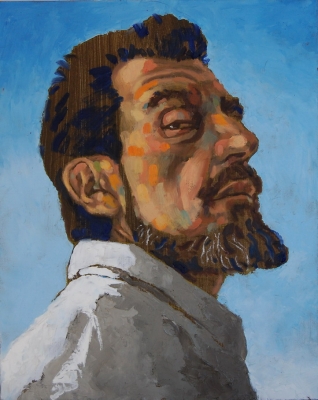




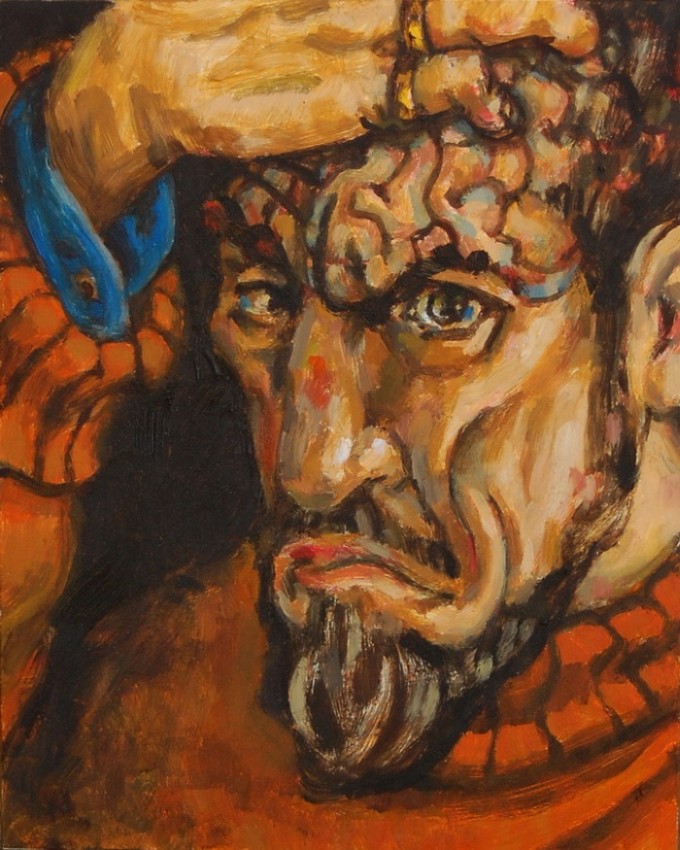


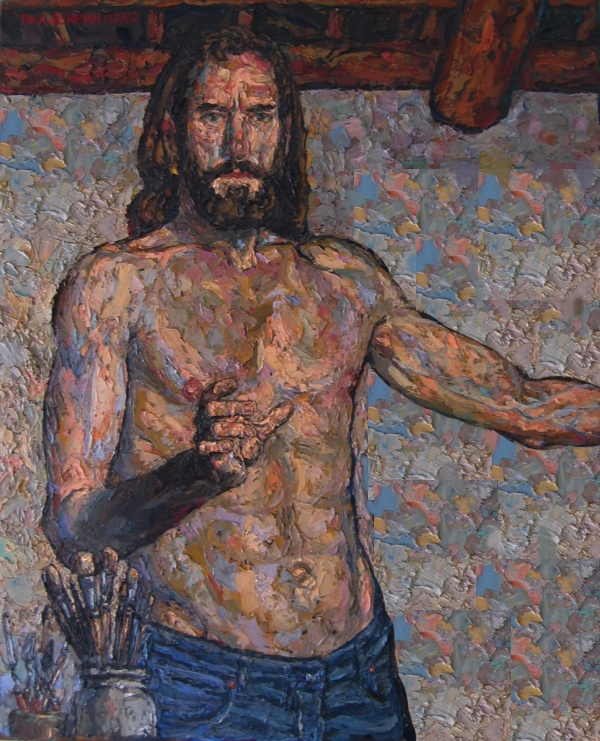
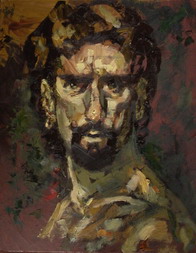
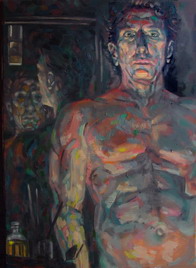
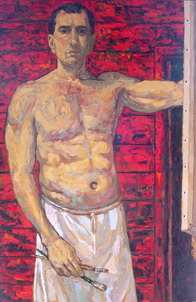




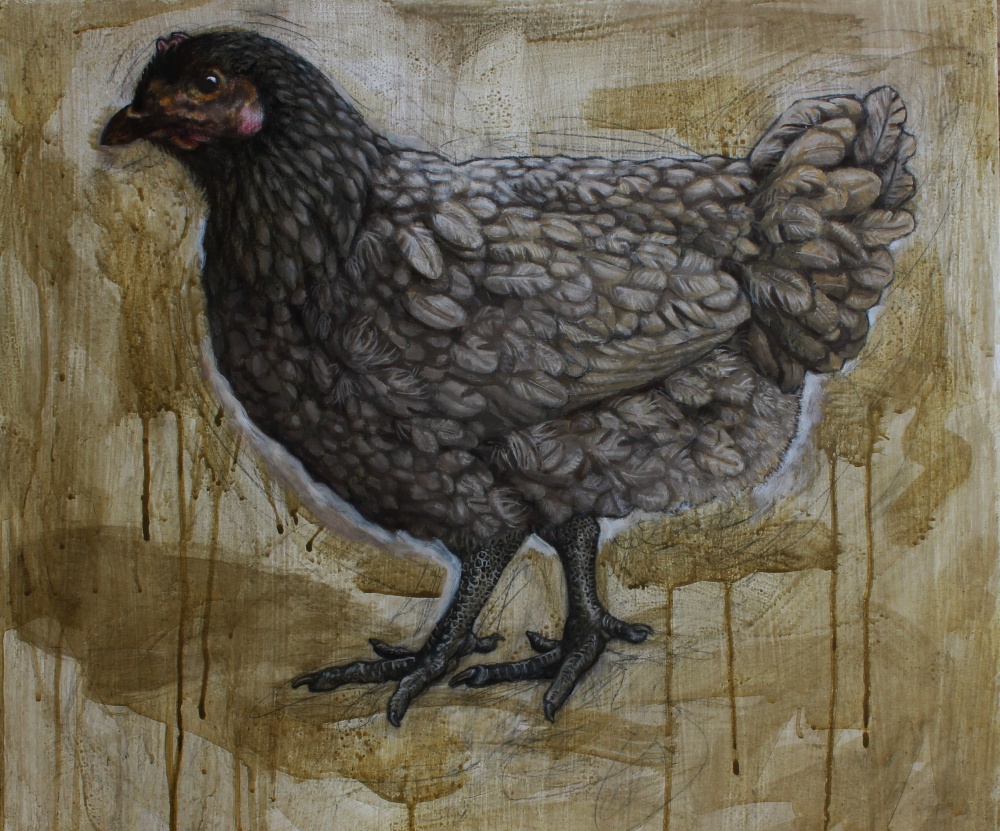


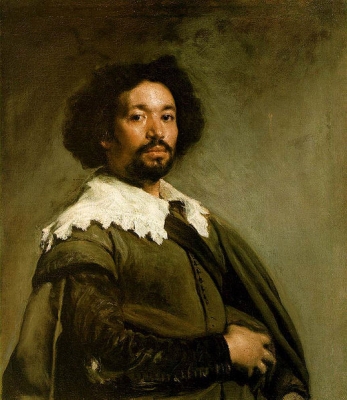
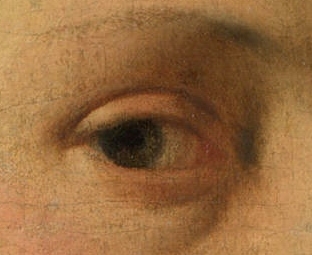
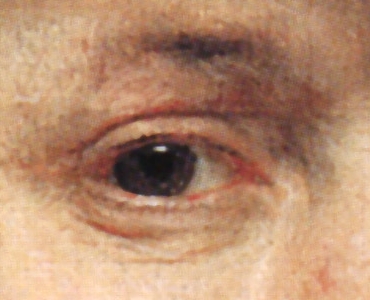
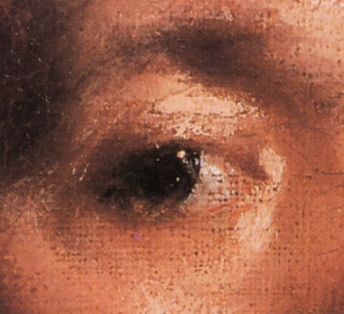
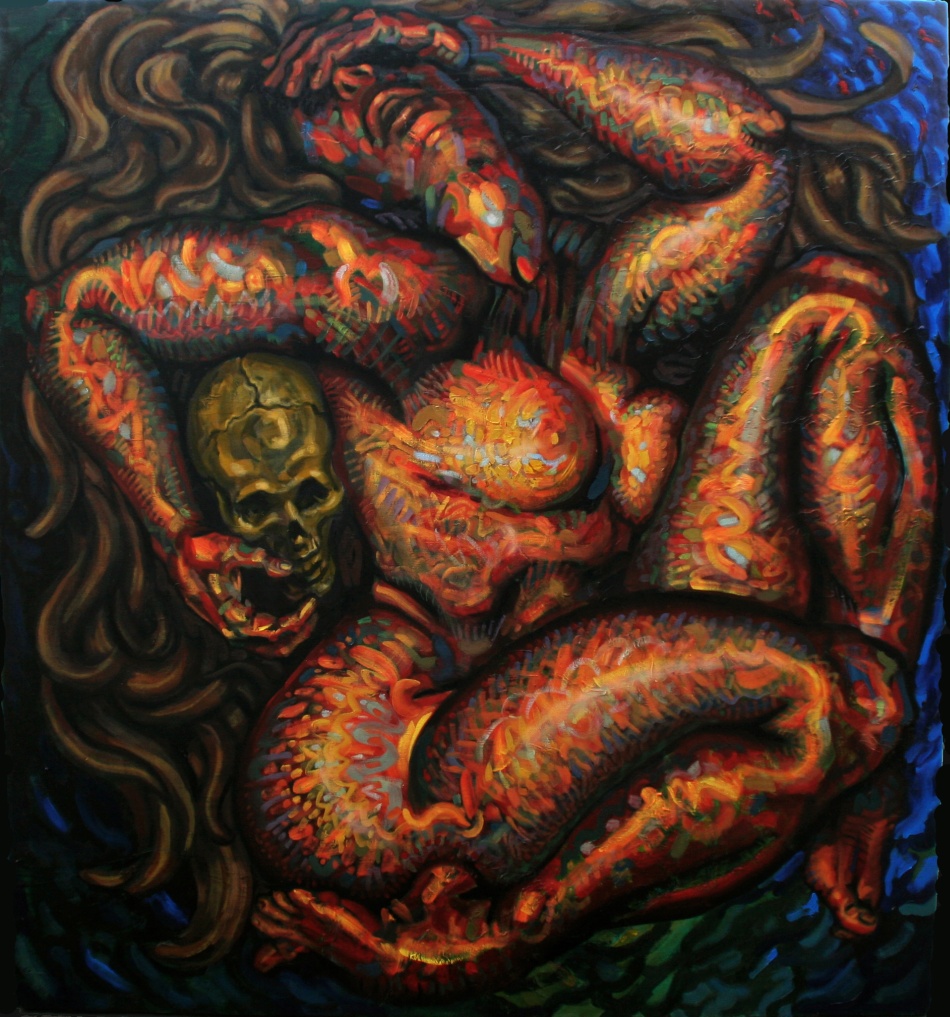
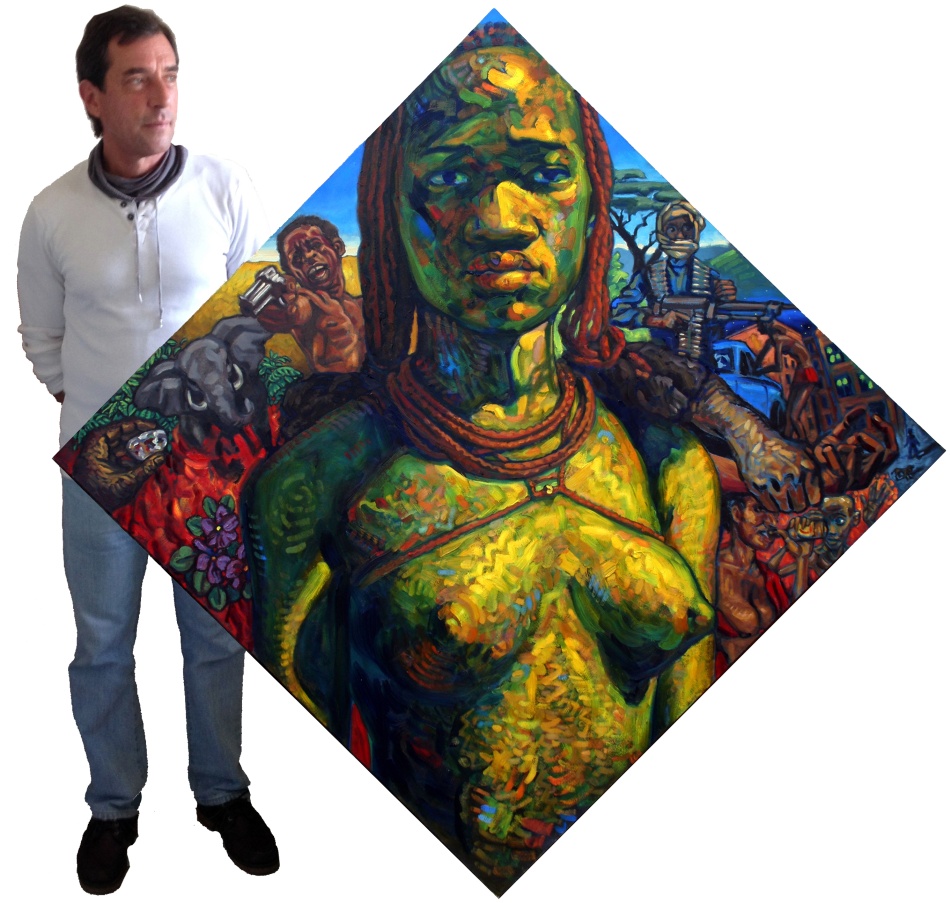
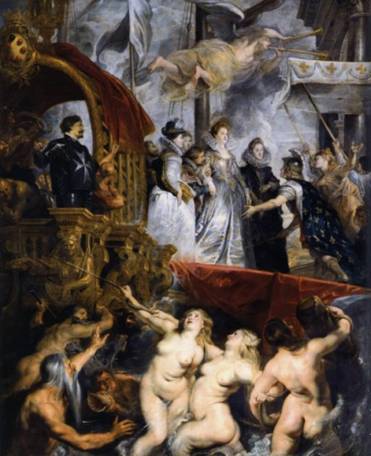 three
seconds. I don’t know how the sum was calculated. If they
simply
divided the number of paintings on a visitor’s route by the
total
amount of time spent in the museum then the figure would be skewed
since we don’t stop and look at every painting. But yet even
if
we multiply the three seconds by a few times the resultant figure still
tells us one thing clearly about the visitor’s experience of
the
paintings: he looks at each only long enough to understand its subject;
it is a man on a horse or a ship landing with some noble personages
being received with pomp. Some mermaids lift themselves from the waters
below to moor the galleon while an angel floats above, that sort of
thing. If one is familiar with the history of the times he might notice
those receiving the guests are French by the golden fleur de lis on
blue ground of the bowing man's cape. Or the ship's coat of arms: the
six pills of the Medici family. A little more time invested shows one
the trumpeters (aboard & in the air above, with brass,
& in the
water with a conch shell), while below, where Neptune directs the
sirens, a canon shoots a celebratory volley, & suddenly the
silent
painting is filled with boisterous sound, breaking waves &
salty
air—in the viewer's imagination. Before the devaluation of
'the
image' I'm sure this kind of synaesthesia was the norm. Behind the
gentleman with the Maltese Cross on his chest, hardly visible amid the
ornate carvings of the stern, a lascivious sailor looks down at the
mermaids. All of this is available even to those who don't understand
the 'art' of it.
three
seconds. I don’t know how the sum was calculated. If they
simply
divided the number of paintings on a visitor’s route by the
total
amount of time spent in the museum then the figure would be skewed
since we don’t stop and look at every painting. But yet even
if
we multiply the three seconds by a few times the resultant figure still
tells us one thing clearly about the visitor’s experience of
the
paintings: he looks at each only long enough to understand its subject;
it is a man on a horse or a ship landing with some noble personages
being received with pomp. Some mermaids lift themselves from the waters
below to moor the galleon while an angel floats above, that sort of
thing. If one is familiar with the history of the times he might notice
those receiving the guests are French by the golden fleur de lis on
blue ground of the bowing man's cape. Or the ship's coat of arms: the
six pills of the Medici family. A little more time invested shows one
the trumpeters (aboard & in the air above, with brass,
& in the
water with a conch shell), while below, where Neptune directs the
sirens, a canon shoots a celebratory volley, & suddenly the
silent
painting is filled with boisterous sound, breaking waves &
salty
air—in the viewer's imagination. Before the devaluation of
'the
image' I'm sure this kind of synaesthesia was the norm. Behind the
gentleman with the Maltese Cross on his chest, hardly visible amid the
ornate carvings of the stern, a lascivious sailor looks down at the
mermaids. All of this is available even to those who don't understand
the 'art' of it.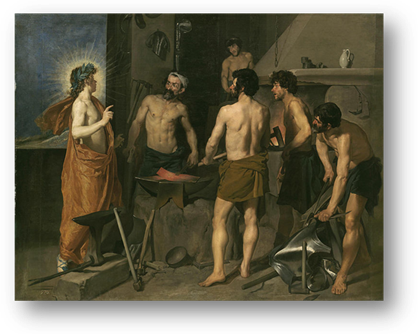 The
Prado in Madrid holds an important collection from Europe’s
long
art history, generous numbers of Riberas, Zurbaráns, Goyas
and
what I personally consider the single painting that comes as close as a
painting can to perfection: Velázquez’ Forge
of Vulcan.
And yet, year after year, the results always show that the
most
popular painting in the Prado's collection is Hieronymus
Bosch’s Garden of Earthly Delights.
I don’t mean to deride poor old Bosch and his production of
painters for his painting factory (four painter sons), but only to
point out that again the painting’s popularity leads us to
the
same conclusion: Bosch offers hundreds of whimsical little figures,
human and animal, to while away a few minutes looking at. He even
offers little rewards to those who look long enough,
The
Prado in Madrid holds an important collection from Europe’s
long
art history, generous numbers of Riberas, Zurbaráns, Goyas
and
what I personally consider the single painting that comes as close as a
painting can to perfection: Velázquez’ Forge
of Vulcan.
And yet, year after year, the results always show that the
most
popular painting in the Prado's collection is Hieronymus
Bosch’s Garden of Earthly Delights.
I don’t mean to deride poor old Bosch and his production of
painters for his painting factory (four painter sons), but only to
point out that again the painting’s popularity leads us to
the
same conclusion: Bosch offers hundreds of whimsical little figures,
human and animal, to while away a few minutes looking at. He even
offers little rewards to those who look long enough, 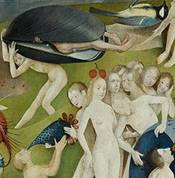 hidden
figures or interactions between them or humorous details, a man being
eaten by a clam—only his lower legs still visible, or a pair
of
ears carrying a dagger & suchlike. I love Bosch, his
painting
is delightful but if you subject it to a scrutiny like that described
above, going beyond the subject of his painting, you find it has very
little to offer. It is simply a sophisticated game of
‘Where’s Wally?’
hidden
figures or interactions between them or humorous details, a man being
eaten by a clam—only his lower legs still visible, or a pair
of
ears carrying a dagger & suchlike. I love Bosch, his
painting
is delightful but if you subject it to a scrutiny like that described
above, going beyond the subject of his painting, you find it has very
little to offer. It is simply a sophisticated game of
‘Where’s Wally?’ 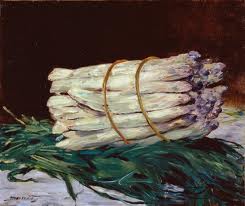
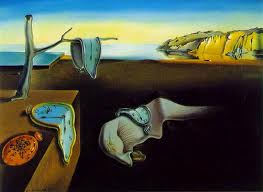 Another
painter popular among the art-uneducated is the twentieth
century’s most successful buffoon among the many playing the
role
of artist, if not actually getting at the matter of it: Salvador
Dalí. The average museum goer may not know what all the fuss
is
about when looking at a sombre portrait by Titian, but can wonder at
Dalí’s soft clocks and if he wishes to, he can
attach any
personal meaning that is significant to him, like time’s
inexorability, or relativity, or cruel dominion over man’s
mortality, to feel the painter intended some deep philosophical
message. Dalí’s compositions are desultory, his
colour
theory elementary and his technique is that of a competent but trudging
craftsman—but he provides a subject to look
at—pandering to
those who don’t know what else to look for in a painting.
While
Manet reaches depths of beauty and mastery of atmosphere with nothing
more thought provoking for subject than a bunch of asparagus.
Another
painter popular among the art-uneducated is the twentieth
century’s most successful buffoon among the many playing the
role
of artist, if not actually getting at the matter of it: Salvador
Dalí. The average museum goer may not know what all the fuss
is
about when looking at a sombre portrait by Titian, but can wonder at
Dalí’s soft clocks and if he wishes to, he can
attach any
personal meaning that is significant to him, like time’s
inexorability, or relativity, or cruel dominion over man’s
mortality, to feel the painter intended some deep philosophical
message. Dalí’s compositions are desultory, his
colour
theory elementary and his technique is that of a competent but trudging
craftsman—but he provides a subject to look
at—pandering to
those who don’t know what else to look for in a painting.
While
Manet reaches depths of beauty and mastery of atmosphere with nothing
more thought provoking for subject than a bunch of asparagus.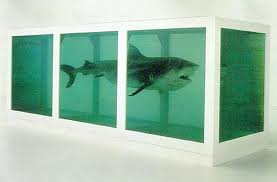 him,
has left the viewer wondering what it is all about. Why do we need art
anymore? He asks himself. Where is the relevance for paintings in a
world saturated with images of all kinds that bombard us from every
side?
him,
has left the viewer wondering what it is all about. Why do we need art
anymore? He asks himself. Where is the relevance for paintings in a
world saturated with images of all kinds that bombard us from every
side? 
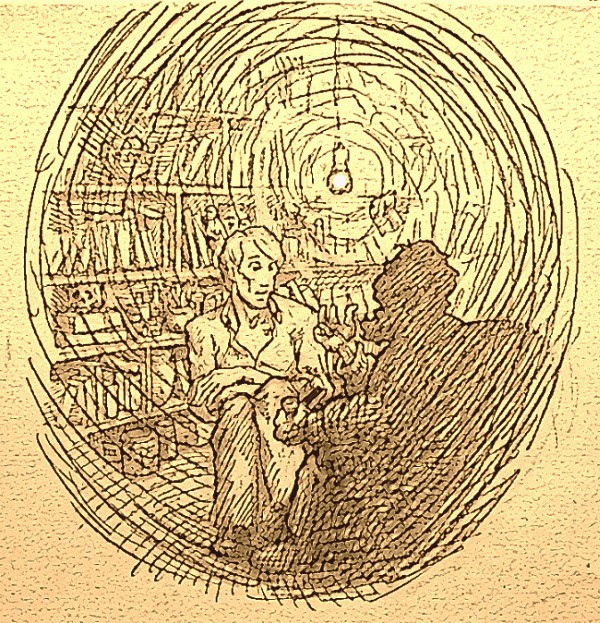
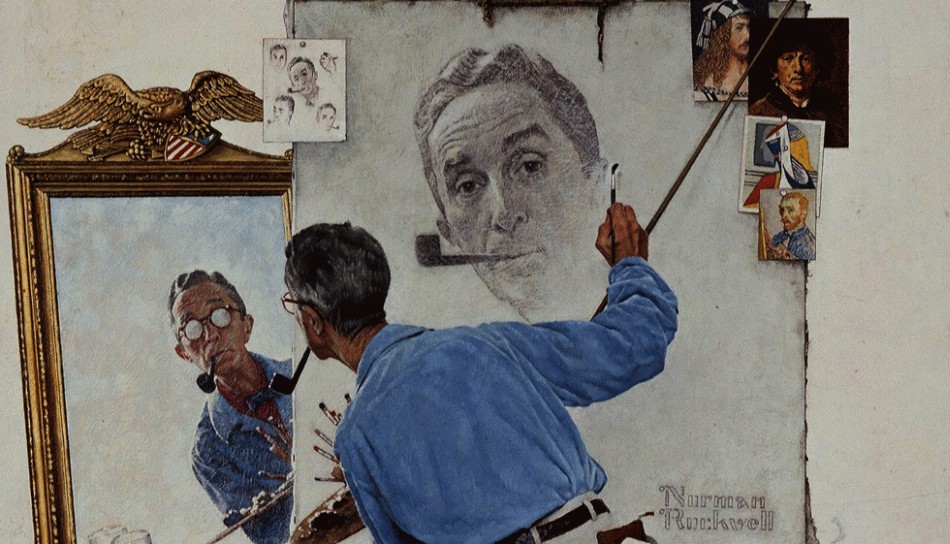
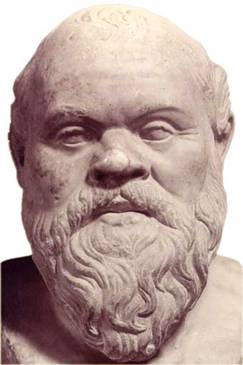 Rather
than seeing books as an alternative repository for knowledge, we see
them as a source of new thought. In some cases a book might be a
summary of the thought dedicated over a life-time by an extraordinary
mind, to questions of importance to all mankind, as is the case with
Socrates whose ponderings would likely be lost to us if Plato
hadn’t done us the favour of writing them down.
Rather
than seeing books as an alternative repository for knowledge, we see
them as a source of new thought. In some cases a book might be a
summary of the thought dedicated over a life-time by an extraordinary
mind, to questions of importance to all mankind, as is the case with
Socrates whose ponderings would likely be lost to us if Plato
hadn’t done us the favour of writing them down.  It
started with a light-hearted invitation to join some friends in a visit
to the 'Garganta del Buitre', The Vulture’s Throat,
a gorgeous national park here in Cádiz.
It
started with a light-hearted invitation to join some friends in a visit
to the 'Garganta del Buitre', The Vulture’s Throat,
a gorgeous national park here in Cádiz. 
 In
a Thai temple I once
saw a scene of Hell painted on carved bas relief, figures whose faces
were chiselled
in permanent gestures of extreme dismay, climbing the trunks of thorny
trees
(Guad tree, right),
with demons, grinning sardonically from below, forcing them up with
pointed
lances.
In
a Thai temple I once
saw a scene of Hell painted on carved bas relief, figures whose faces
were chiselled
in permanent gestures of extreme dismay, climbing the trunks of thorny
trees
(Guad tree, right),
with demons, grinning sardonically from below, forcing them up with
pointed
lances.
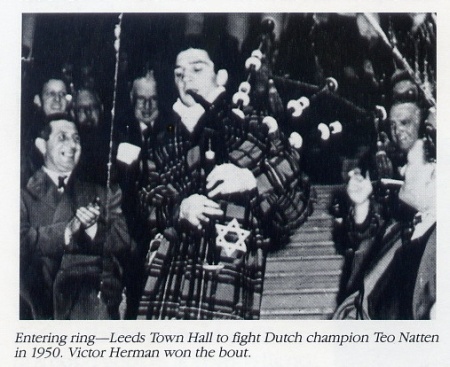

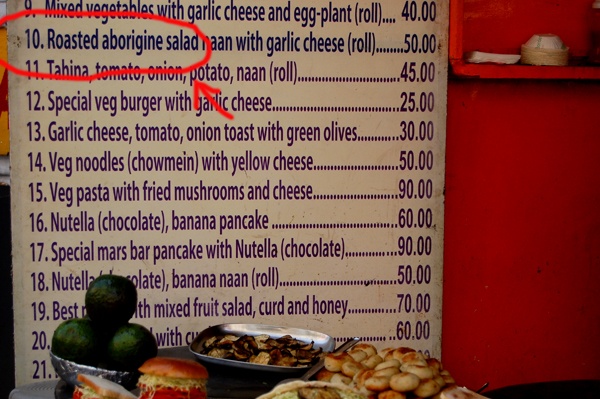
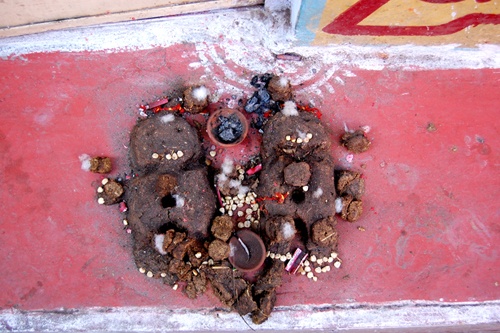
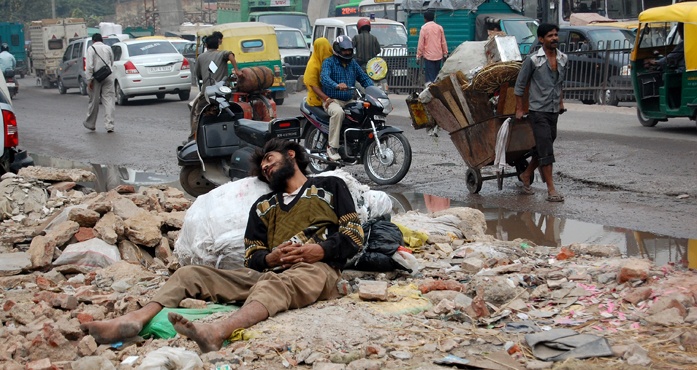
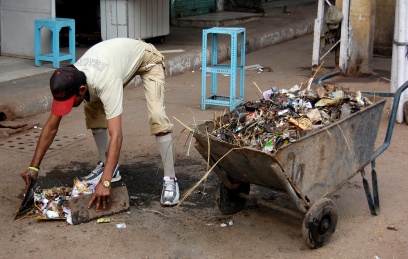 India, Bangladesh and
even Pakistan all treat women as second rate citizens and, in
some cases, as the chattel of men, and yet they have all three
had women prime ministers. But though these countries will accept
female leadership, on the ground level everything is decided and
run by men. All three of these countries eschew cooperative
organisation in favour of ruthless competition and as a result
are filthy (the attitude seems to be: don’t clean until
necessary), rude, corrupt and depressed in spirit.
India, Bangladesh and
even Pakistan all treat women as second rate citizens and, in
some cases, as the chattel of men, and yet they have all three
had women prime ministers. But though these countries will accept
female leadership, on the ground level everything is decided and
run by men. All three of these countries eschew cooperative
organisation in favour of ruthless competition and as a result
are filthy (the attitude seems to be: don’t clean until
necessary), rude, corrupt and depressed in spirit.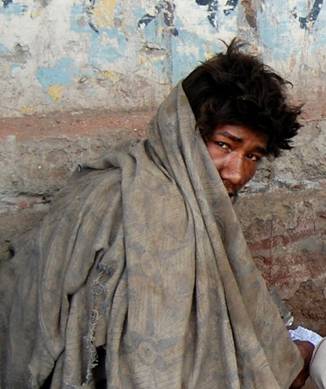 It seems whatever other
differences there may be between men and women it is the women
who have better talents for structuring communities.
It seems whatever other
differences there may be between men and women it is the women
who have better talents for structuring communities.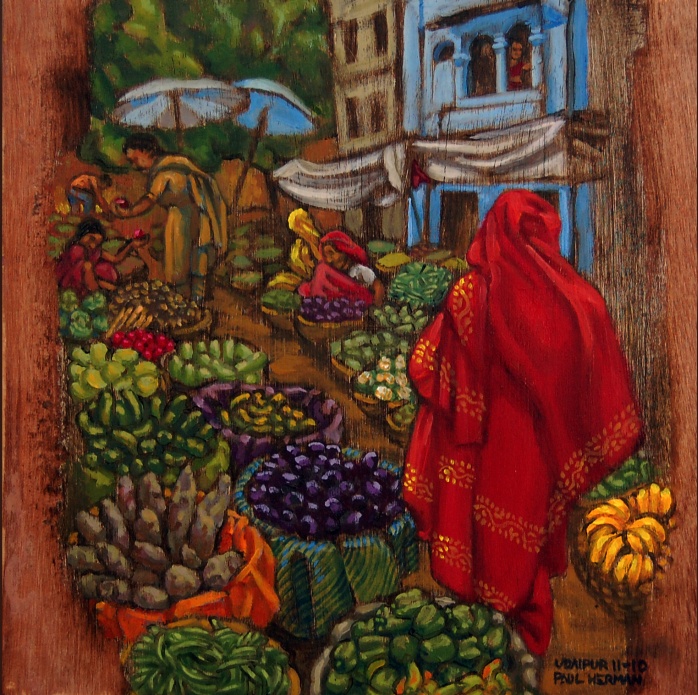
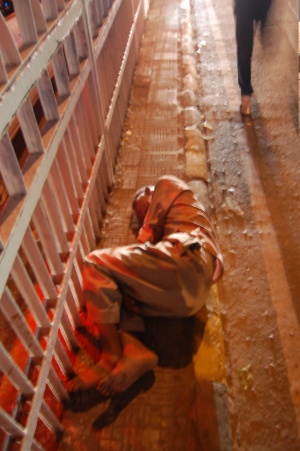 everybody
beeping constantly, not in protest or warning but merely as a matter of
form. Through these same lanes, congested by a mixture of rickshaws,
lathered and labouring cows or men pulling wagons;
undernourished, often lactating dogs, automobiles and motorbikes,
were people sleeping in the skinny median between opposing lanes.
everybody
beeping constantly, not in protest or warning but merely as a matter of
form. Through these same lanes, congested by a mixture of rickshaws,
lathered and labouring cows or men pulling wagons;
undernourished, often lactating dogs, automobiles and motorbikes,
were people sleeping in the skinny median between opposing lanes.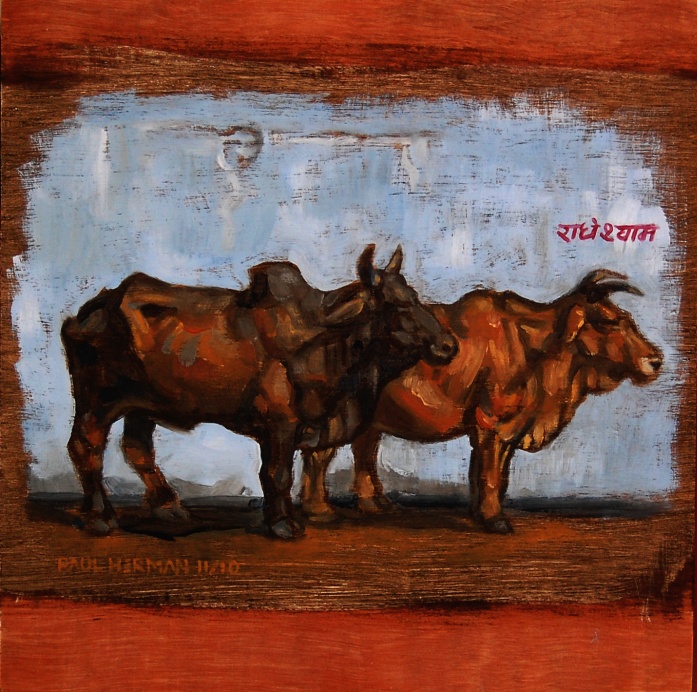
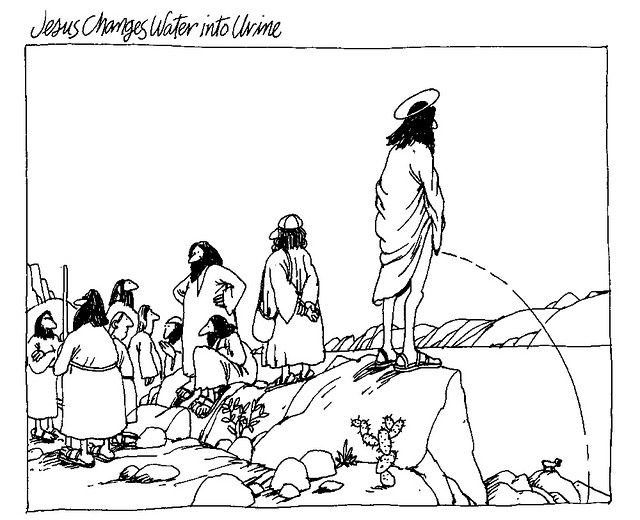
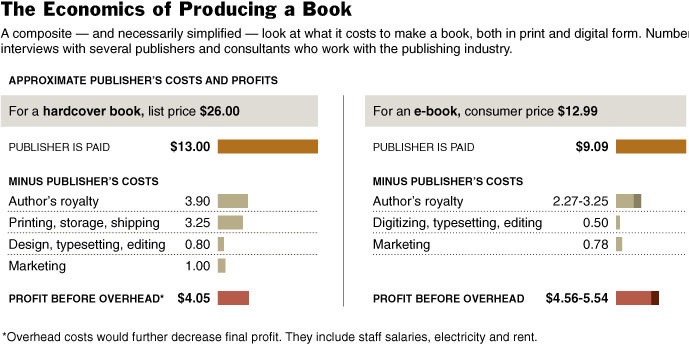

 are
further removed by being symbols of the symbolic sounds which we
translate into
meaning.
are
further removed by being symbols of the symbolic sounds which we
translate into
meaning.
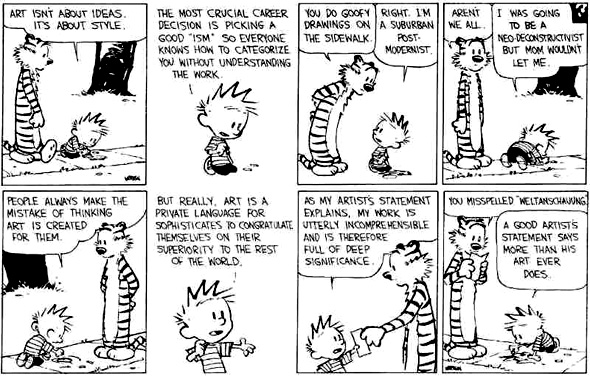
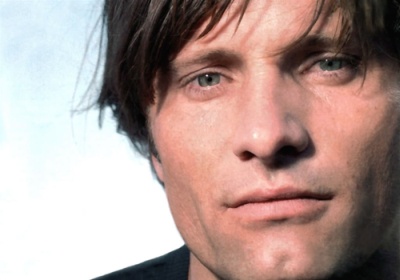 Viggo
Mortensen is an interesting man.
Everyone knows he is a an able actor (even if it took the badly written
role in those god-awful Lord of the Ring films to
make him popular—in the scene where he rallies his troops I
couldn't
help thinking he kept turning his horse's ass to the camera out of
embarrassment at the thought of Olivier or Branagh at the gates of
Harfleur) and we all know how photogenically handsome he is. The
results of a combination of genetic good luck plus talent and
hard work. What is less known about him however, is how atypical he is
in Hollywood: he considers his acting career a means to the end of his
more serious work: artistic photography, poetry, short story writing
and painting.
Viggo
Mortensen is an interesting man.
Everyone knows he is a an able actor (even if it took the badly written
role in those god-awful Lord of the Ring films to
make him popular—in the scene where he rallies his troops I
couldn't
help thinking he kept turning his horse's ass to the camera out of
embarrassment at the thought of Olivier or Branagh at the gates of
Harfleur) and we all know how photogenically handsome he is. The
results of a combination of genetic good luck plus talent and
hard work. What is less known about him however, is how atypical he is
in Hollywood: he considers his acting career a means to the end of his
more serious work: artistic photography, poetry, short story writing
and painting. 

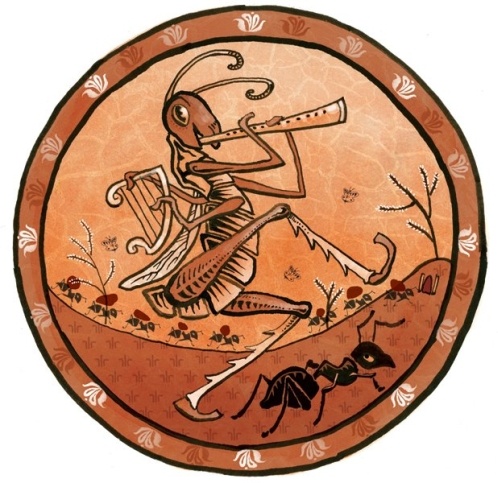
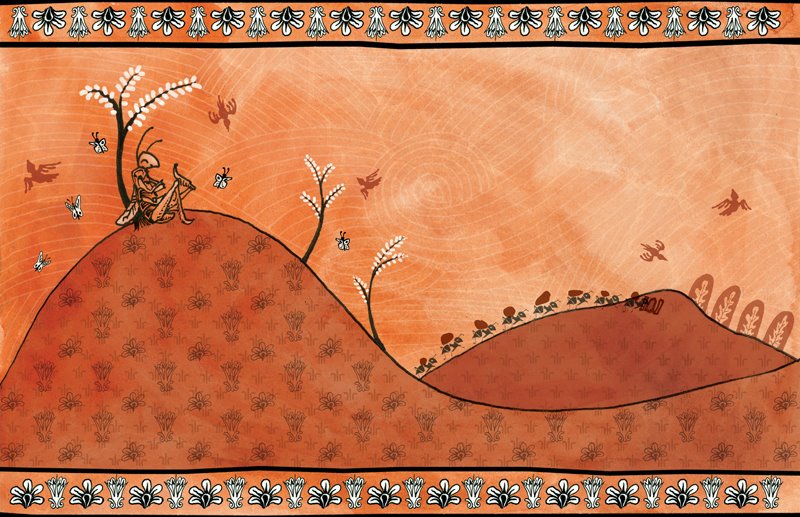
 Paul: I
think it is interesting to consider one of my favourite pieces by
Picasso in this context, his bull's head. It is in an entirely
different category to Duchamp's found art, since it is a sculpture made
of found objects. Even if it is so simple that he might have found its
two parts lying together on the floor of his garage and thought:
hey! That handlebar and bicycle seat look like a bull's head! It
is a piece no-one can doubt his right to sign as his own.
Paul: I
think it is interesting to consider one of my favourite pieces by
Picasso in this context, his bull's head. It is in an entirely
different category to Duchamp's found art, since it is a sculpture made
of found objects. Even if it is so simple that he might have found its
two parts lying together on the floor of his garage and thought:
hey! That handlebar and bicycle seat look like a bull's head! It
is a piece no-one can doubt his right to sign as his own.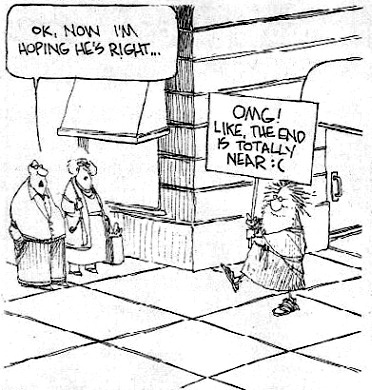

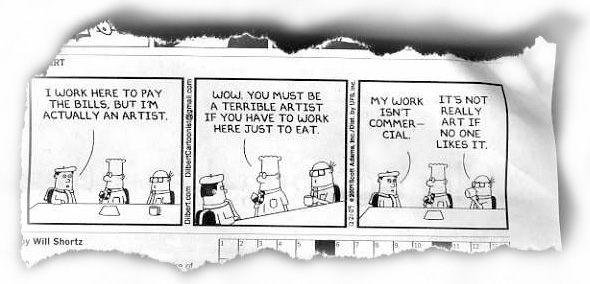
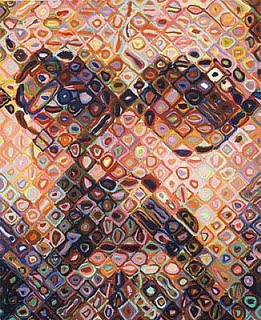 Inspiration
is for amateurs, the rest of us just turn up for work.
Inspiration
is for amateurs, the rest of us just turn up for work.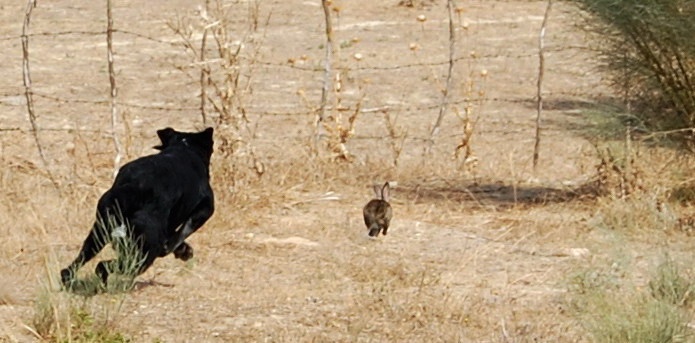
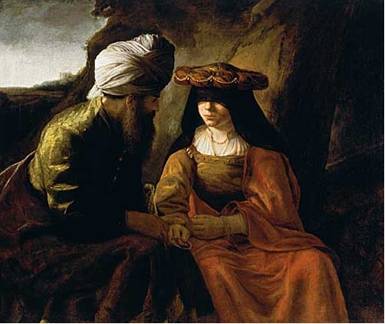 Onan
uses coitus interruptus as his preferred contraceptive method but when
his father finds out he has been spilling his seed anywhere but in
Tamar (occasioning the word onanism to eventually
become synonymous to masturbation) he gets as angry as God had with Er
and with the same consequence: he kills his second son, Onan
Onan
uses coitus interruptus as his preferred contraceptive method but when
his father finds out he has been spilling his seed anywhere but in
Tamar (occasioning the word onanism to eventually
become synonymous to masturbation) he gets as angry as God had with Er
and with the same consequence: he kills his second son, Onan